 Image 1 of 1
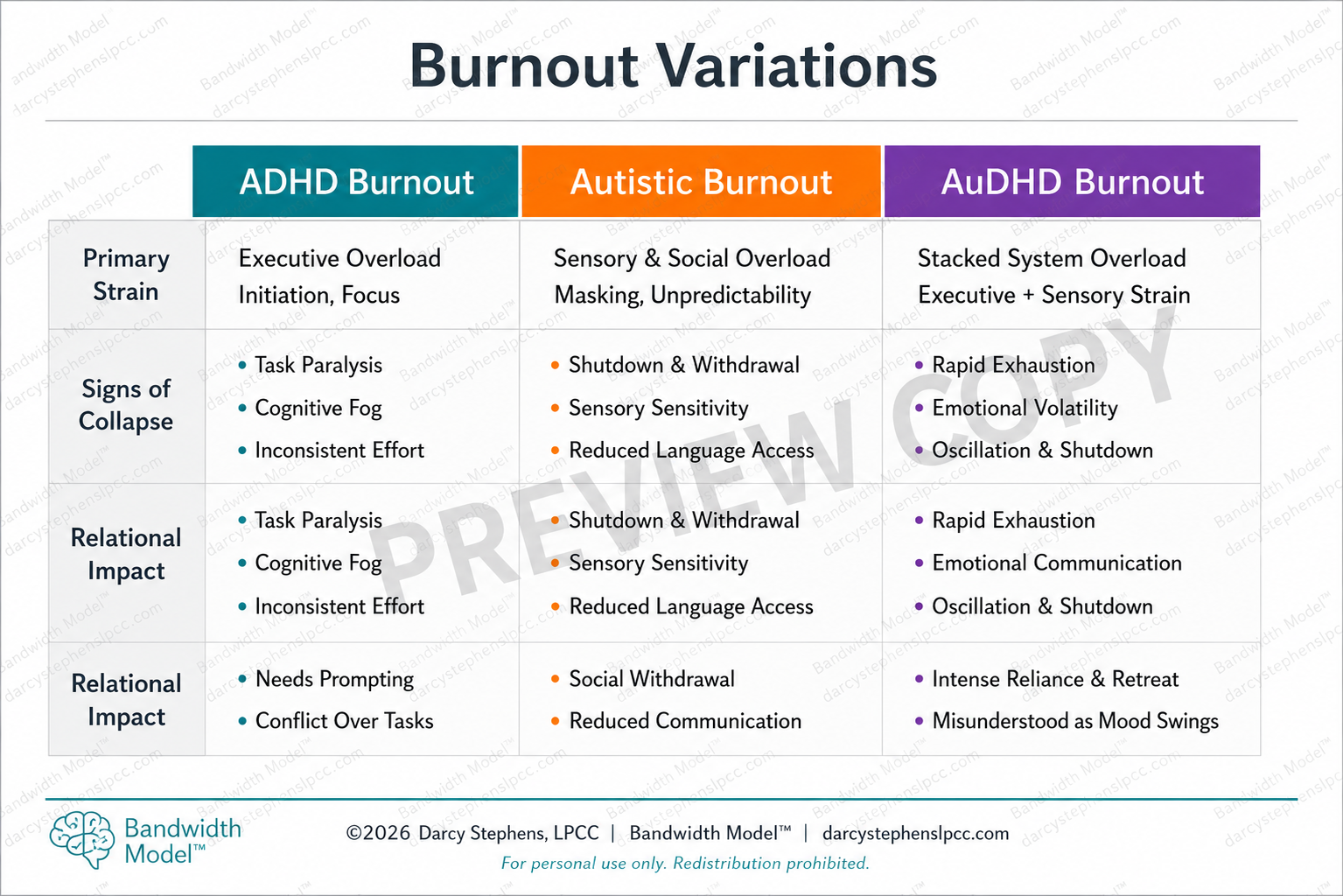
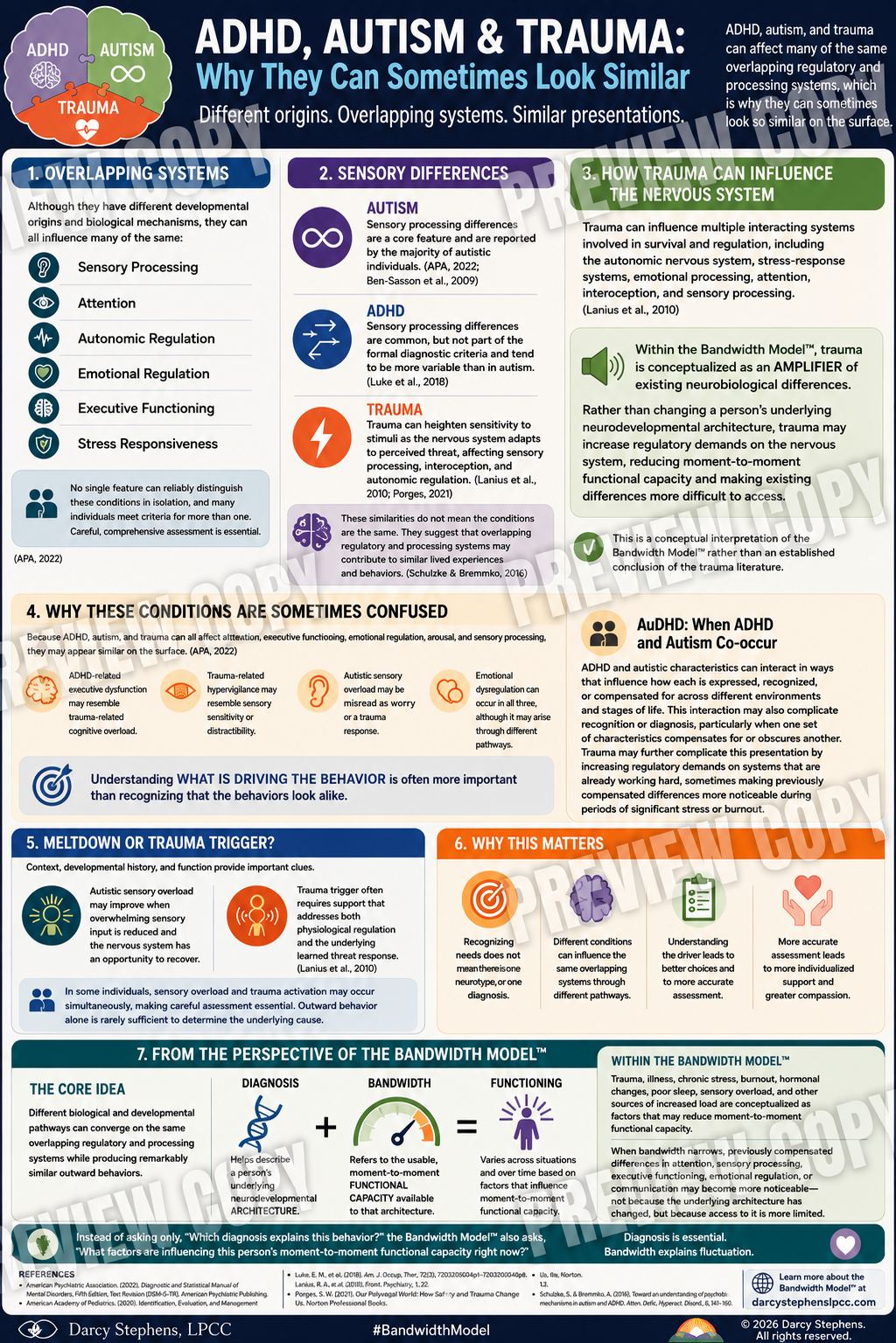
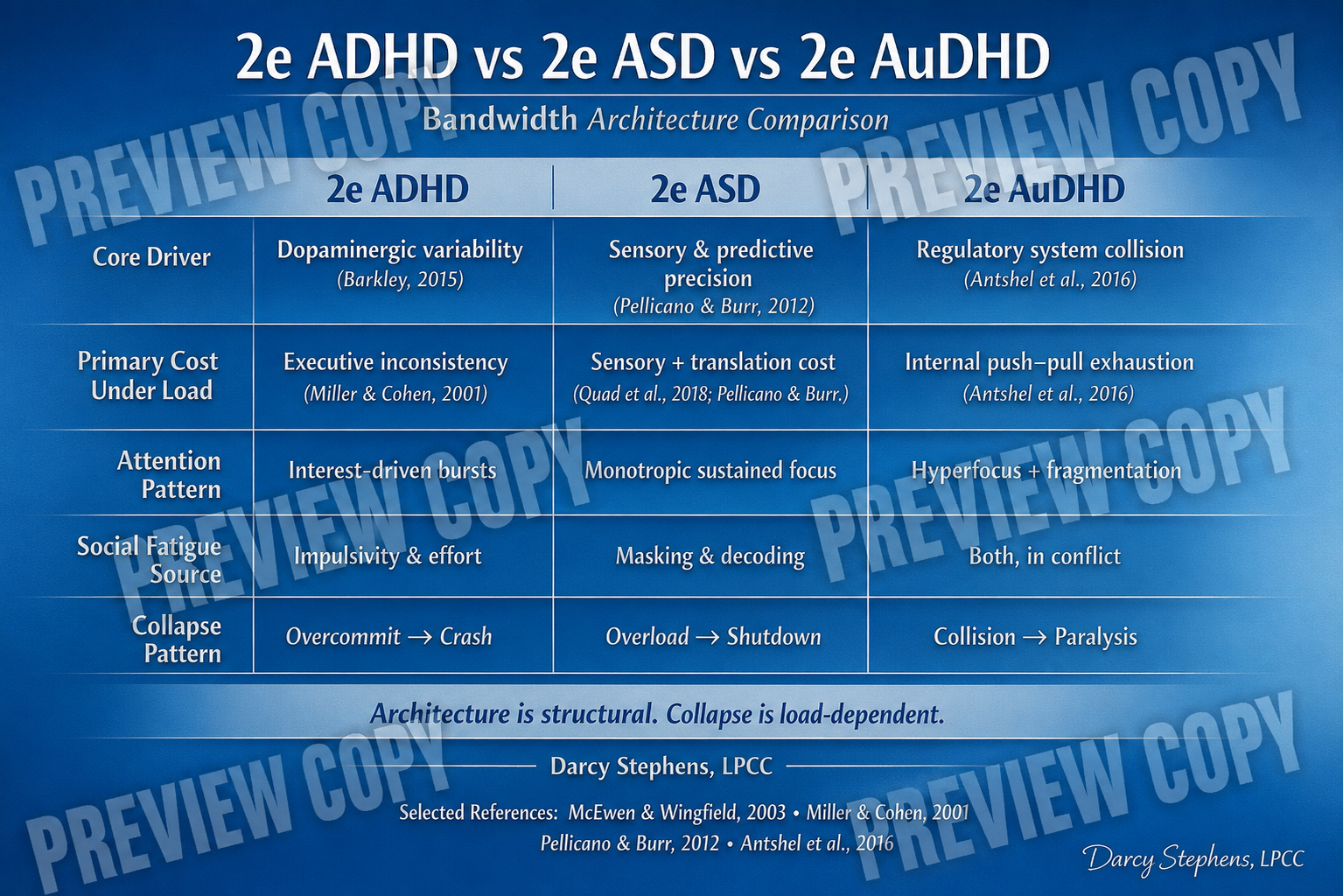
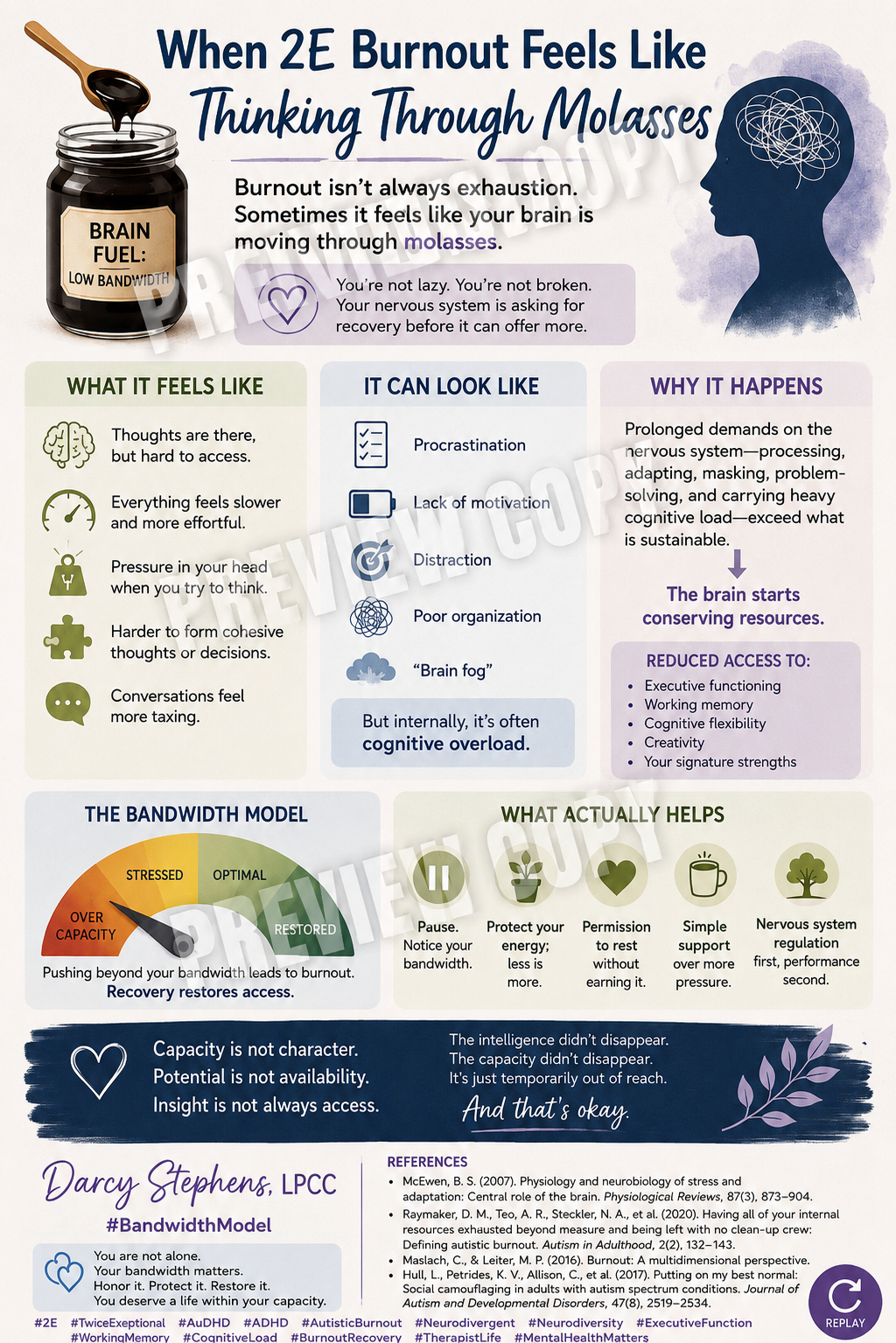
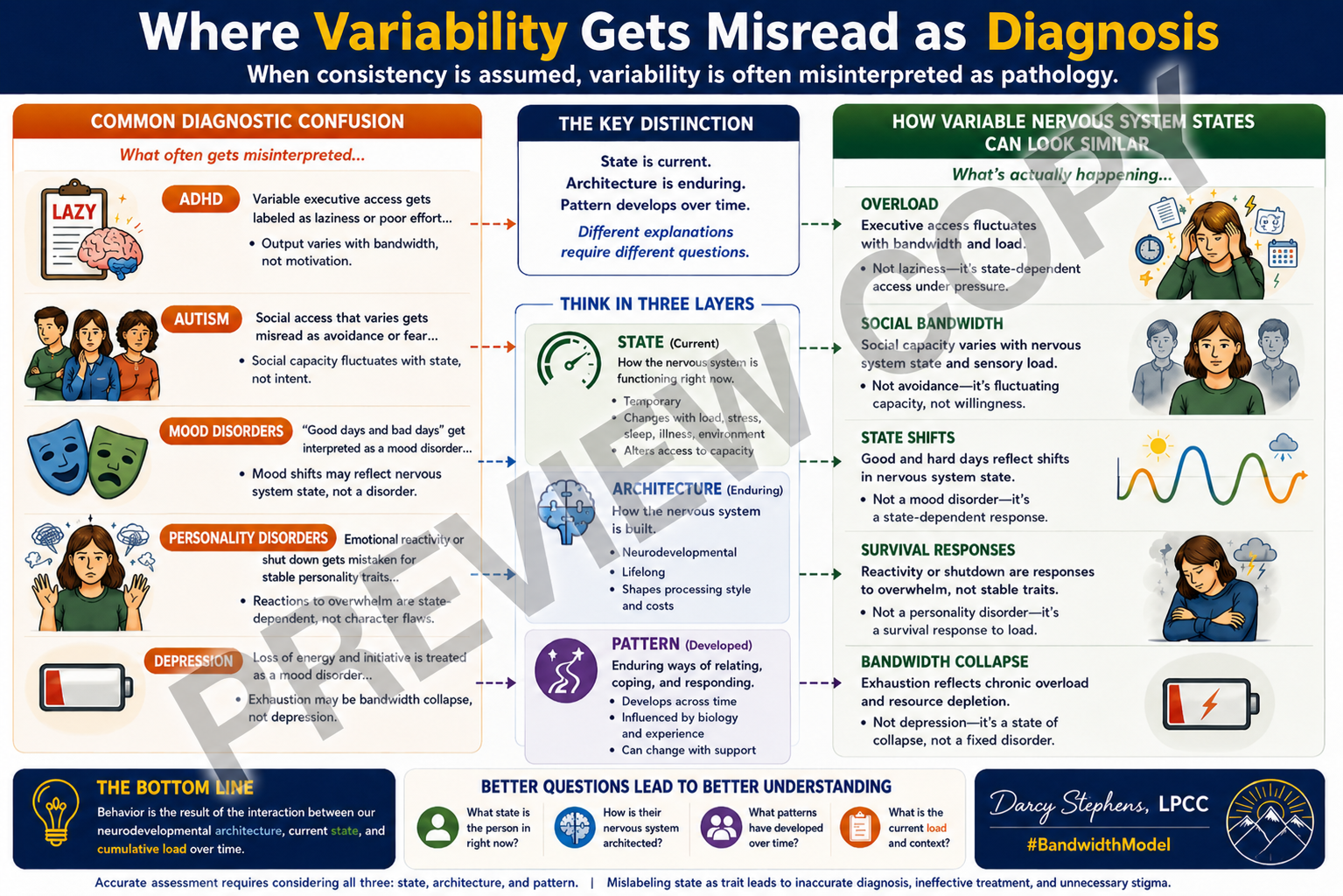
Behavior isn't always a stable trait—it often reflects the interaction between nervous system state, neurodevelopmental architecture, and current load. This infographic explains why fluctuations in executive functioning, social capacity, emotional regulation, and energy are frequently mistaken for fixed diagnoses or personality characteristics. Using the Bandwidth Model™, it illustrates how temporary changes in nervous system state can resemble ADHD, autism, mood disorders, personality disorders, or depression when variability is interpreted without context.
Designed for clinicians, educators, graduate students, and neurodivergent individuals, this visual guide introduces a practical three-layer framework—State, Architecture, and Pattern—to support more accurate assessment and reduce common diagnostic errors. Rather than asking "What's wrong with this person?" it encourages asking "What state is their nervous system in, how is it built, and what patterns have developed over time?"
You'll learn:
Why variable executive functioning is often mistaken for poor motivation
How social bandwidth changes can be misread as avoidance or personality traits
Why mood fluctuations may reflect nervous system state rather than mood disorders
How chronic overload can resemble depression or burnout
A practical framework for distinguishing state, architecture, and pattern in clinical practice
Educational resource only. This infographic reflects current research alongside the author's Bandwidth Model™, an evidence-informed conceptual framework describing how neurodevelopmental architecture, nervous system state, cumulative load, and learned patterns interact to influence functioning. The Bandwidth Model™ has not yet been empirically evaluated and should be considered a conceptual framework rather than an established scientific model. This resource is intended for educational purposes and is not a substitute for professional assessment, diagnosis, or treatment.
Behavior isn't always a stable trait—it often reflects the interaction between nervous system state, neurodevelopmental architecture, and current load. This infographic explains why fluctuations in executive functioning, social capacity, emotional regulation, and energy are frequently mistaken for fixed diagnoses or personality characteristics. Using the Bandwidth Model™, it illustrates how temporary changes in nervous system state can resemble ADHD, autism, mood disorders, personality disorders, or depression when variability is interpreted without context.
Designed for clinicians, educators, graduate students, and neurodivergent individuals, this visual guide introduces a practical three-layer framework—State, Architecture, and Pattern—to support more accurate assessment and reduce common diagnostic errors. Rather than asking "What's wrong with this person?" it encourages asking "What state is their nervous system in, how is it built, and what patterns have developed over time?"
You'll learn:
Why variable executive functioning is often mistaken for poor motivation
How social bandwidth changes can be misread as avoidance or personality traits
Why mood fluctuations may reflect nervous system state rather than mood disorders
How chronic overload can resemble depression or burnout
A practical framework for distinguishing state, architecture, and pattern in clinical practice
Educational resource only. This infographic reflects current research alongside the author's Bandwidth Model™, an evidence-informed conceptual framework describing how neurodevelopmental architecture, nervous system state, cumulative load, and learned patterns interact to influence functioning. The Bandwidth Model™ has not yet been empirically evaluated and should be considered a conceptual framework rather than an established scientific model. This resource is intended for educational purposes and is not a substitute for professional assessment, diagnosis, or treatment.