 Image 1 of 1
When You're Burned Out—And No One Understands Why
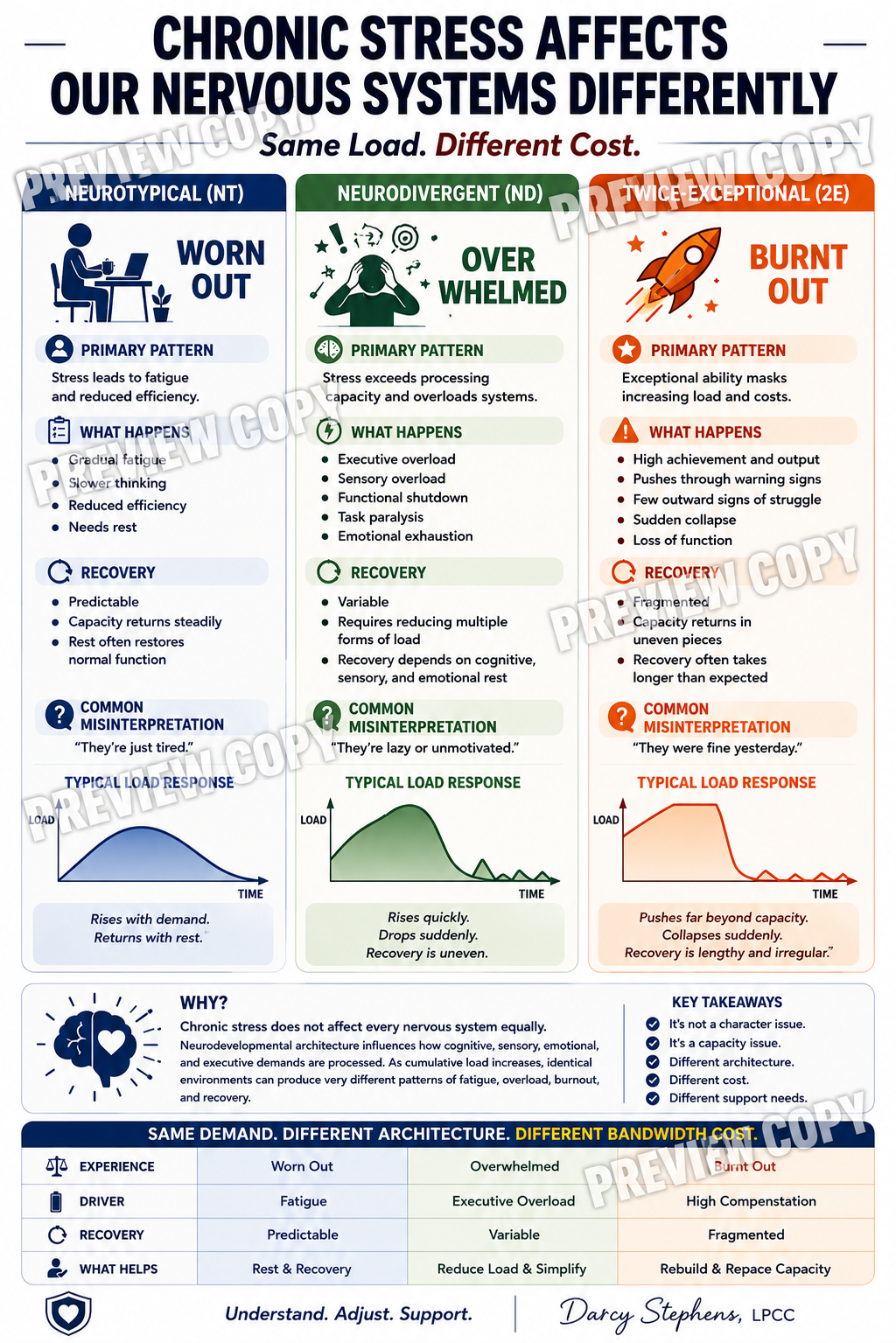
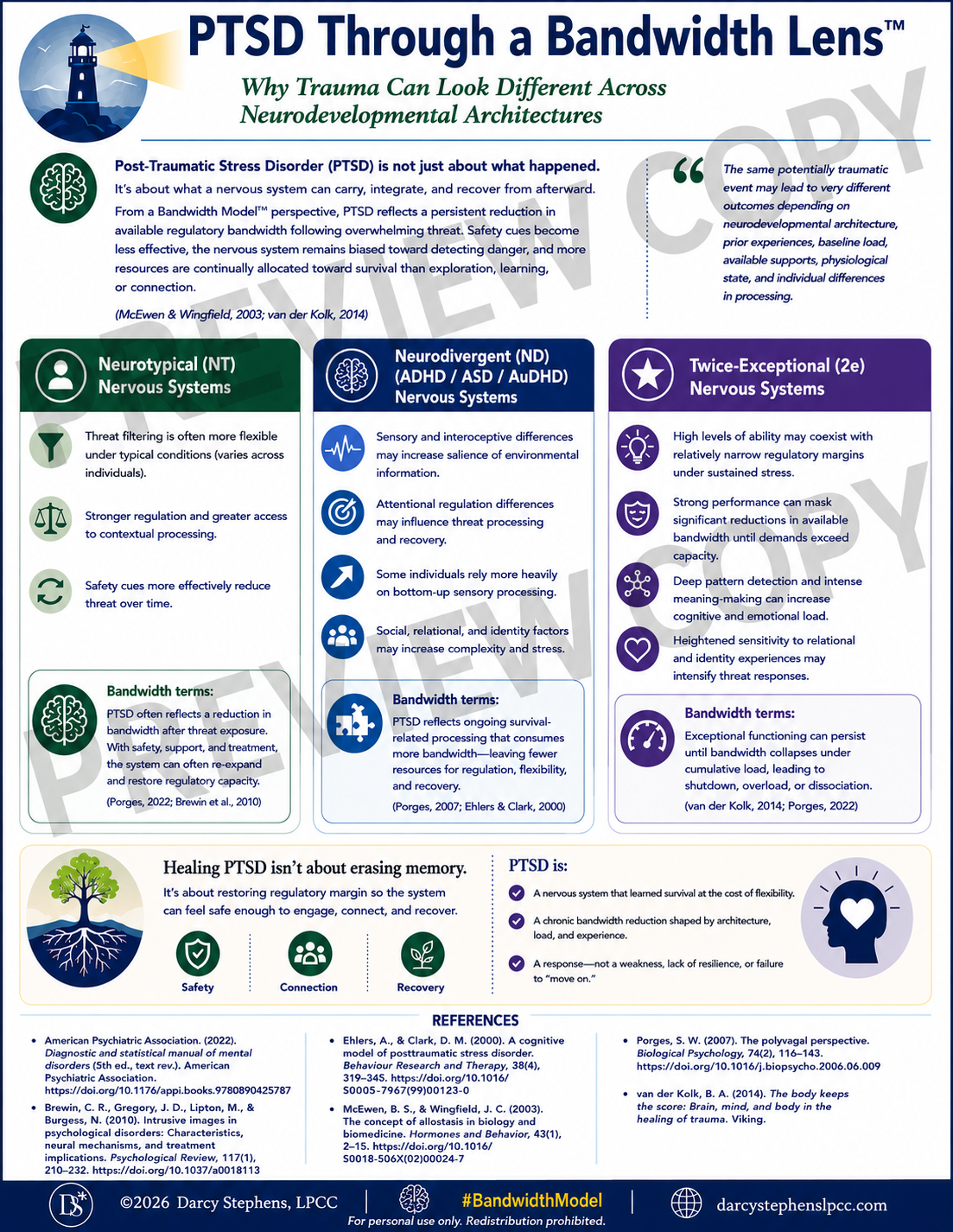
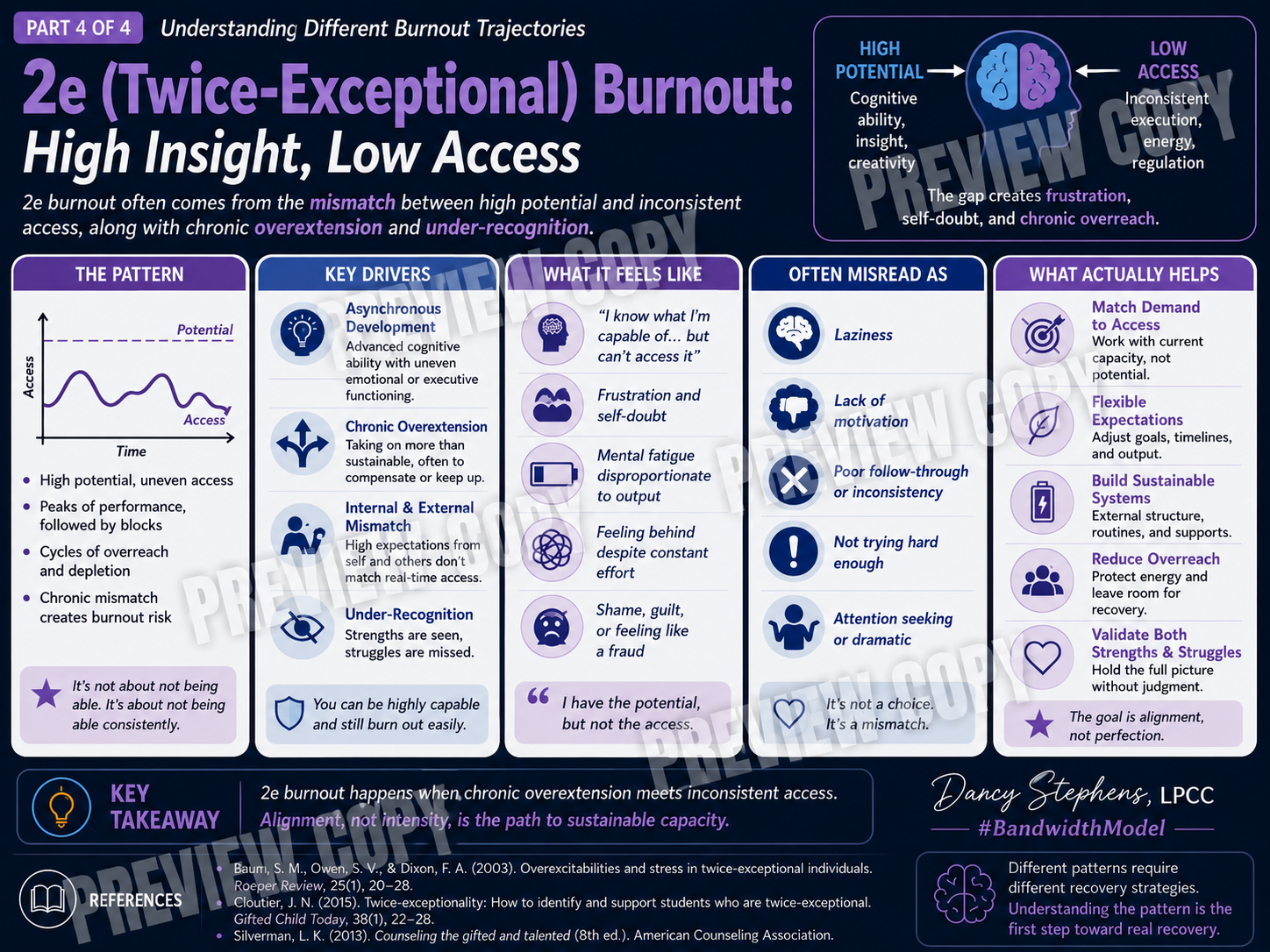
Why can someone who has always been capable, dependable, and successful suddenly struggle with basic daily tasks? This infographic explores burnout through the Bandwidth Model™, explaining why burnout in neurodivergent and twice-exceptional (2e) individuals is often misunderstood as laziness, disengagement, or loss of motivation.
Rather than viewing burnout as a personal failure, this resource explains how cumulative cognitive, sensory, emotional, and physiological demands gradually reduce access to executive functioning—even while underlying ability remains unchanged.
Inside you'll learn:
Why neurodivergent burnout often begins with a higher baseline energy cost
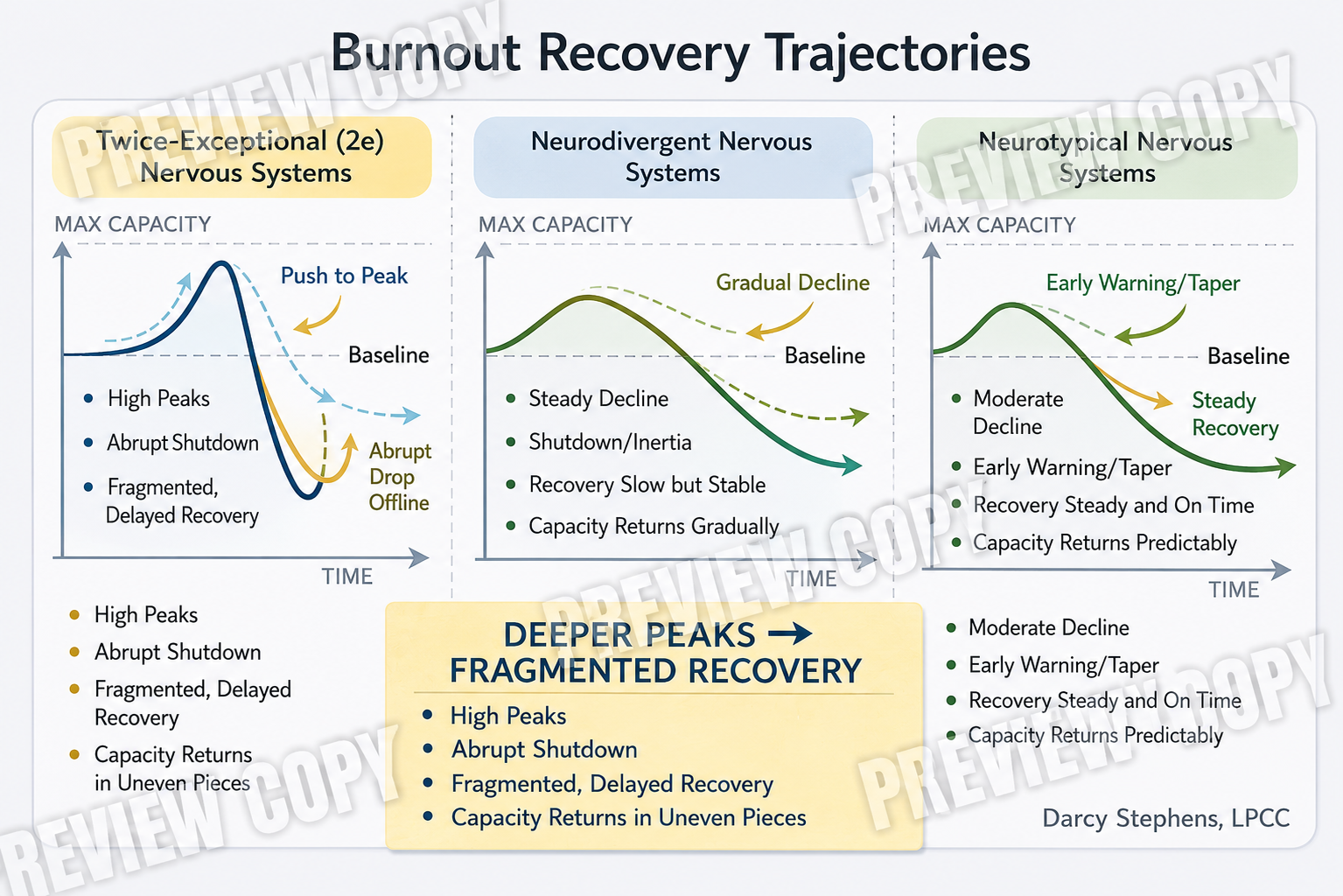
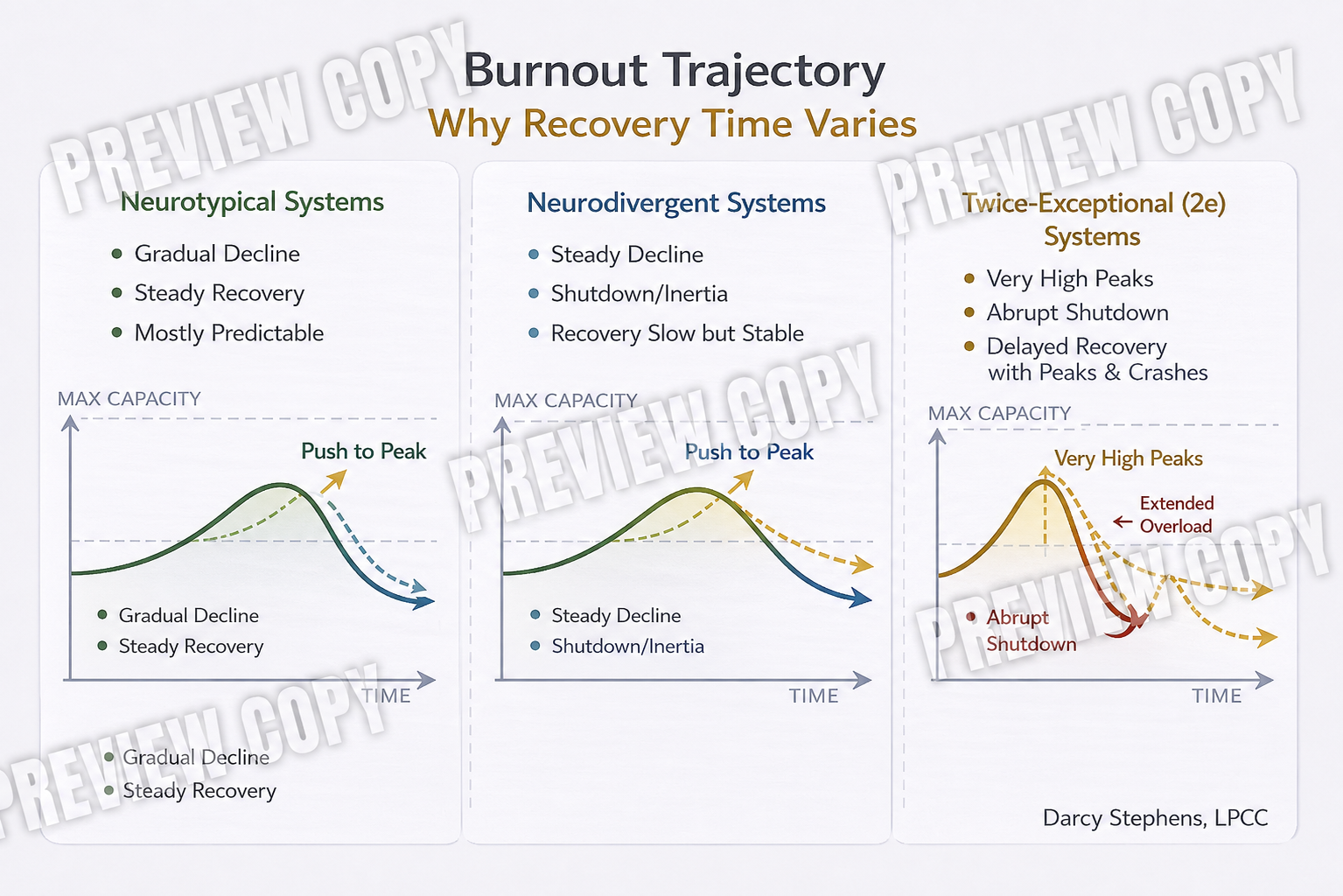
How twice-exceptional (2e) individuals can maintain exceptional performance until capacity suddenly collapses
Why losing access to words, focus, motivation, or social energy is often a bandwidth issue—not a character issue
The difference between output, capacity, and access
Practical recovery principles based on reducing demand rather than increasing effort
This infographic is ideal for clinicians, educators, coaches, caregivers, employers, and neurodivergent adults seeking a compassionate, neuroscience-informed explanation of burnout that goes beyond "self-care" advice.
Includes: 1 high-resolution printable PDF (8.5" × 11")
Topics: Neurodivergent Burnout • ADHD • Autism • AuDHD • Twice-Exceptional (2e) • Executive Function • Cognitive Fatigue • Burnout Recovery • Nervous System Regulation • Bandwidth Model™
Educational use only. This resource reflects the Bandwidth Model™, an evidence-informed conceptual framework developed by Darcy Stephens, LPCC. It is intended for psychoeducation and is not a diagnostic or treatment tool.
When You're Burned Out—And No One Understands Why
Why can someone who has always been capable, dependable, and successful suddenly struggle with basic daily tasks? This infographic explores burnout through the Bandwidth Model™, explaining why burnout in neurodivergent and twice-exceptional (2e) individuals is often misunderstood as laziness, disengagement, or loss of motivation.
Rather than viewing burnout as a personal failure, this resource explains how cumulative cognitive, sensory, emotional, and physiological demands gradually reduce access to executive functioning—even while underlying ability remains unchanged.
Inside you'll learn:
Why neurodivergent burnout often begins with a higher baseline energy cost
How twice-exceptional (2e) individuals can maintain exceptional performance until capacity suddenly collapses
Why losing access to words, focus, motivation, or social energy is often a bandwidth issue—not a character issue
The difference between output, capacity, and access
Practical recovery principles based on reducing demand rather than increasing effort
This infographic is ideal for clinicians, educators, coaches, caregivers, employers, and neurodivergent adults seeking a compassionate, neuroscience-informed explanation of burnout that goes beyond "self-care" advice.
Includes: 1 high-resolution printable PDF (8.5" × 11")
Topics: Neurodivergent Burnout • ADHD • Autism • AuDHD • Twice-Exceptional (2e) • Executive Function • Cognitive Fatigue • Burnout Recovery • Nervous System Regulation • Bandwidth Model™
Educational use only. This resource reflects the Bandwidth Model™, an evidence-informed conceptual framework developed by Darcy Stephens, LPCC. It is intended for psychoeducation and is not a diagnostic or treatment tool.