 Image 1 of 1
Why do trauma anniversaries sometimes seem to bring old emotions back to the surface—even years later?
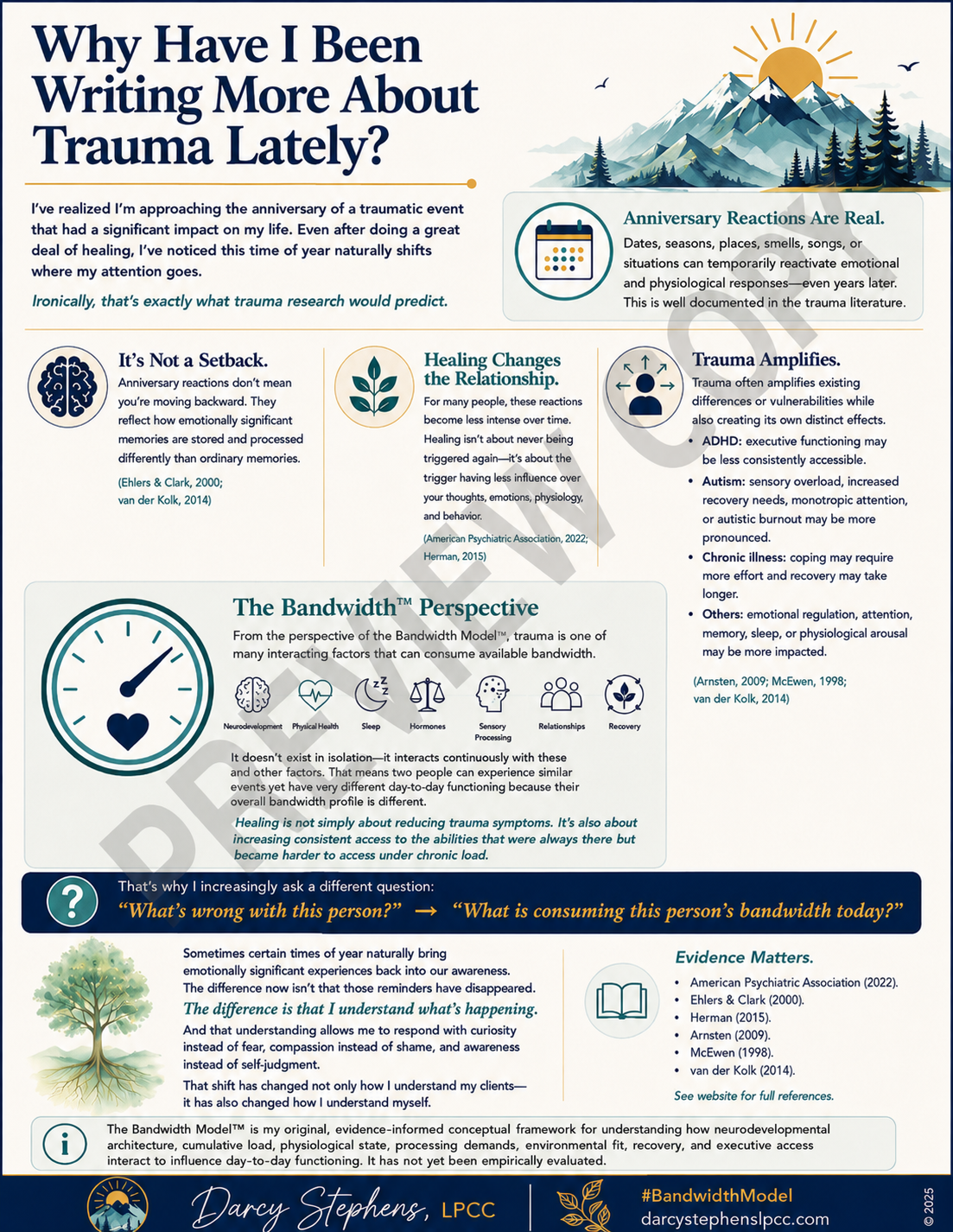
This educational handout explores the science behind anniversary reactions, why they occur, and how healing changes our relationship with traumatic memories over time. Rather than viewing renewed emotions as a setback, this resource explains how trauma can temporarily influence attention, emotion, executive functioning, and nervous system regulation while highlighting that these reactions often become less intense as healing progresses.
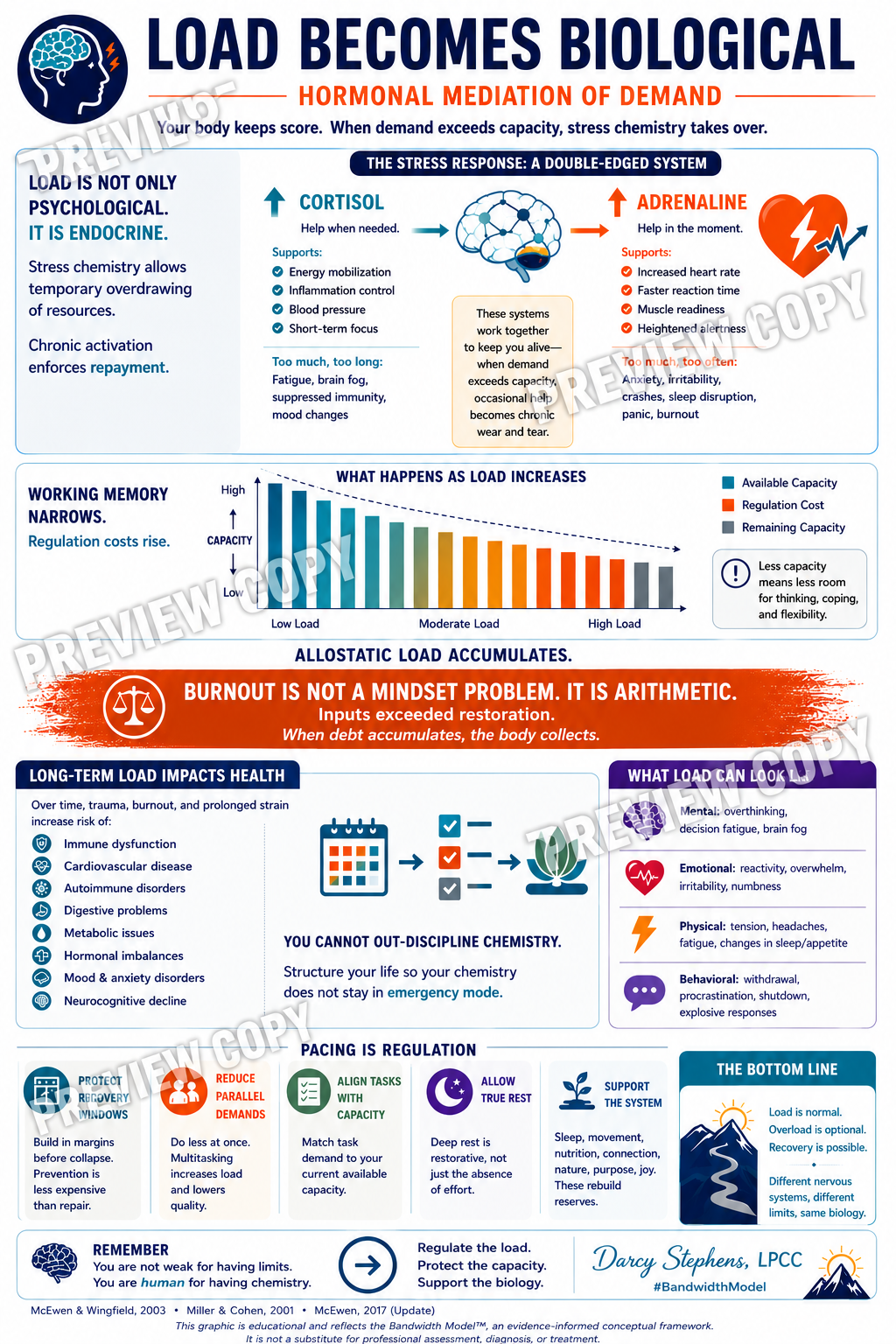
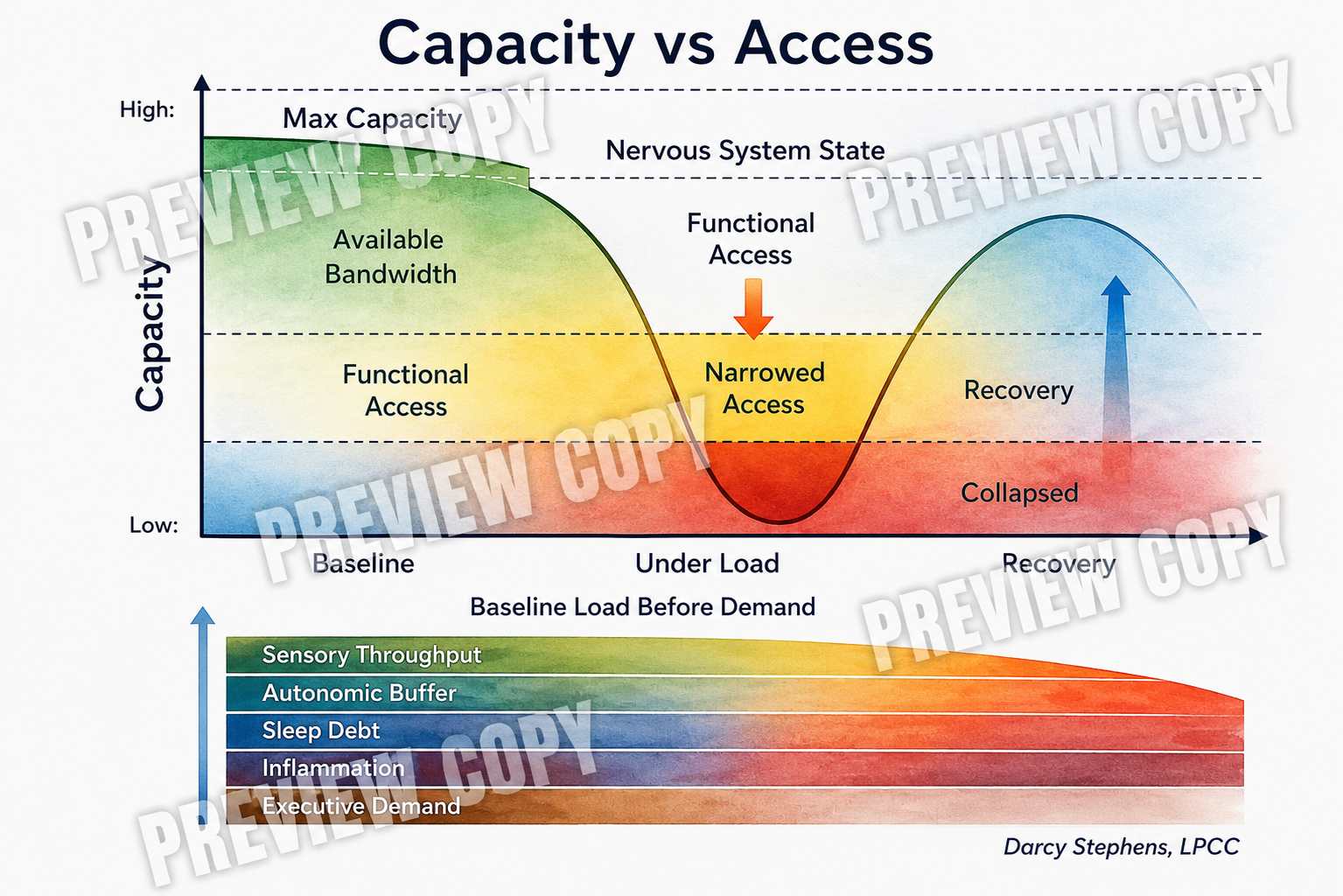
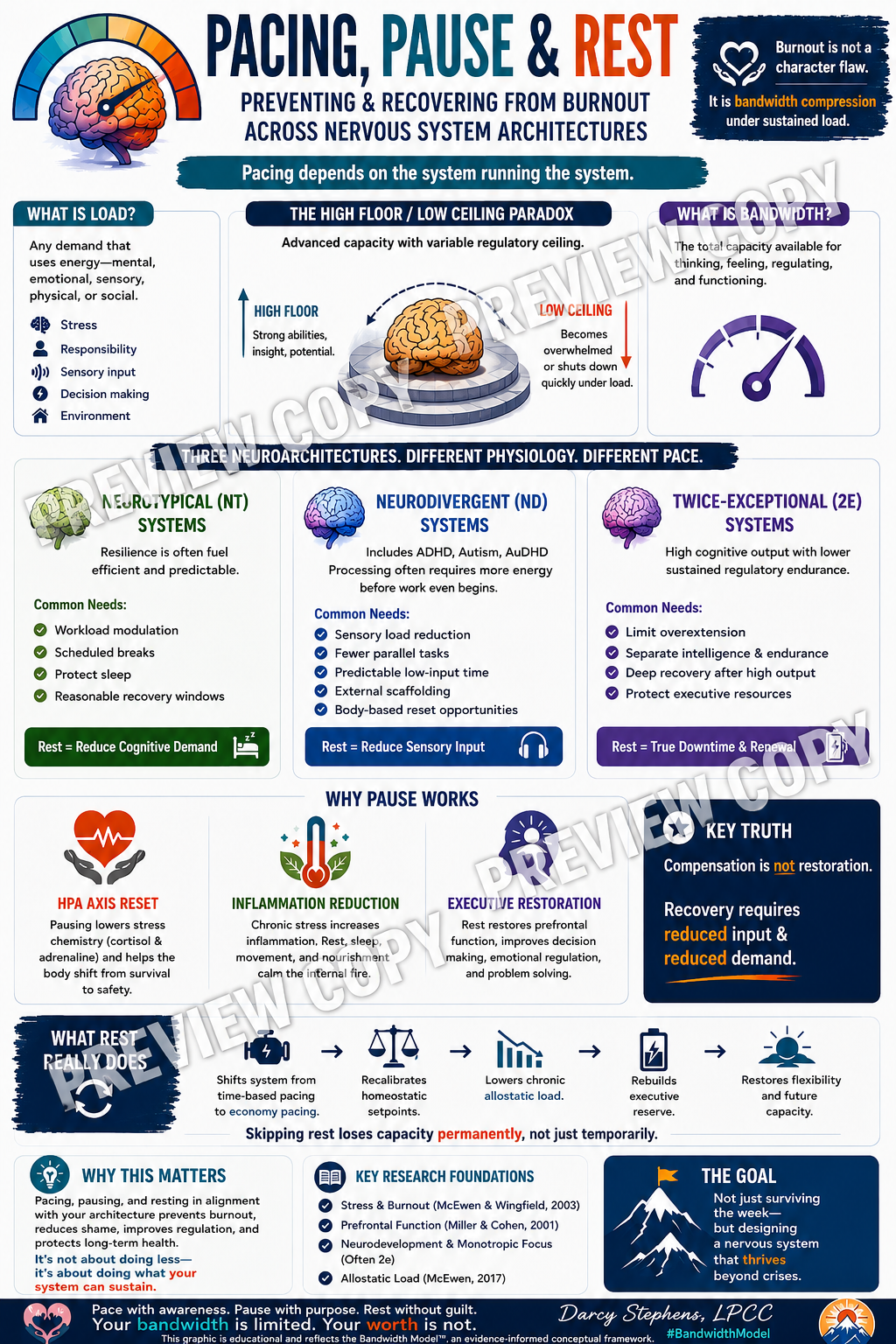
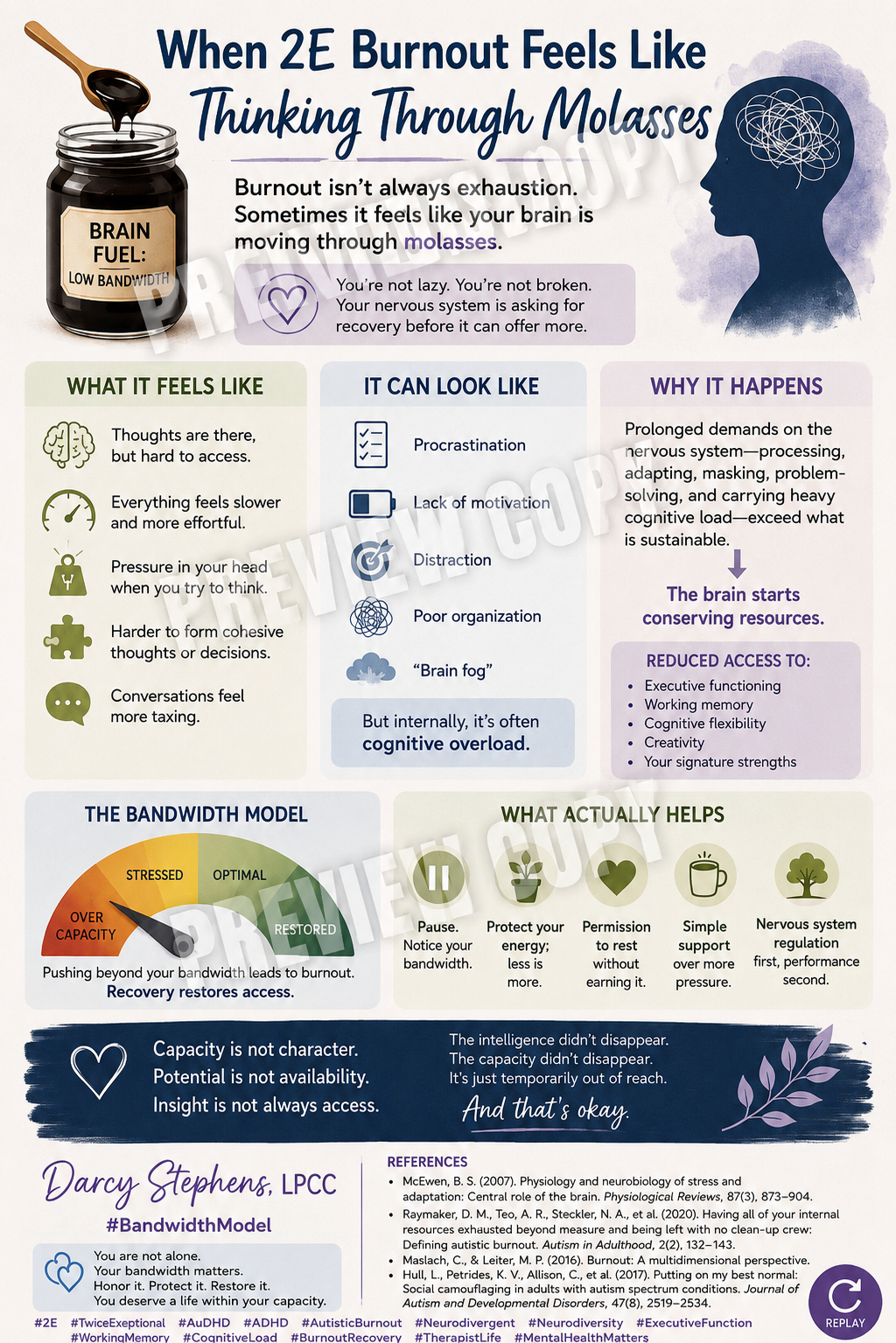
The infographic also introduces the Bandwidth Model™ perspective, illustrating how trauma is one of many interacting factors that can consume available bandwidth alongside neurodevelopment, physical health, sleep, hormones, sensory processing, relationships, and recovery. Through this lens, trauma is understood not as an isolated cause of distress but as one contributor to the overall demands placed on the nervous system.
Topics include:
Why anniversary reactions are a well-documented trauma phenomenon
How healing changes—not necessarily eliminates—trauma responses
Why trauma can amplify existing vulnerabilities such as ADHD, autism, chronic illness, and stress
The difference between asking “What’s wrong with this person?” and “What is consuming this person’s bandwidth today?”
A compassionate, neuroscience-informed perspective on recovery
Grounded in research from trauma psychology, stress physiology, neuroscience, and nervous system regulation, this resource is designed for clinicians, educators, caregivers, students, and anyone interested in understanding trauma through a more integrated, evidence-informed lens.
Please note: The Bandwidth Model™ is an original conceptual framework developed by Darcy Stephens, LPCC. It is informed by existing scientific literature but has not yet been empirically evaluated as an independent model.
Format: Digital PDF (1 page)
Author: Darcy Stephens, LPCC
Series: Bandwidth Model™ Educational Resources
Why do trauma anniversaries sometimes seem to bring old emotions back to the surface—even years later?
This educational handout explores the science behind anniversary reactions, why they occur, and how healing changes our relationship with traumatic memories over time. Rather than viewing renewed emotions as a setback, this resource explains how trauma can temporarily influence attention, emotion, executive functioning, and nervous system regulation while highlighting that these reactions often become less intense as healing progresses.
The infographic also introduces the Bandwidth Model™ perspective, illustrating how trauma is one of many interacting factors that can consume available bandwidth alongside neurodevelopment, physical health, sleep, hormones, sensory processing, relationships, and recovery. Through this lens, trauma is understood not as an isolated cause of distress but as one contributor to the overall demands placed on the nervous system.
Topics include:
Why anniversary reactions are a well-documented trauma phenomenon
How healing changes—not necessarily eliminates—trauma responses
Why trauma can amplify existing vulnerabilities such as ADHD, autism, chronic illness, and stress
The difference between asking “What’s wrong with this person?” and “What is consuming this person’s bandwidth today?”
A compassionate, neuroscience-informed perspective on recovery
Grounded in research from trauma psychology, stress physiology, neuroscience, and nervous system regulation, this resource is designed for clinicians, educators, caregivers, students, and anyone interested in understanding trauma through a more integrated, evidence-informed lens.
Please note: The Bandwidth Model™ is an original conceptual framework developed by Darcy Stephens, LPCC. It is informed by existing scientific literature but has not yet been empirically evaluated as an independent model.
Format: Digital PDF (1 page)
Author: Darcy Stephens, LPCC
Series: Bandwidth Model™ Educational Resources