 Image 1 of 1
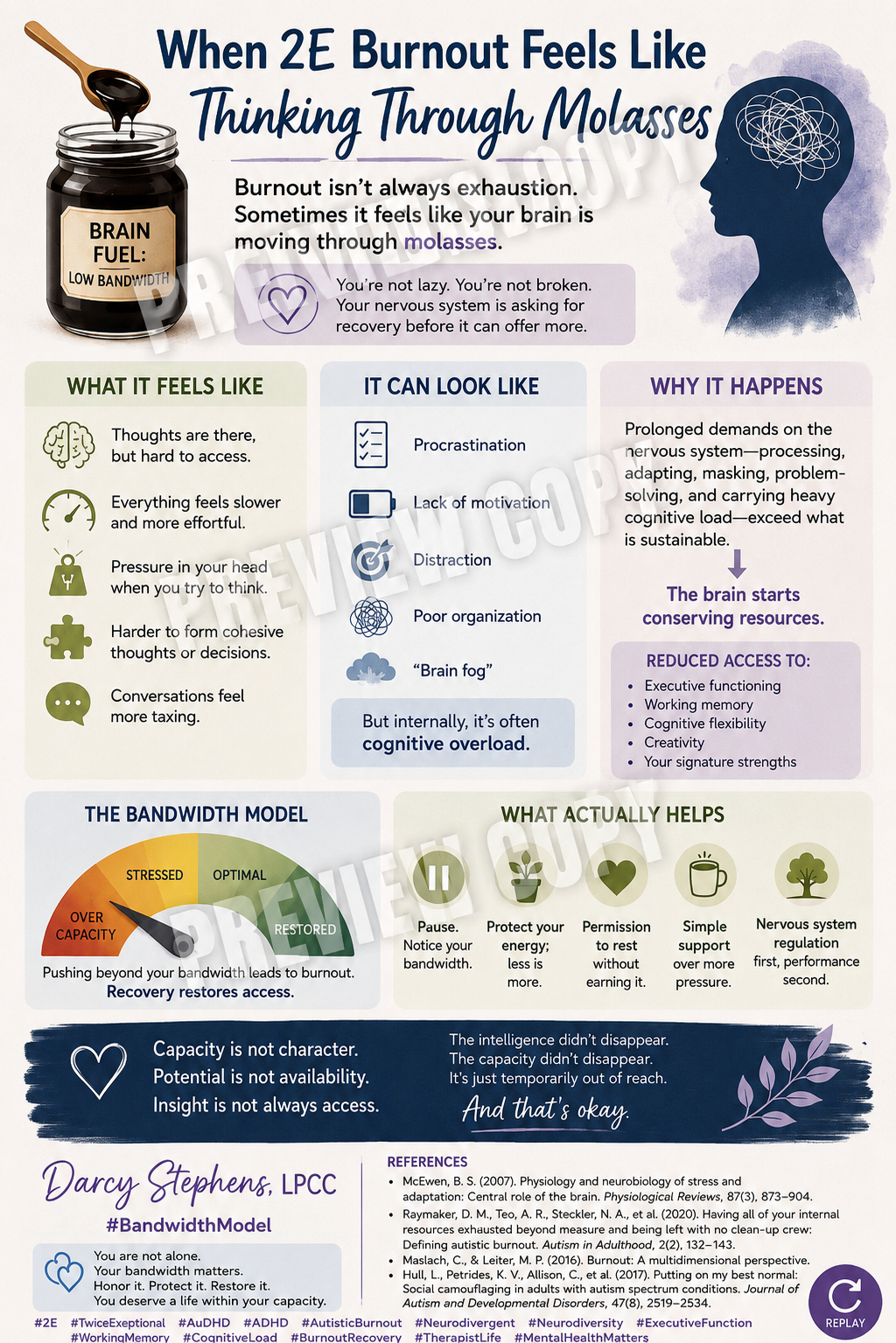
When 2E Burnout Feels Like Thinking Through Molasses
Burnout isn't always obvious.
Sometimes it doesn't look like exhaustion—it feels like your thoughts are just out of reach.
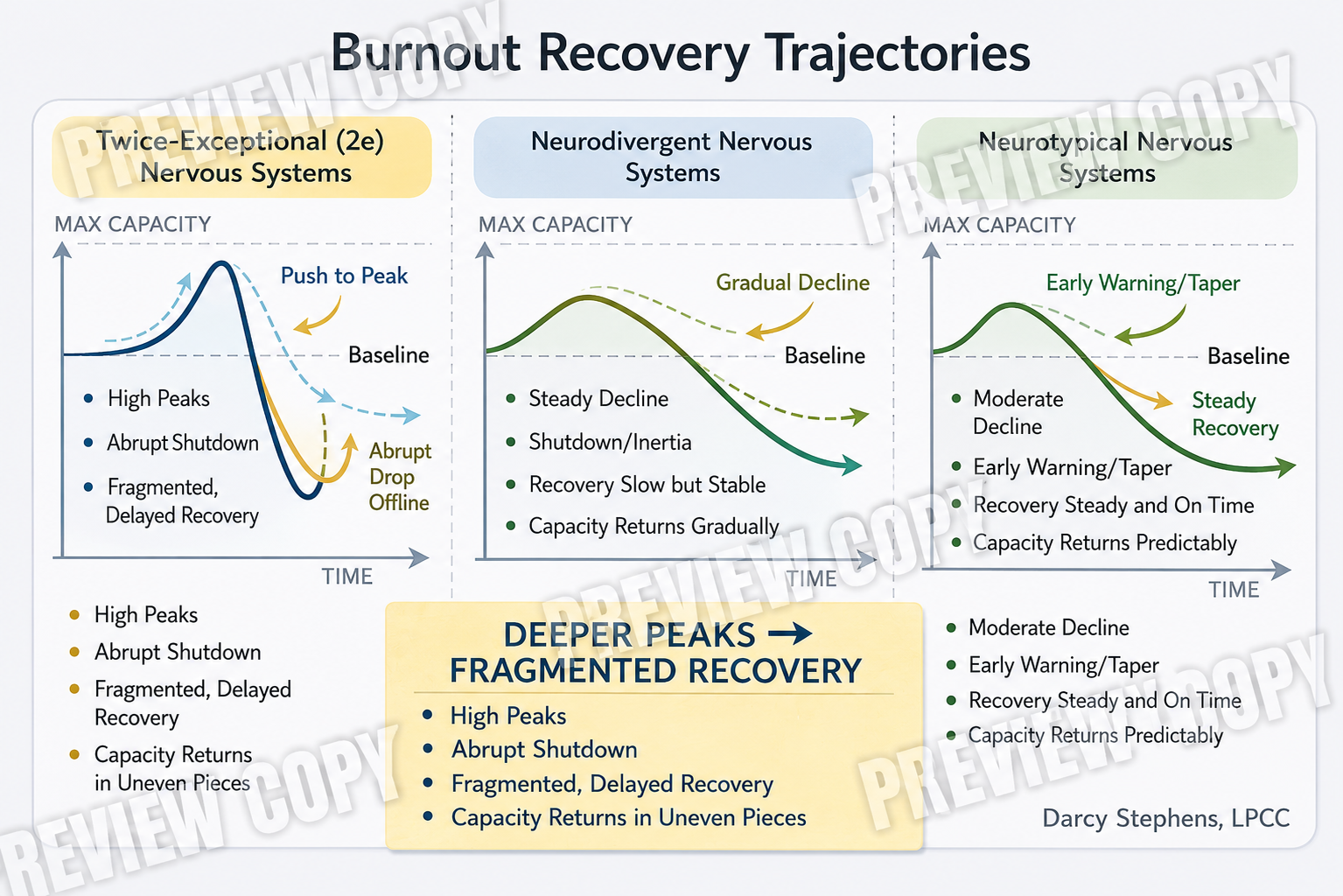
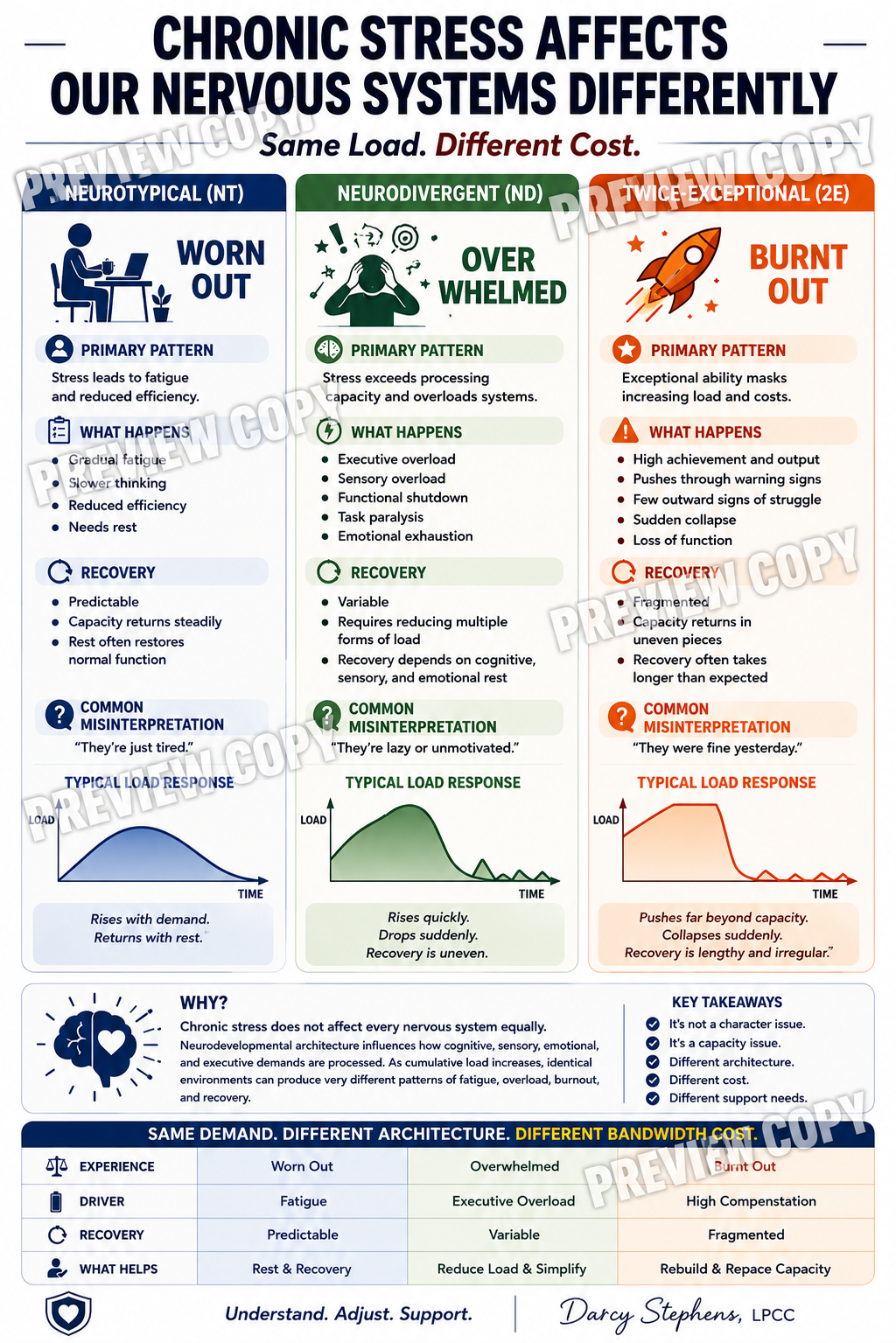
This educational PDF explores one of the most common yet least understood experiences of neurodivergent burnout: the feeling that your intelligence is still there, but access to it has temporarily narrowed.
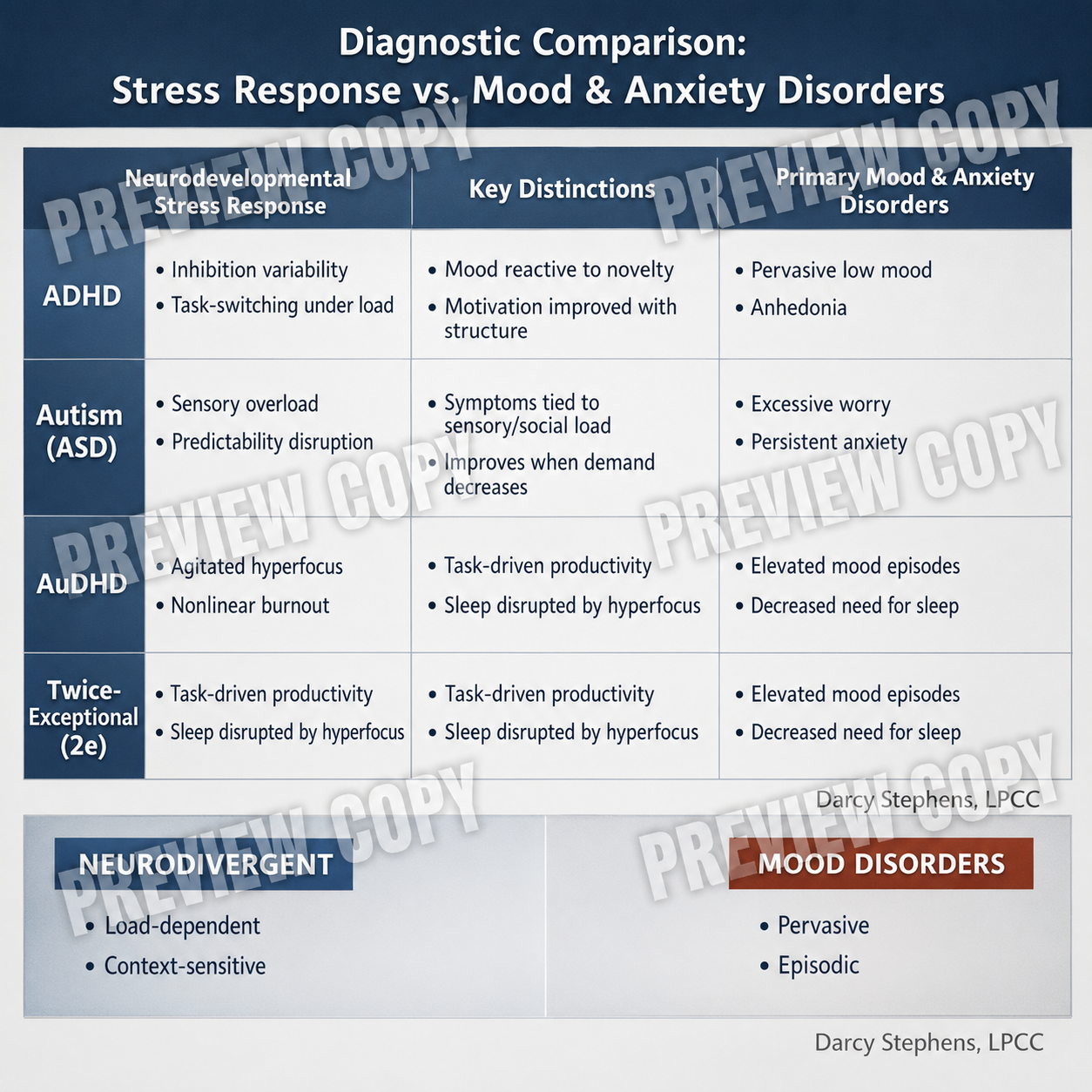
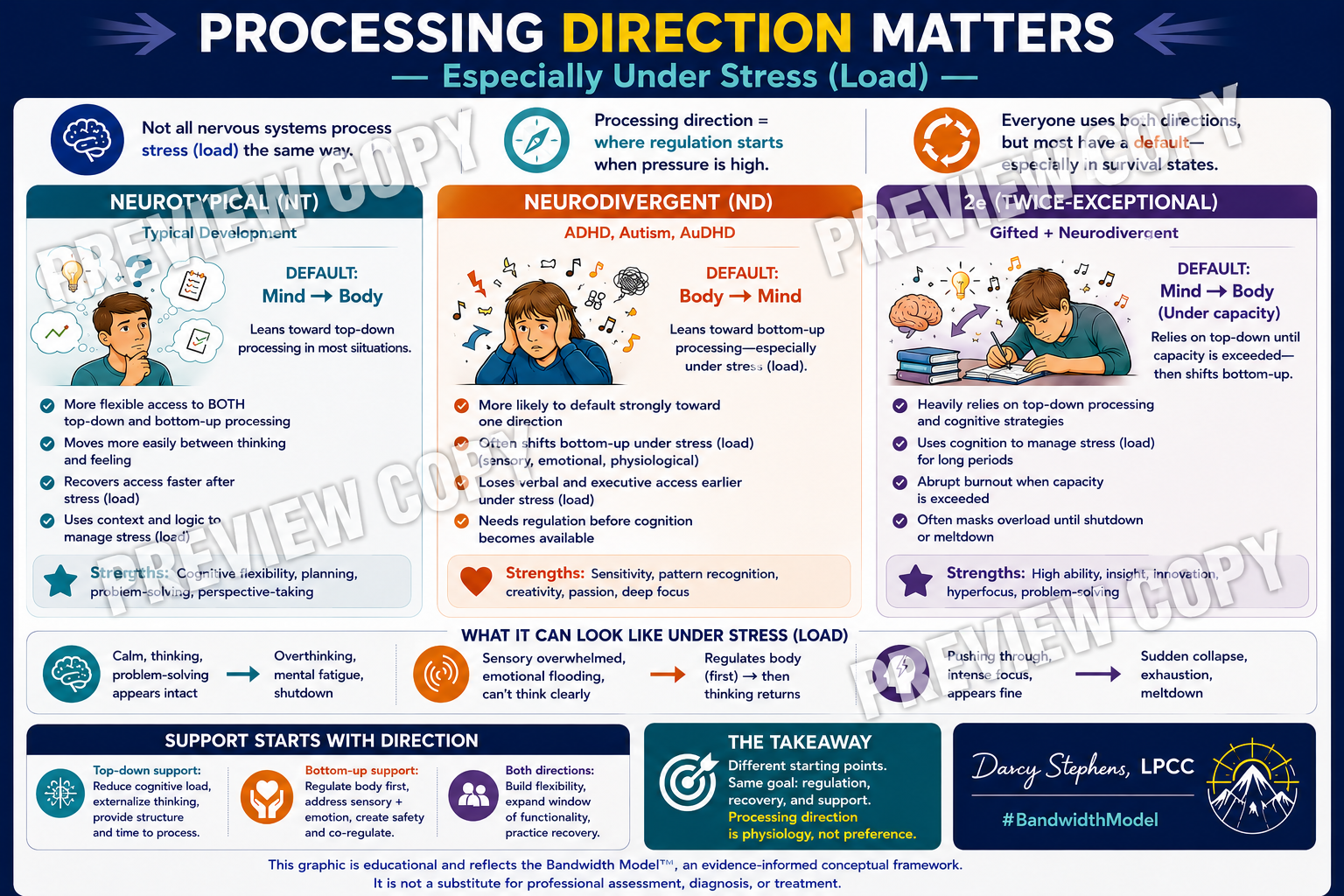
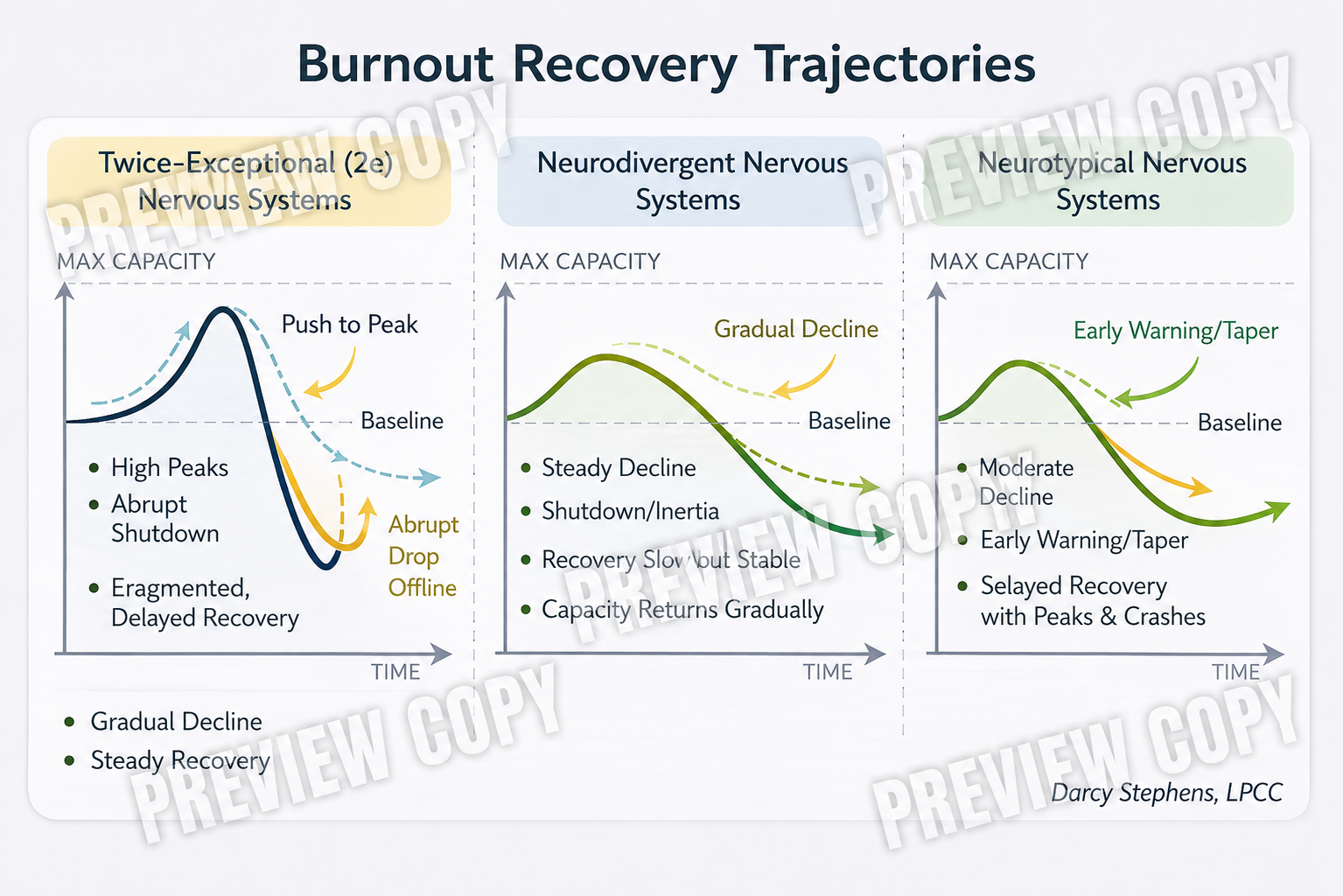
Using the Bandwidth Model™, this guide explains why prolonged cognitive, sensory, emotional, and executive demands can reduce moment-to-moment access to thinking, planning, memory, creativity, and decision-making—without changing your underlying ability.
Inside you'll learn:
Why burnout can feel like "thinking through molasses"
Why brain fog is often a bandwidth issue rather than a motivation problem
How chronic cognitive load affects executive functioning
Why available capacity differs from potential
Signs of cognitive overload that are often misunderstood
Practical recovery principles that support nervous system restoration
The Bandwidth Model™ explanation of burnout and functional access
This resource is designed for neurodivergent adults, twice-exceptional (2e) individuals, clinicians, educators, coaches, caregivers, and anyone seeking a more compassionate understanding of cognitive burnout.
Digital Download
High-resolution PDF
Printable
Personal educational use
Important Note: The Bandwidth Model™ is an evidence-informed conceptual framework developed by Darcy Stephens, LPCC. It is intended to complement—not replace—professional assessment, diagnosis, or treatment.
When 2E Burnout Feels Like Thinking Through Molasses
Burnout isn't always obvious.
Sometimes it doesn't look like exhaustion—it feels like your thoughts are just out of reach.
This educational PDF explores one of the most common yet least understood experiences of neurodivergent burnout: the feeling that your intelligence is still there, but access to it has temporarily narrowed.
Using the Bandwidth Model™, this guide explains why prolonged cognitive, sensory, emotional, and executive demands can reduce moment-to-moment access to thinking, planning, memory, creativity, and decision-making—without changing your underlying ability.
Inside you'll learn:
Why burnout can feel like "thinking through molasses"
Why brain fog is often a bandwidth issue rather than a motivation problem
How chronic cognitive load affects executive functioning
Why available capacity differs from potential
Signs of cognitive overload that are often misunderstood
Practical recovery principles that support nervous system restoration
The Bandwidth Model™ explanation of burnout and functional access
This resource is designed for neurodivergent adults, twice-exceptional (2e) individuals, clinicians, educators, coaches, caregivers, and anyone seeking a more compassionate understanding of cognitive burnout.
Digital Download
High-resolution PDF
Printable
Personal educational use
Important Note: The Bandwidth Model™ is an evidence-informed conceptual framework developed by Darcy Stephens, LPCC. It is intended to complement—not replace—professional assessment, diagnosis, or treatment.