 Image 1 of 1
State ≠ Architecture ≠ Pattern
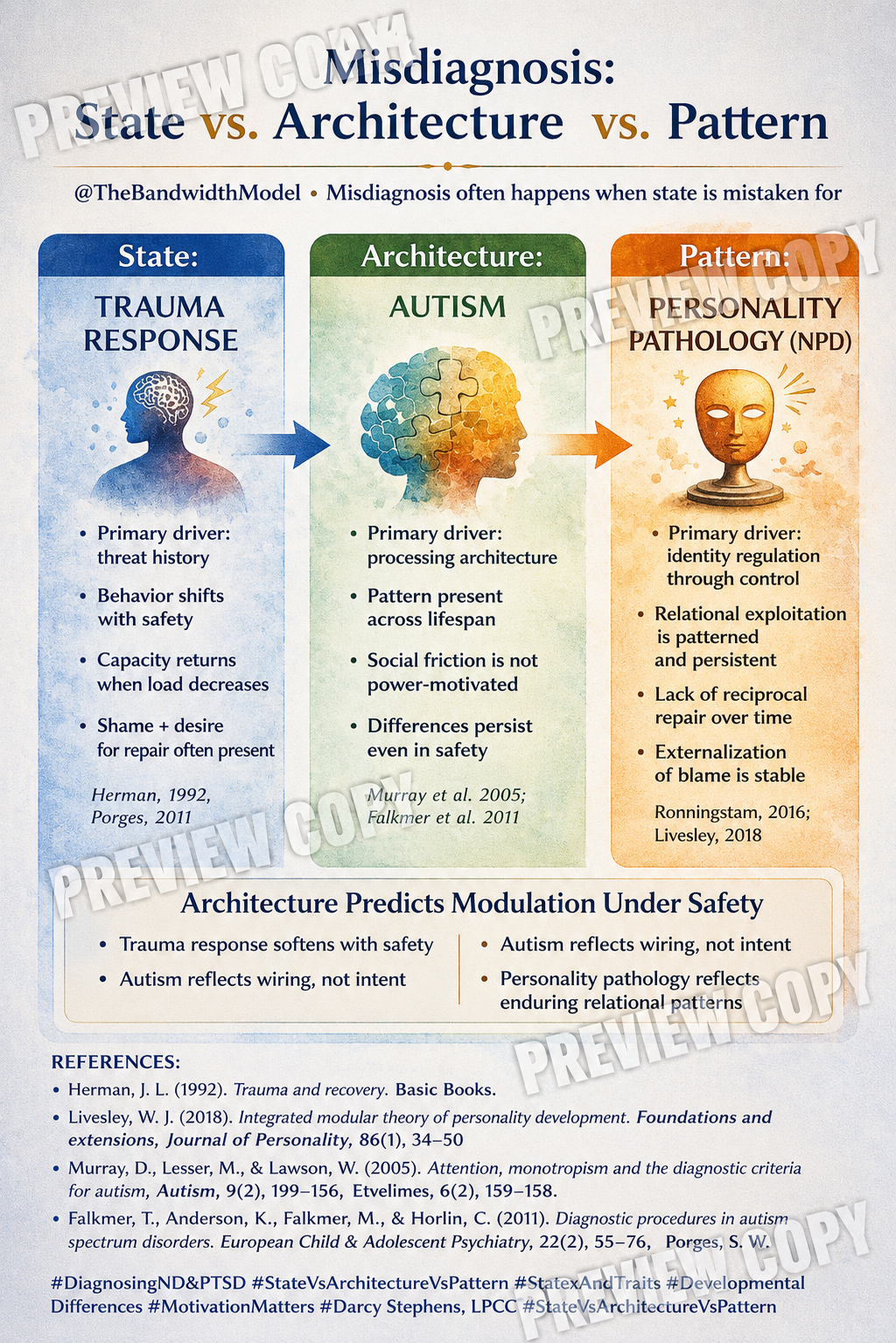
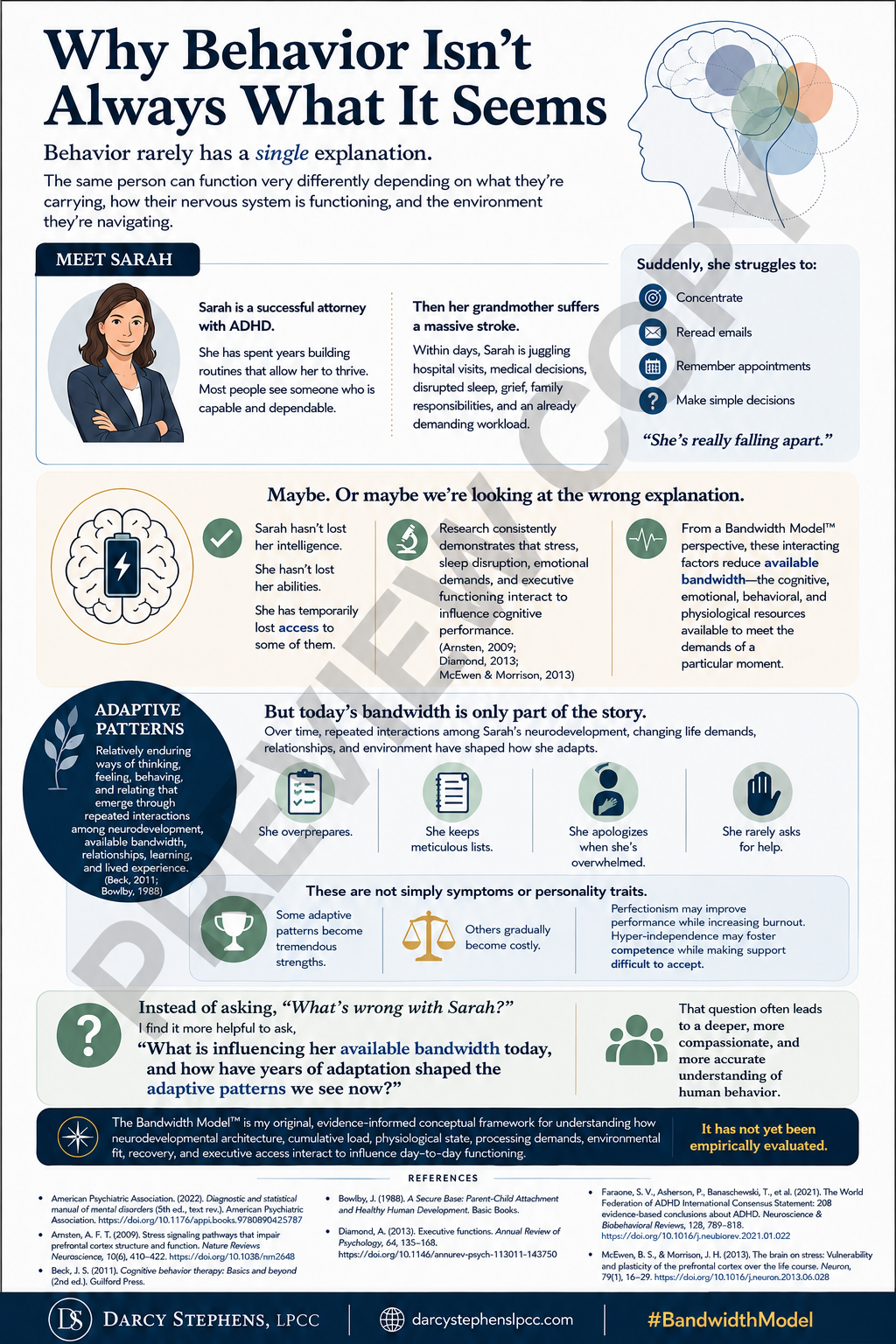
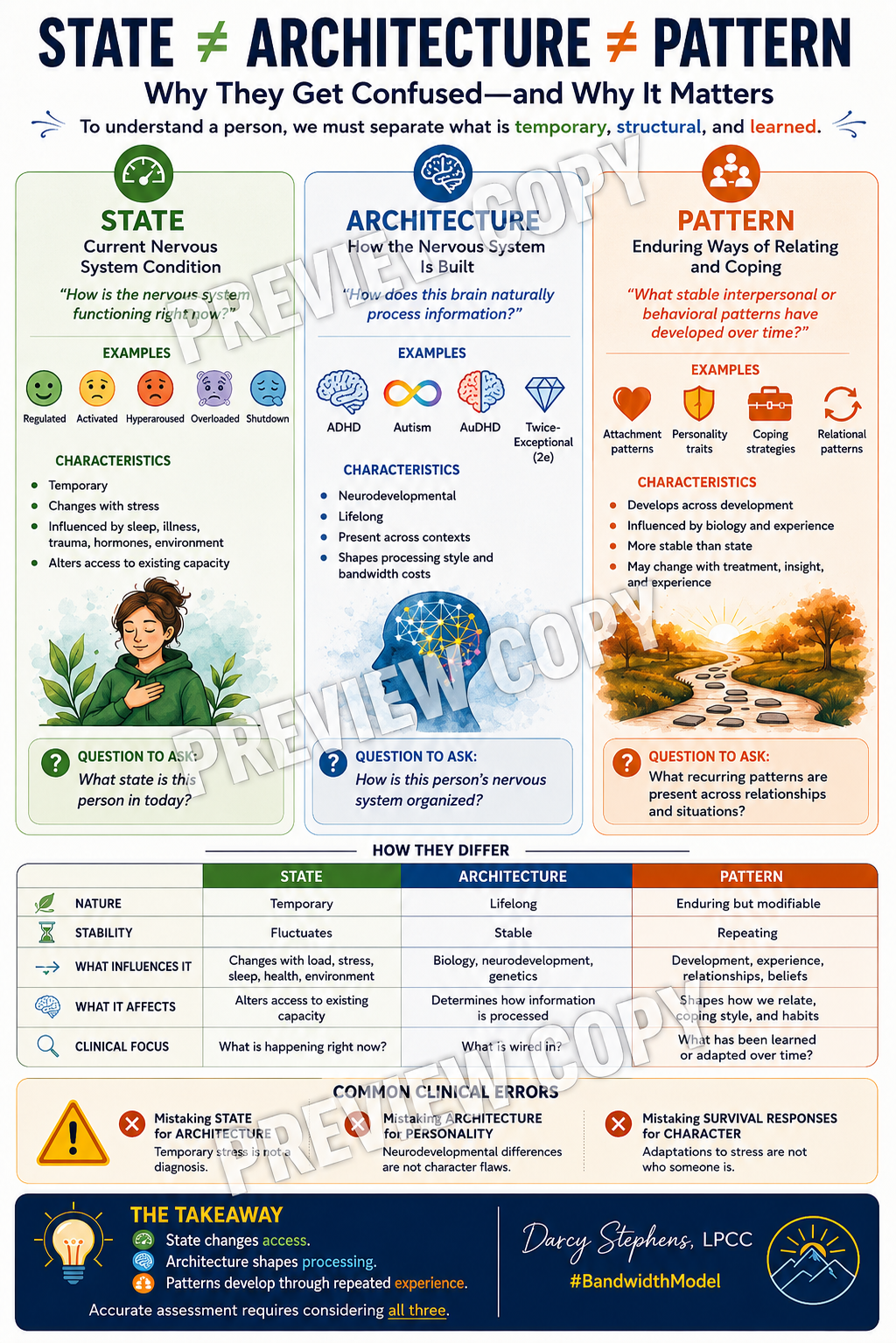
Why do clinicians sometimes confuse temporary stress responses with lifelong neurodevelopmental differences—or mistake either for enduring personality patterns? This clinical reference infographic introduces a practical framework for distinguishing state, architecture, and pattern during assessment and case conceptualization. Drawing from the Bandwidth Model™, it illustrates how current nervous system state, neurodevelopmental architecture, and learned relational patterns each influence behavior in different ways and require different clinical questions. By separating what is temporary, structural, and learned, this resource supports more accurate differential diagnosis while reducing the risk of misinterpreting survival responses as personality or neurodevelopmental differences.
Designed for mental health professionals, educators, graduate students, and neurodivergent individuals, this infographic provides a concise visual guide to understanding why effective assessment begins with identifying what is happening now, how the nervous system is organized, and what enduring patterns have developed over time.
Educational resource only. This handout reflects current research and clinical concepts and incorporates the author's Bandwidth Model™, an evidence-informed conceptual framework for understanding how neurodevelopmental architecture, nervous system state, cumulative load, and learned patterns interact to influence day-to-day functioning. The Bandwidth Model™ has not yet been empirically evaluated and should be considered a conceptual framework rather than an established scientific model. This resource is intended for educational purposes and should not be used as a substitute for comprehensive clinical assessment, diagnosis, or professional medical or mental health care.
State ≠ Architecture ≠ Pattern
Why do clinicians sometimes confuse temporary stress responses with lifelong neurodevelopmental differences—or mistake either for enduring personality patterns? This clinical reference infographic introduces a practical framework for distinguishing state, architecture, and pattern during assessment and case conceptualization. Drawing from the Bandwidth Model™, it illustrates how current nervous system state, neurodevelopmental architecture, and learned relational patterns each influence behavior in different ways and require different clinical questions. By separating what is temporary, structural, and learned, this resource supports more accurate differential diagnosis while reducing the risk of misinterpreting survival responses as personality or neurodevelopmental differences.
Designed for mental health professionals, educators, graduate students, and neurodivergent individuals, this infographic provides a concise visual guide to understanding why effective assessment begins with identifying what is happening now, how the nervous system is organized, and what enduring patterns have developed over time.
Educational resource only. This handout reflects current research and clinical concepts and incorporates the author's Bandwidth Model™, an evidence-informed conceptual framework for understanding how neurodevelopmental architecture, nervous system state, cumulative load, and learned patterns interact to influence day-to-day functioning. The Bandwidth Model™ has not yet been empirically evaluated and should be considered a conceptual framework rather than an established scientific model. This resource is intended for educational purposes and should not be used as a substitute for comprehensive clinical assessment, diagnosis, or professional medical or mental health care.