 Image 1 of 1
PTSD Through a Bandwidth Lens™: Why Trauma Can Look Different Across Neurodevelopmental Architectures (PDF Infographic)
Why do two people sometimes experience similar traumatic events yet develop very different symptoms afterward?
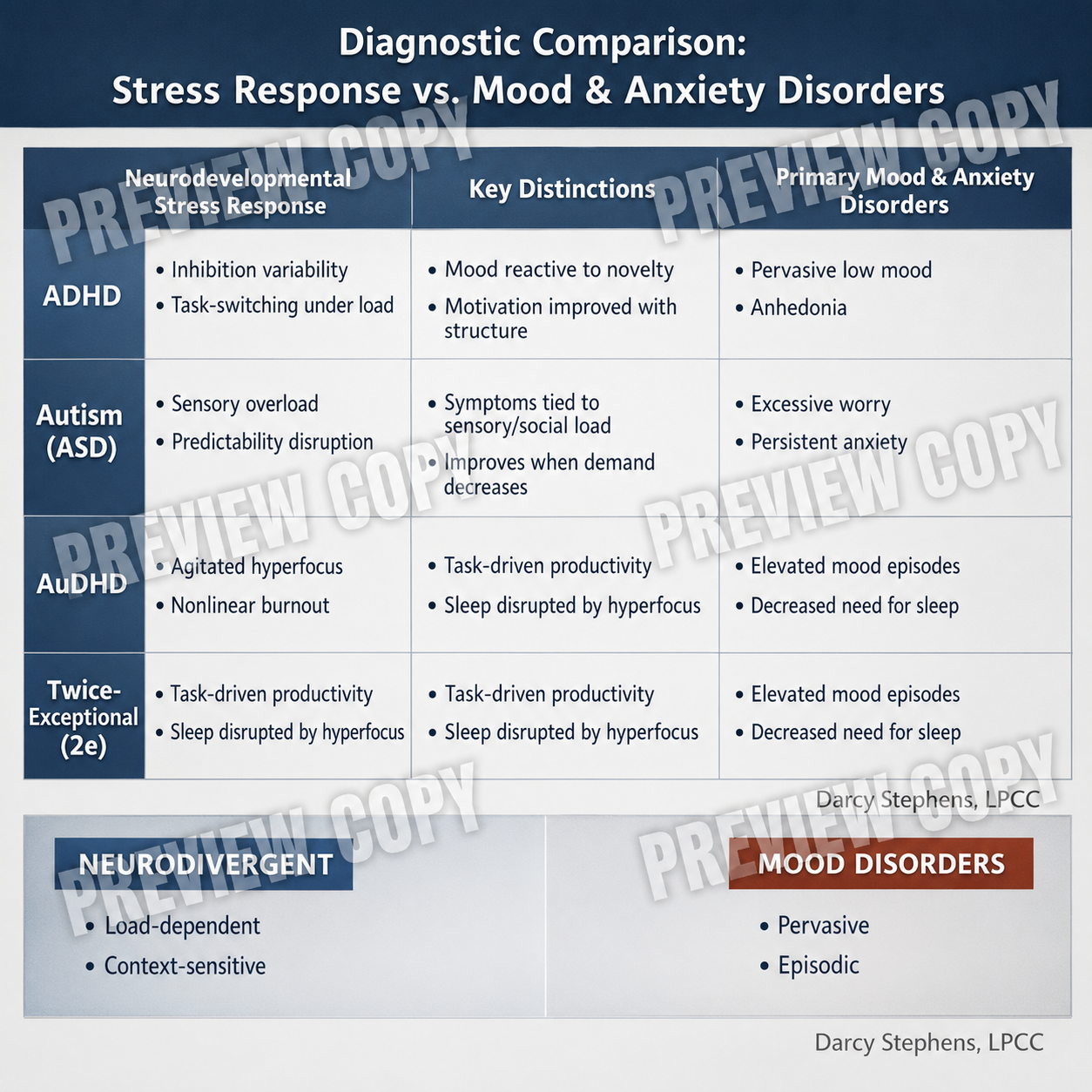
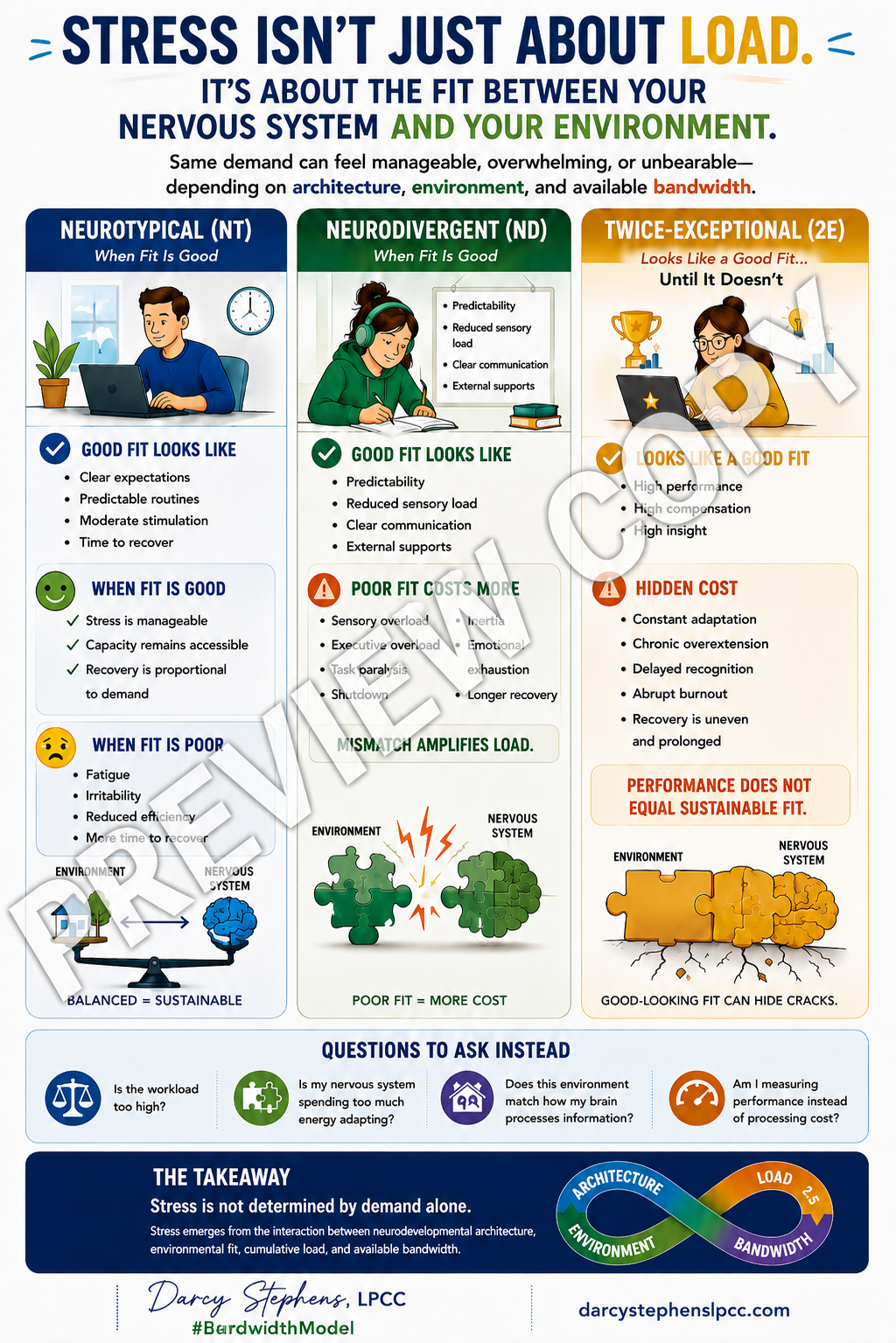
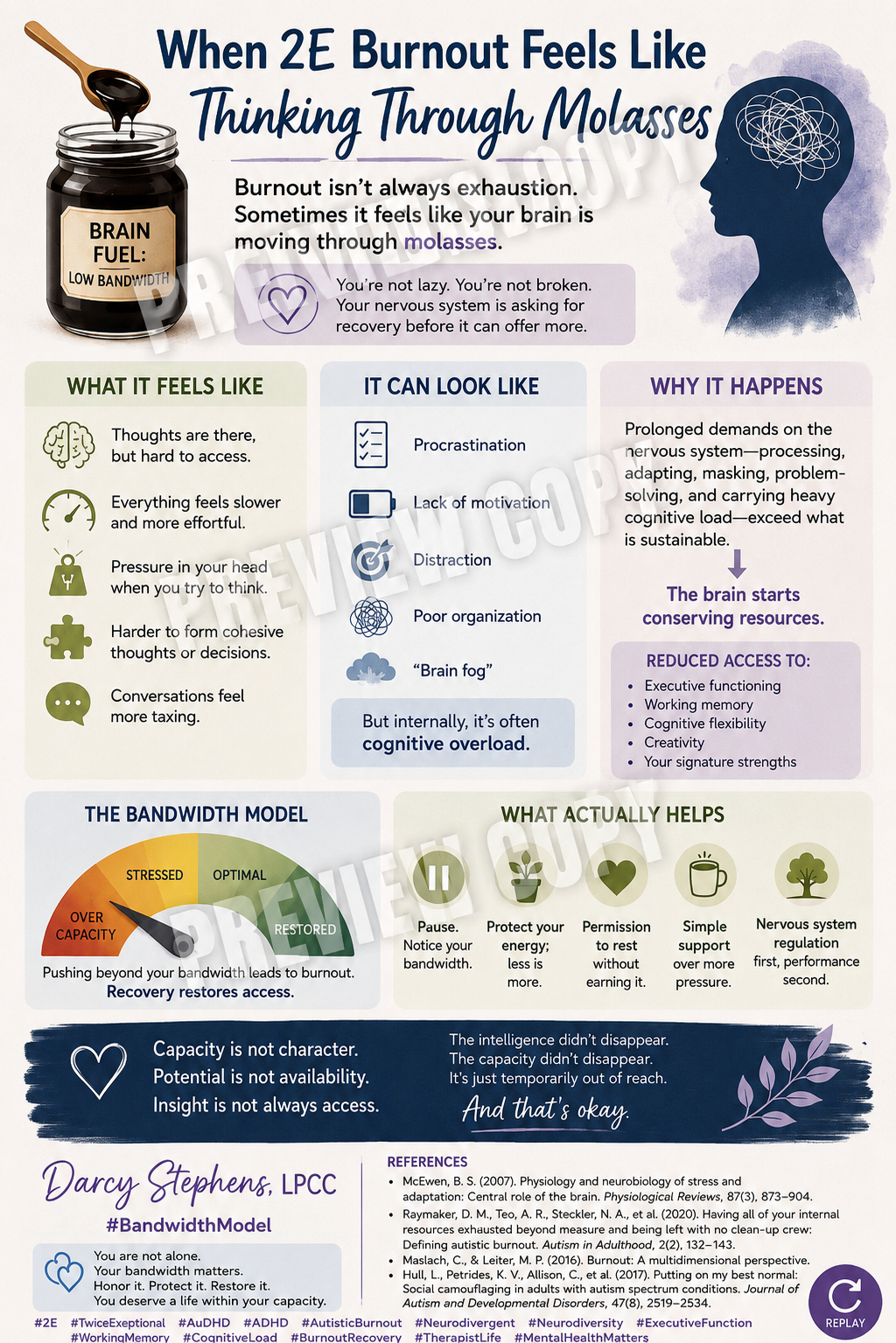
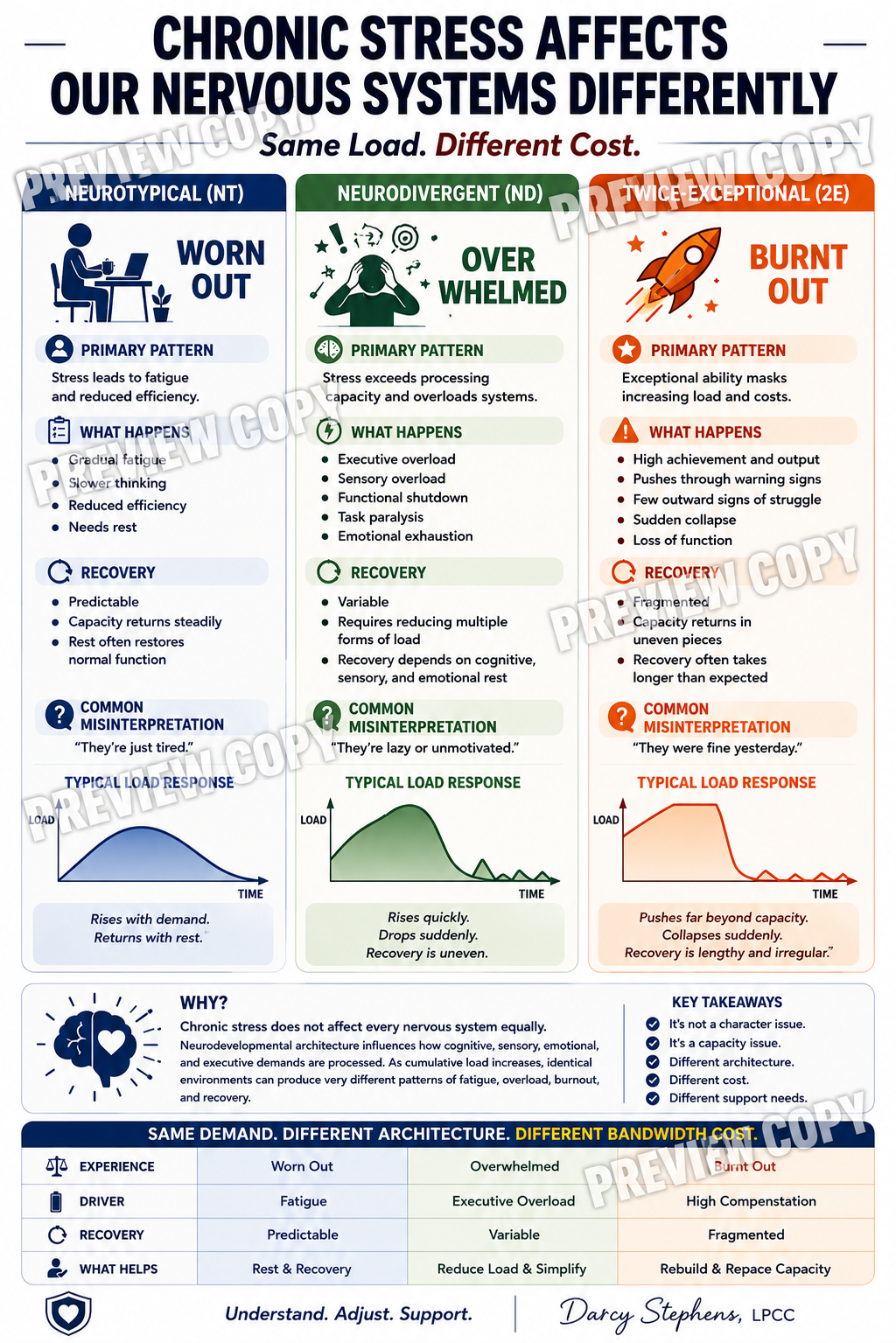
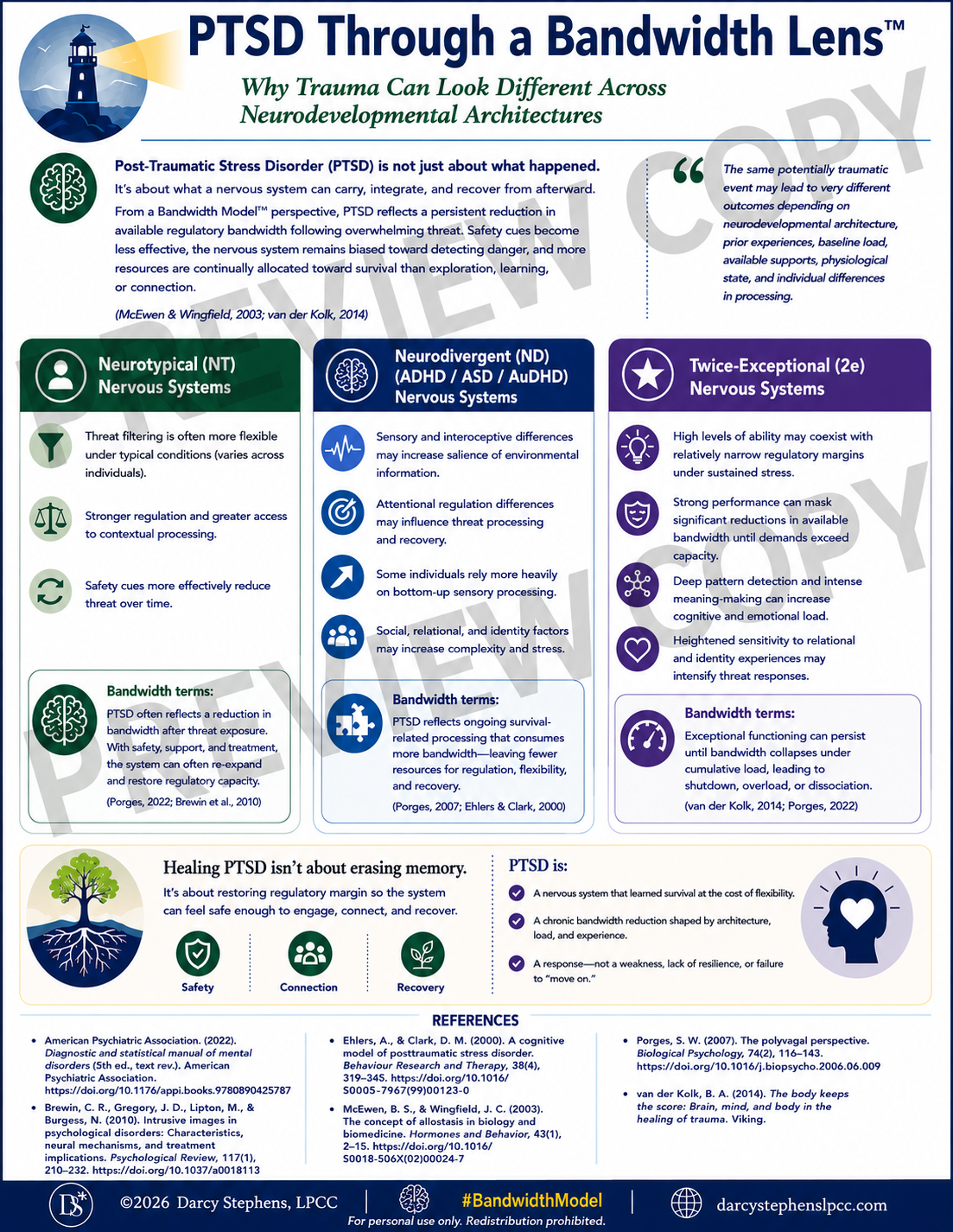
This educational infographic explores that question through the Bandwidth Model™, an original conceptual framework that integrates neuroscience, trauma research, executive functioning, and neurodevelopment into a broader way of understanding human functioning.
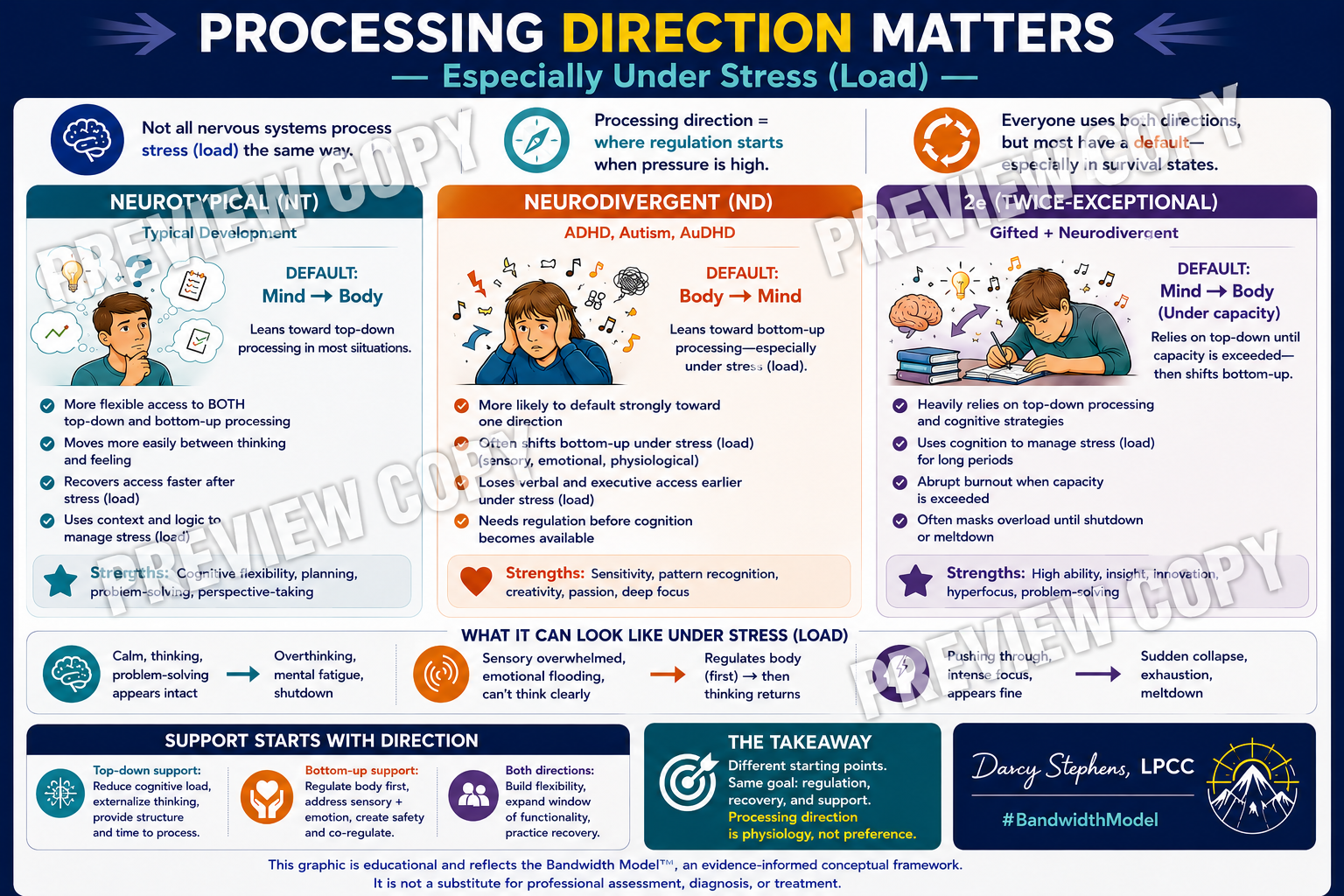
Using an evidence-informed approach, this infographic examines how PTSD may present differently across neurotypical, neurodivergent (ADHD, autism, AuDHD), and twice-exceptional (2e) nervous systems while emphasizing that individual differences, prior experiences, physiology, and environmental context all contribute to post-traumatic outcomes.
Why PTSD involves more than remembering a traumatic event.
How chronic survival-oriented processing can reduce available regulatory bandwidth.
Why trauma may present differently across individuals with different neurodevelopmental architectures.
How adaptive patterns can emerge through repeated interactions among neurodevelopment, stress, and lived experience.
Why restoring regulatory capacity—not simply eliminating memories—is a central goal of trauma recovery.
Mental health professionals
Trauma therapists
Psychology students
Social workers
Educators
Coaches
Neurodivergent adults and families
Anyone interested in understanding trauma through an evidence-informed lens
Format: Digital PDF Download
Author: Darcy Stephens, LPCC
Educational Use Only
The Bandwidth Model™ is an original conceptual framework developed by Darcy Stephens, LPCC. It is informed by research in neuroscience, psychology, trauma, executive functioning, and neurodevelopment. The model has not yet been empirically evaluated and is intended to complement—not replace—existing diagnostic systems and evidence-based approaches.
PTSD Through a Bandwidth Lens™: Why Trauma Can Look Different Across Neurodevelopmental Architectures (PDF Infographic)
Why do two people sometimes experience similar traumatic events yet develop very different symptoms afterward?
This educational infographic explores that question through the Bandwidth Model™, an original conceptual framework that integrates neuroscience, trauma research, executive functioning, and neurodevelopment into a broader way of understanding human functioning.
Using an evidence-informed approach, this infographic examines how PTSD may present differently across neurotypical, neurodivergent (ADHD, autism, AuDHD), and twice-exceptional (2e) nervous systems while emphasizing that individual differences, prior experiences, physiology, and environmental context all contribute to post-traumatic outcomes.
Why PTSD involves more than remembering a traumatic event.
How chronic survival-oriented processing can reduce available regulatory bandwidth.
Why trauma may present differently across individuals with different neurodevelopmental architectures.
How adaptive patterns can emerge through repeated interactions among neurodevelopment, stress, and lived experience.
Why restoring regulatory capacity—not simply eliminating memories—is a central goal of trauma recovery.
Mental health professionals
Trauma therapists
Psychology students
Social workers
Educators
Coaches
Neurodivergent adults and families
Anyone interested in understanding trauma through an evidence-informed lens
Format: Digital PDF Download
Author: Darcy Stephens, LPCC
Educational Use Only
The Bandwidth Model™ is an original conceptual framework developed by Darcy Stephens, LPCC. It is informed by research in neuroscience, psychology, trauma, executive functioning, and neurodevelopment. The model has not yet been empirically evaluated and is intended to complement—not replace—existing diagnostic systems and evidence-based approaches.