 Image 1 of 1
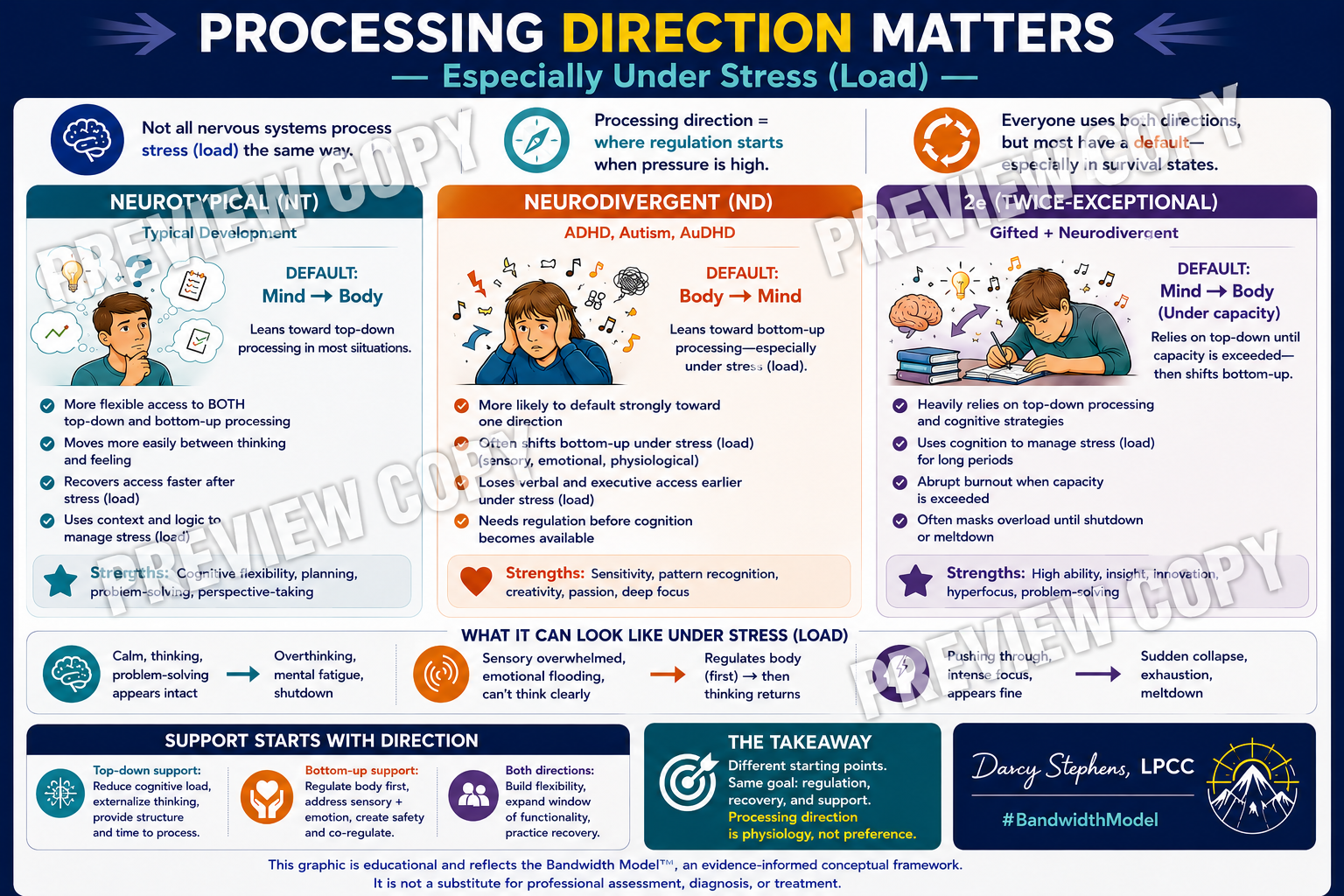
Not all nervous systems regulate stress in the same way. Some people naturally begin with top-down processing, relying on thinking, reasoning, and cognitive strategies before their body settles. Others begin with bottom-up processing, where sensory input, physiology, and emotional regulation must occur before higher-level thinking becomes fully accessible. This infographic explores how processing direction influences behavior under stress and why recognizing these differences leads to more effective support.
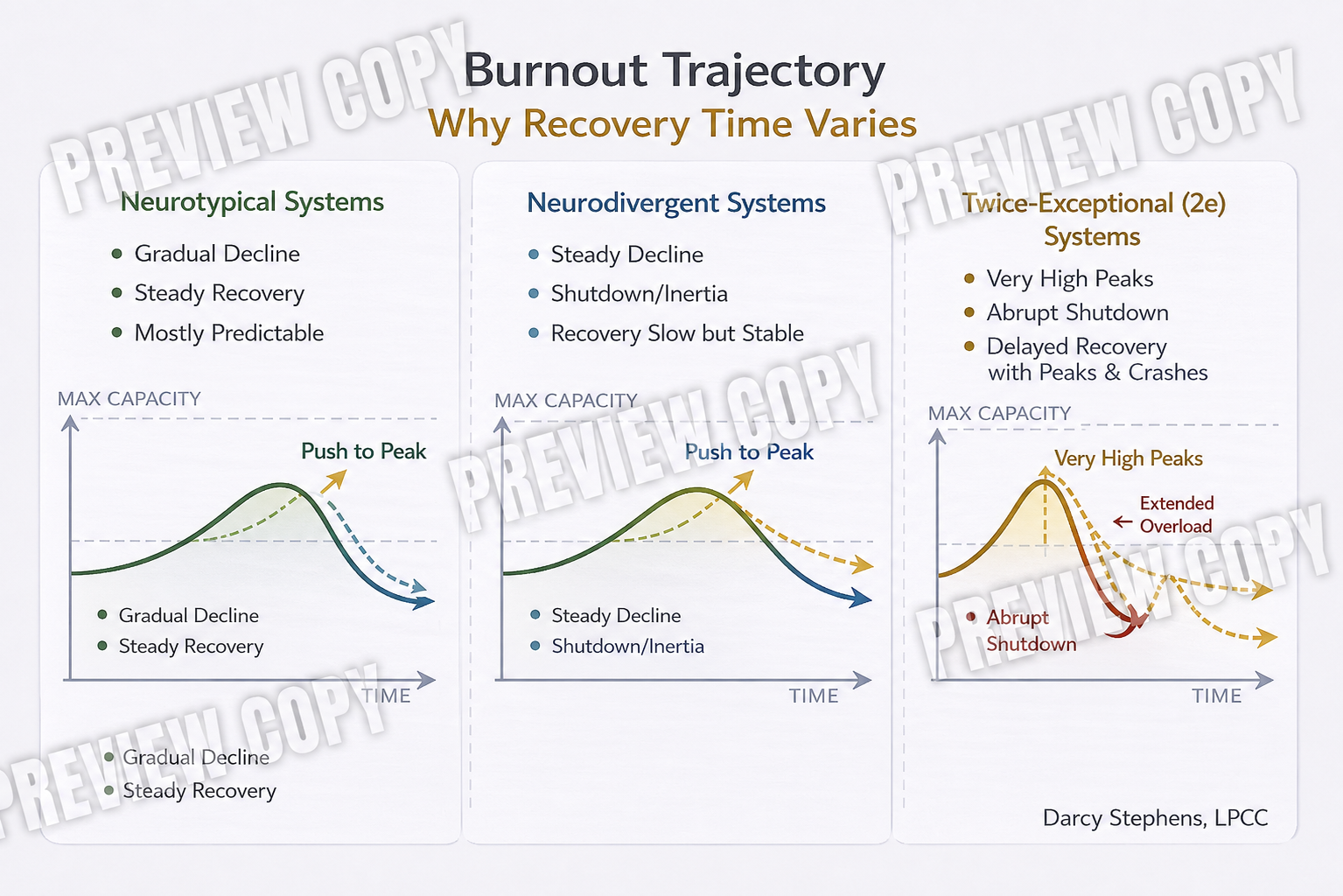
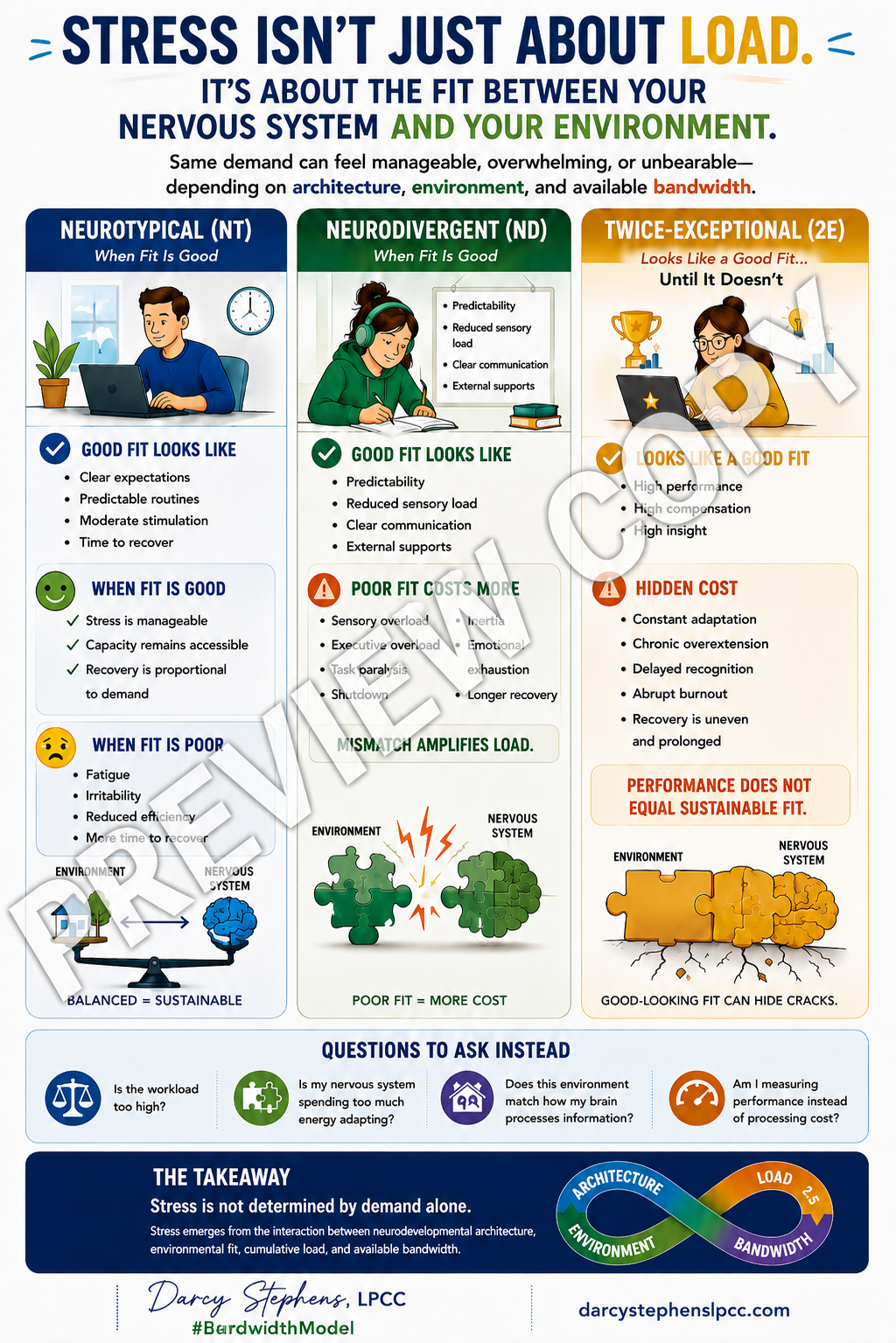
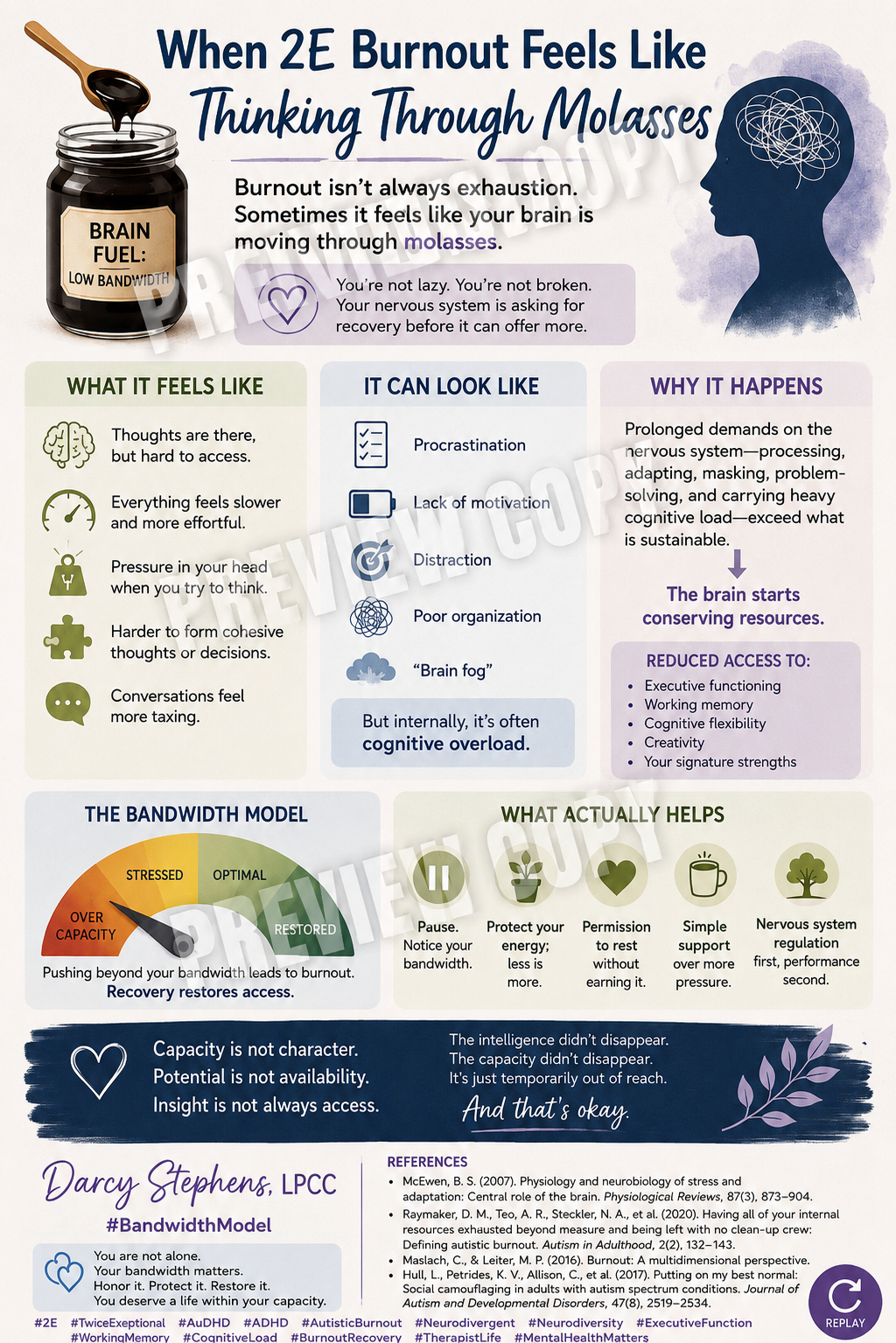
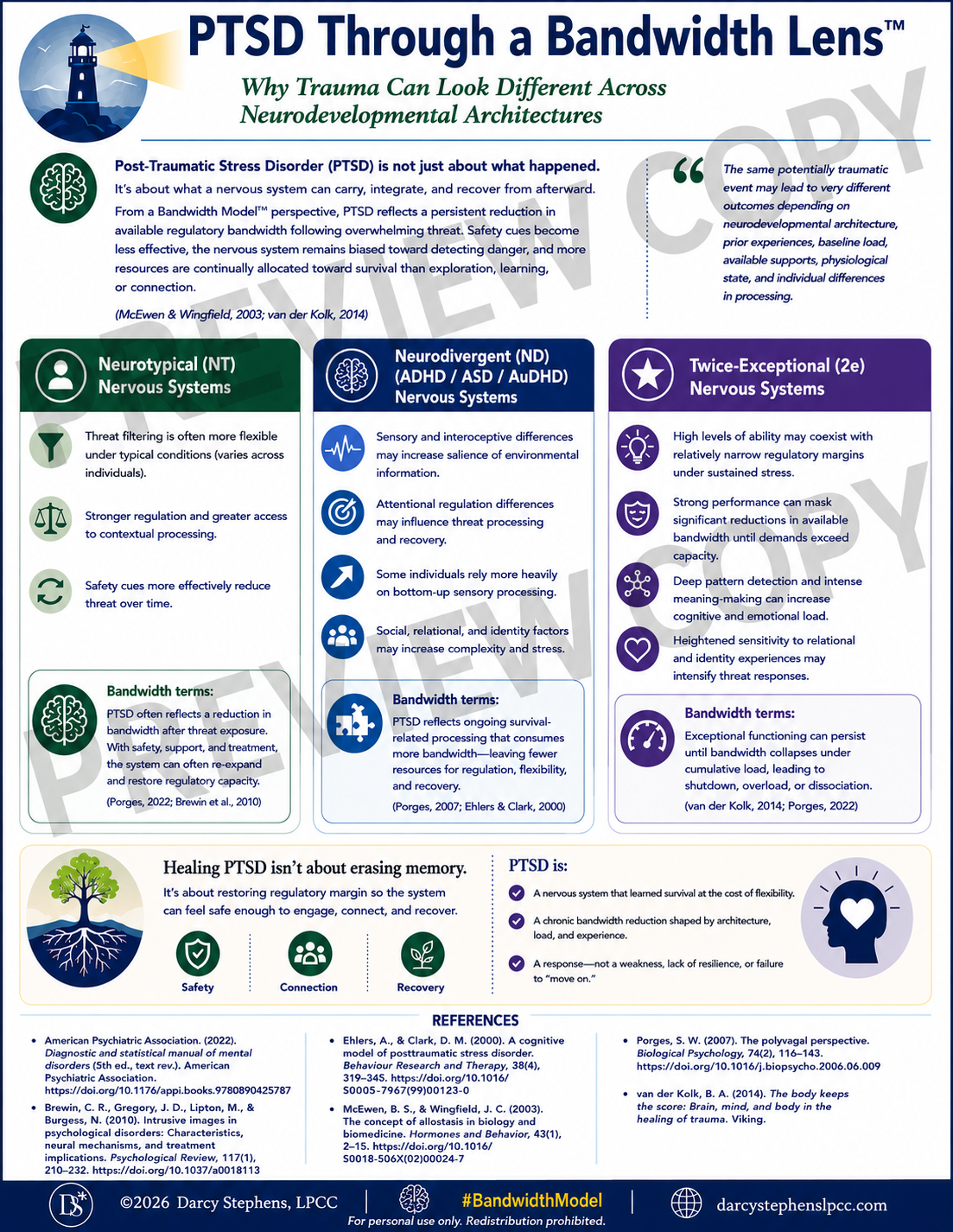
Drawing on the Bandwidth Model™, this visual guide compares common processing patterns across neurotypical, neurodivergent, and twice-exceptional (2e) nervous systems while emphasizing that everyone uses both directions. The key difference is where regulation naturally starts when bandwidth narrows under load.
You'll learn:
The difference between top-down (mind → body) and bottom-up (body → mind) regulation
Why neurotypical, neurodivergent, and twice-exceptional nervous systems often default to different processing directions under stress
How overload changes executive functioning, language access, emotional regulation, and behavior
Why processing direction reflects nervous system physiology rather than motivation or personality
Practical support strategies that match an individual's natural pathway back to regulation
This resource is designed for clinicians, educators, caregivers, graduate students, and neurodivergent individuals seeking a deeper understanding of how different nervous systems respond to stress and why matching intervention to processing style can improve communication, reduce misunderstandings, and support recovery.
Educational resource only. This infographic reflects current research alongside the author's Bandwidth Model™, an evidence-informed conceptual framework describing how neurodevelopmental architecture, nervous system state, cumulative load, and processing direction interact to influence functioning. The Bandwidth Model™ has not yet been empirically evaluated and should be considered a conceptual framework rather than an established scientific model. This resource is intended for educational purposes and is not a substitute for professional assessment, diagnosis, or treatment.
Not all nervous systems regulate stress in the same way. Some people naturally begin with top-down processing, relying on thinking, reasoning, and cognitive strategies before their body settles. Others begin with bottom-up processing, where sensory input, physiology, and emotional regulation must occur before higher-level thinking becomes fully accessible. This infographic explores how processing direction influences behavior under stress and why recognizing these differences leads to more effective support.
Drawing on the Bandwidth Model™, this visual guide compares common processing patterns across neurotypical, neurodivergent, and twice-exceptional (2e) nervous systems while emphasizing that everyone uses both directions. The key difference is where regulation naturally starts when bandwidth narrows under load.
You'll learn:
The difference between top-down (mind → body) and bottom-up (body → mind) regulation
Why neurotypical, neurodivergent, and twice-exceptional nervous systems often default to different processing directions under stress
How overload changes executive functioning, language access, emotional regulation, and behavior
Why processing direction reflects nervous system physiology rather than motivation or personality
Practical support strategies that match an individual's natural pathway back to regulation
This resource is designed for clinicians, educators, caregivers, graduate students, and neurodivergent individuals seeking a deeper understanding of how different nervous systems respond to stress and why matching intervention to processing style can improve communication, reduce misunderstandings, and support recovery.
Educational resource only. This infographic reflects current research alongside the author's Bandwidth Model™, an evidence-informed conceptual framework describing how neurodevelopmental architecture, nervous system state, cumulative load, and processing direction interact to influence functioning. The Bandwidth Model™ has not yet been empirically evaluated and should be considered a conceptual framework rather than an established scientific model. This resource is intended for educational purposes and is not a substitute for professional assessment, diagnosis, or treatment.