 Image 1 of 1
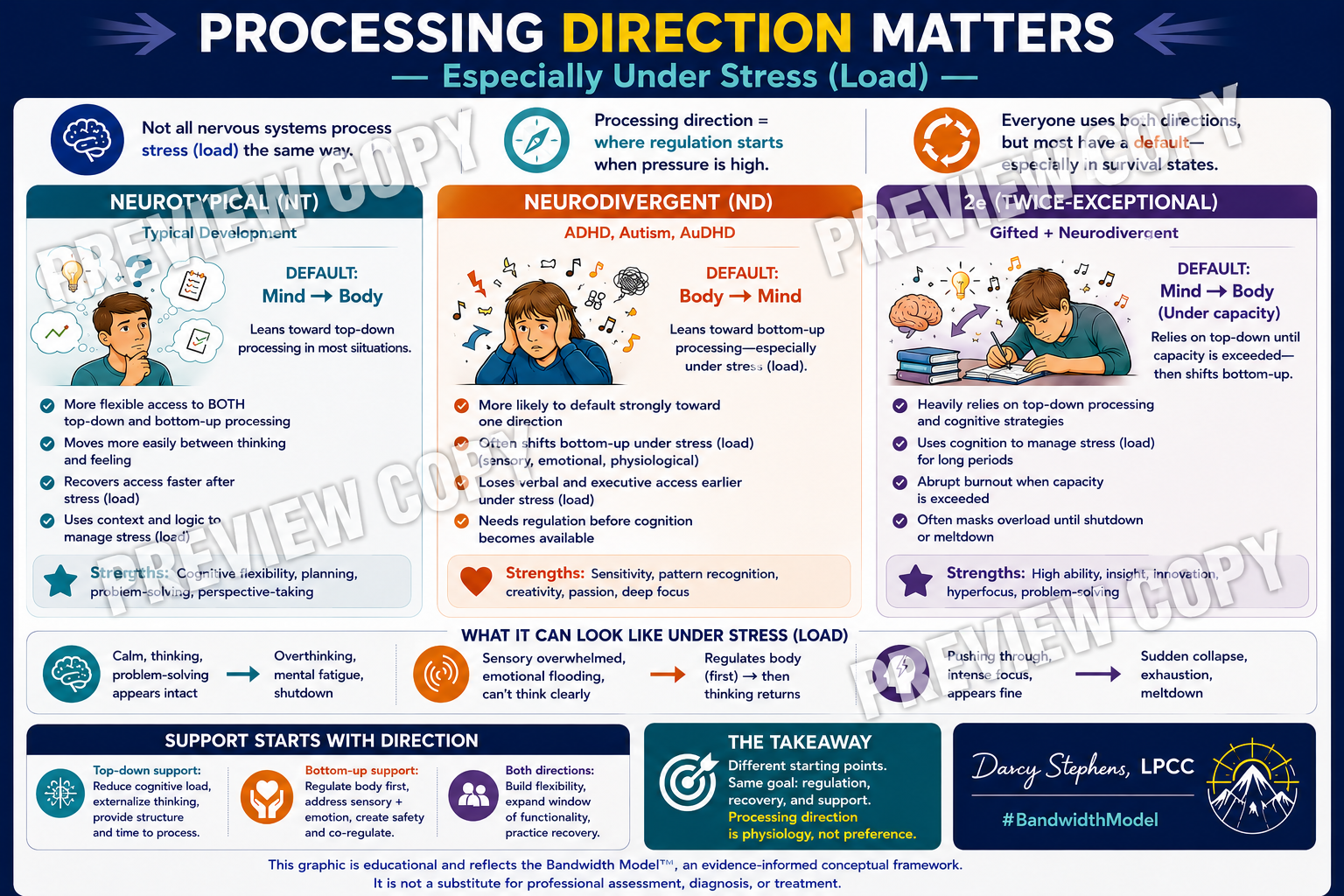
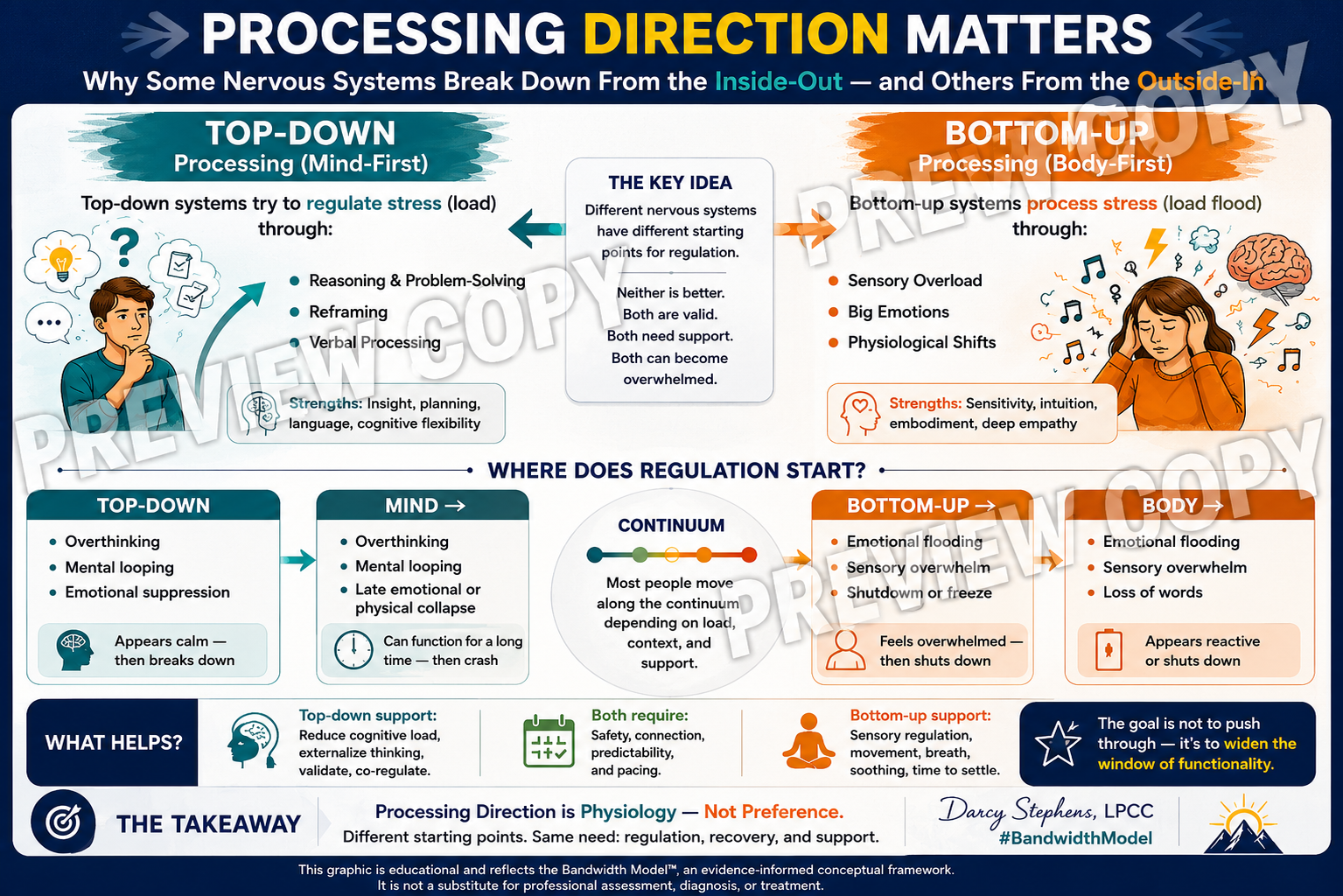
Not everyone regulates stress the same way. Some people naturally process stress from the top down—using thinking, reasoning, and problem-solving first. Others process from the bottom up, where sensory input, physiology, and emotions shape thinking before conscious reasoning is available. This infographic explains why these differences matter and how understanding an individual's processing direction can improve communication, support strategies, and clinical care.
Based on the Bandwidth Model™, this visual guide compares top-down and bottom-up processing, explores common signs of overload, and outlines practical approaches for supporting each nervous system. Rather than viewing one style as better than the other, it emphasizes that different nervous systems have different pathways to regulation—and that effective intervention begins where regulation naturally starts.
You'll learn:
The differences between top-down (mind-first) and bottom-up (body-first) processing
Why some people appear calm until they suddenly crash, while others experience sensory or emotional overwhelm first
Common strengths and vulnerabilities associated with each processing style
Practical regulation strategies that align with how different nervous systems function
Why processing direction reflects physiology—not personality or preference
Educational resource only. This infographic reflects current research alongside the author's Bandwidth Model™, an evidence-informed conceptual framework describing how neurodevelopmental architecture, nervous system state, cumulative load, and processing style interact to influence functioning. The Bandwidth Model™ has not yet been empirically evaluated and should be considered a conceptual framework rather than an established scientific model. This resource is intended for educational purposes and is not a substitute for professional assessment, diagnosis, or treatment.
Not everyone regulates stress the same way. Some people naturally process stress from the top down—using thinking, reasoning, and problem-solving first. Others process from the bottom up, where sensory input, physiology, and emotions shape thinking before conscious reasoning is available. This infographic explains why these differences matter and how understanding an individual's processing direction can improve communication, support strategies, and clinical care.
Based on the Bandwidth Model™, this visual guide compares top-down and bottom-up processing, explores common signs of overload, and outlines practical approaches for supporting each nervous system. Rather than viewing one style as better than the other, it emphasizes that different nervous systems have different pathways to regulation—and that effective intervention begins where regulation naturally starts.
You'll learn:
The differences between top-down (mind-first) and bottom-up (body-first) processing
Why some people appear calm until they suddenly crash, while others experience sensory or emotional overwhelm first
Common strengths and vulnerabilities associated with each processing style
Practical regulation strategies that align with how different nervous systems function
Why processing direction reflects physiology—not personality or preference
Educational resource only. This infographic reflects current research alongside the author's Bandwidth Model™, an evidence-informed conceptual framework describing how neurodevelopmental architecture, nervous system state, cumulative load, and processing style interact to influence functioning. The Bandwidth Model™ has not yet been empirically evaluated and should be considered a conceptual framework rather than an established scientific model. This resource is intended for educational purposes and is not a substitute for professional assessment, diagnosis, or treatment.