 Image 1 of 1
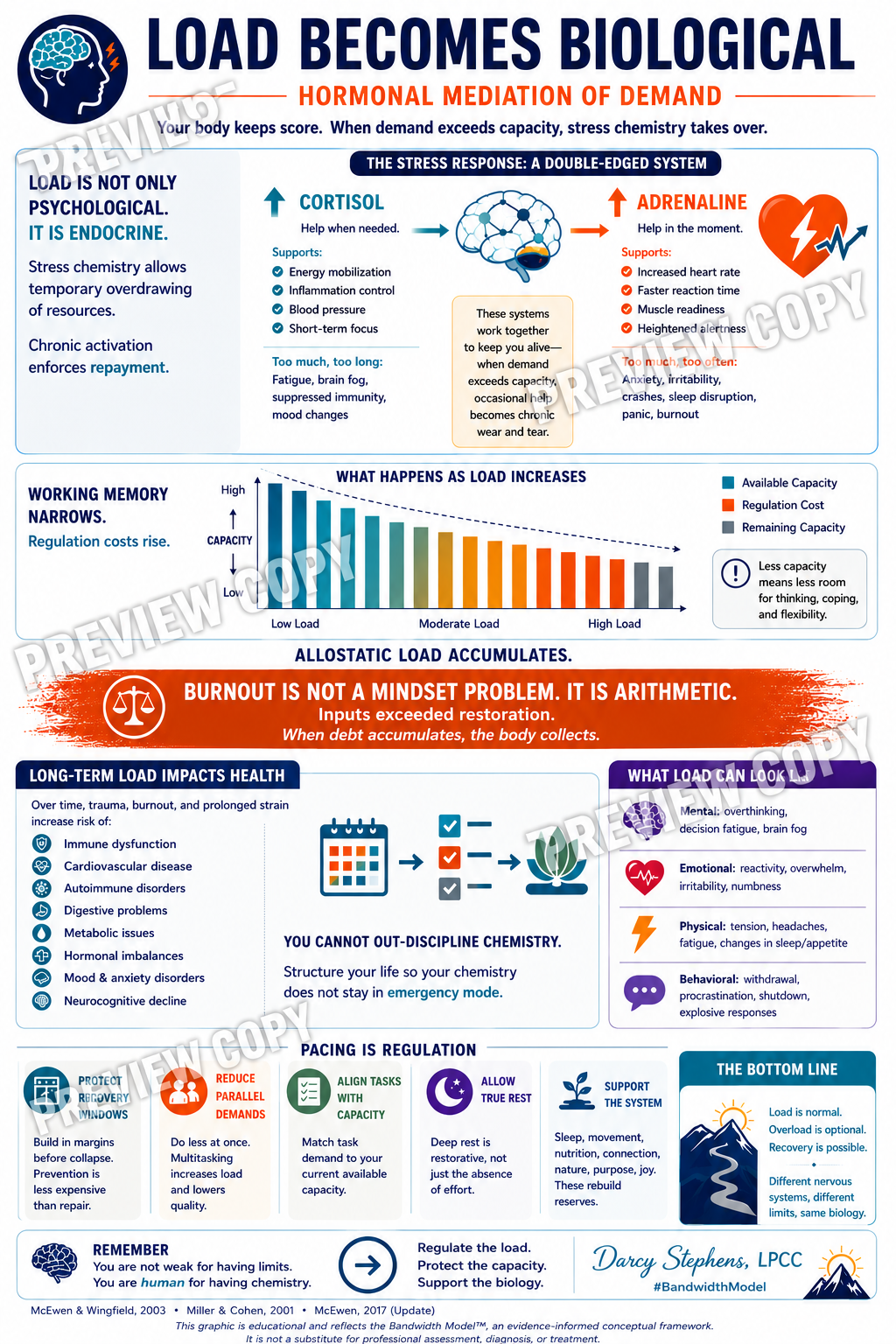
Load Becomes Biological: Hormonal Mediation of Demand explores why chronic stress is far more than a psychological experience—it is a biological process that changes how the brain and body function. Rather than viewing burnout as a failure of motivation or resilience, this infographic explains how stress hormones, allostatic load, and cumulative physiological demand gradually reduce available bandwidth for thinking, emotional regulation, and daily functioning.
Grounded in neuroscience and stress physiology, this resource illustrates how cortisol and adrenaline help us survive acute challenges but become costly when activation is prolonged. It also explains why pacing, recovery, and matching demands to capacity are evidence-based strategies for protecting long-term health—not signs of weakness.
Inside you'll explore:
The biological role of cortisol and adrenaline during stress.
How chronic activation narrows working memory and executive functioning.
Why allostatic load accumulates over time.
The difference between temporary stress adaptation and chronic overload.
Common mental, emotional, physical, and behavioral signs that your nervous system is operating under excessive load.
Practical strategies for protecting recovery, reducing cumulative demand, and supporting long-term nervous system health.
Ideal for:
Mental health professionals
Healthcare providers
Coaches and educators
Neurodivergent adults
Caregivers
Anyone recovering from chronic stress, burnout, or trauma
The Bandwidth Model™ takeaway:
Burnout is not a character flaw or a mindset problem. It is the biological result of sustained demand exceeding recovery. When we understand the chemistry of stress, we can stop blaming ourselves and begin protecting the systems that make healthy functioning possible.
Educational resource only. This infographic reflects the Bandwidth Model™, an evidence-informed conceptual framework integrating current research on stress physiology, allostatic load, executive functioning, and nervous system regulation. It is intended for education and is not a diagnostic or treatment tool.
Load Becomes Biological: Hormonal Mediation of Demand explores why chronic stress is far more than a psychological experience—it is a biological process that changes how the brain and body function. Rather than viewing burnout as a failure of motivation or resilience, this infographic explains how stress hormones, allostatic load, and cumulative physiological demand gradually reduce available bandwidth for thinking, emotional regulation, and daily functioning.
Grounded in neuroscience and stress physiology, this resource illustrates how cortisol and adrenaline help us survive acute challenges but become costly when activation is prolonged. It also explains why pacing, recovery, and matching demands to capacity are evidence-based strategies for protecting long-term health—not signs of weakness.
Inside you'll explore:
The biological role of cortisol and adrenaline during stress.
How chronic activation narrows working memory and executive functioning.
Why allostatic load accumulates over time.
The difference between temporary stress adaptation and chronic overload.
Common mental, emotional, physical, and behavioral signs that your nervous system is operating under excessive load.
Practical strategies for protecting recovery, reducing cumulative demand, and supporting long-term nervous system health.
Ideal for:
Mental health professionals
Healthcare providers
Coaches and educators
Neurodivergent adults
Caregivers
Anyone recovering from chronic stress, burnout, or trauma
The Bandwidth Model™ takeaway:
Burnout is not a character flaw or a mindset problem. It is the biological result of sustained demand exceeding recovery. When we understand the chemistry of stress, we can stop blaming ourselves and begin protecting the systems that make healthy functioning possible.
Educational resource only. This infographic reflects the Bandwidth Model™, an evidence-informed conceptual framework integrating current research on stress physiology, allostatic load, executive functioning, and nervous system regulation. It is intended for education and is not a diagnostic or treatment tool.