 Image 1 of 1
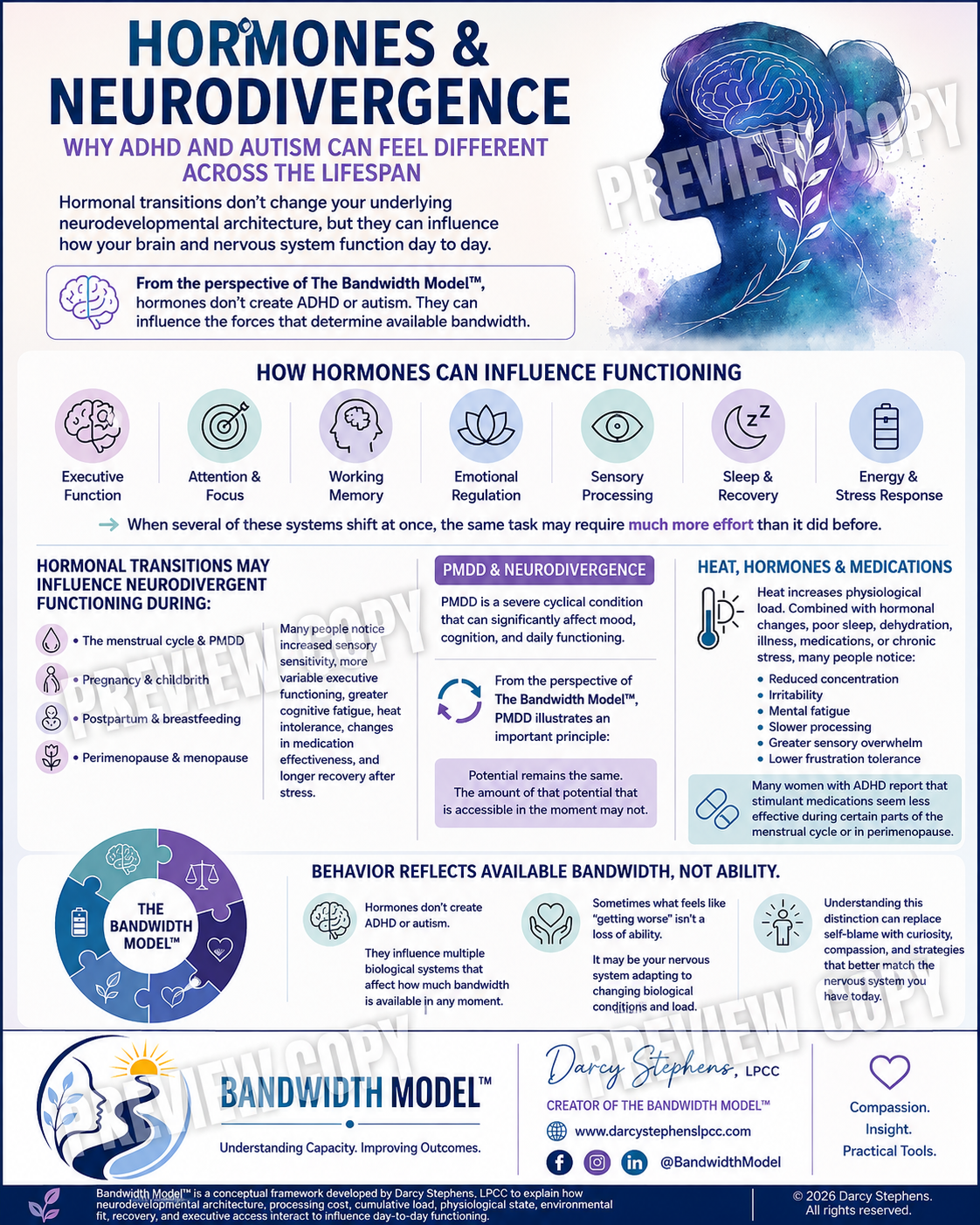
Hormonal changes don't create ADHD or autism—but they can influence how your brain and nervous system function from day to day.
This educational guide explores how hormonal transitions, including the menstrual cycle, pregnancy, postpartum, perimenopause, menopause, PMDD, illness, and heat, may affect executive functioning, attention, working memory, emotional regulation, sensory processing, sleep, and overall capacity.
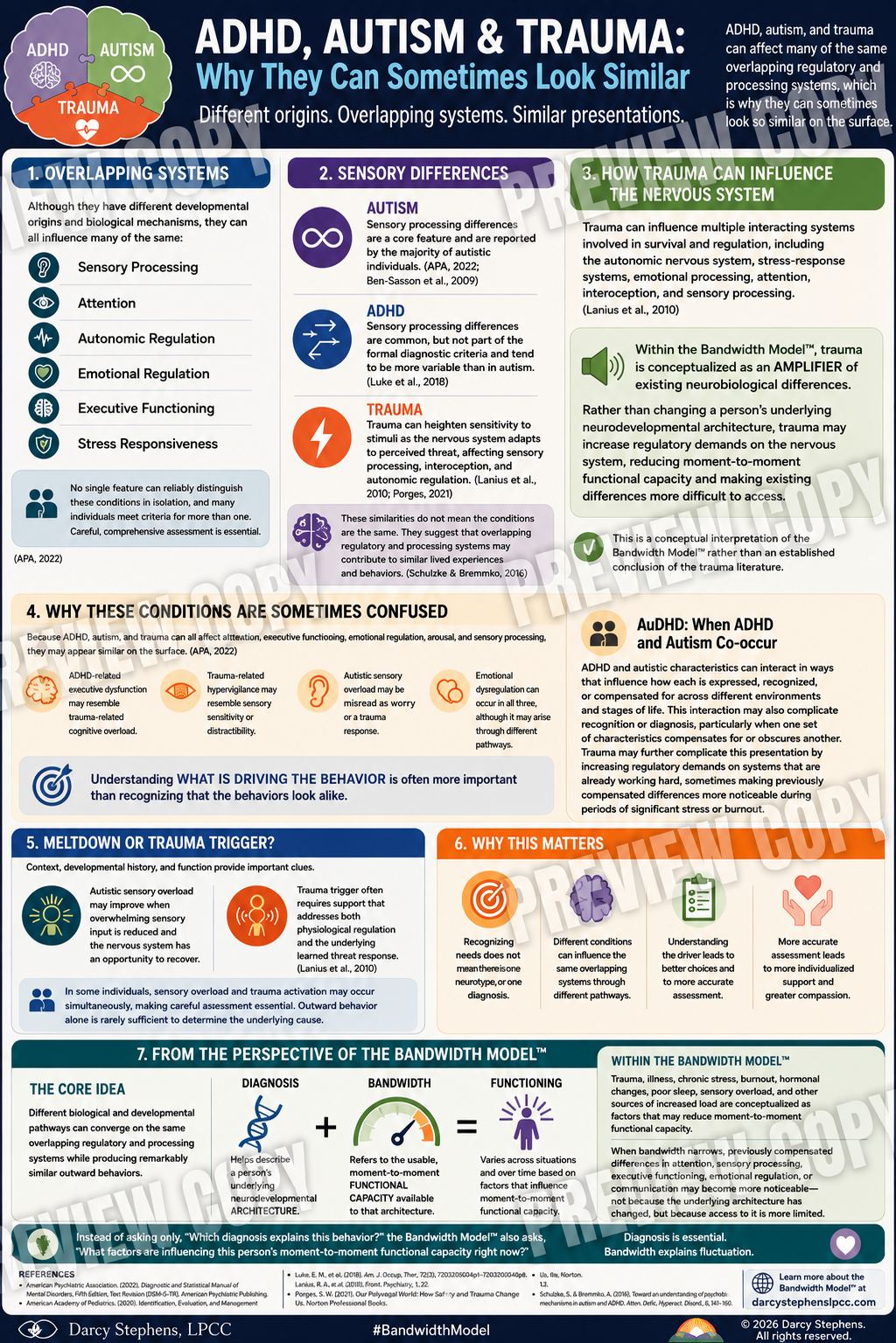
Using the Bandwidth Model™, this guide explains why functioning may fluctuate even though your underlying neurodevelopmental architecture remains the same. Rather than viewing these changes as a loss of ability, you'll learn how shifts in physiology can temporarily influence the amount of bandwidth available in the moment.
Whether you're neurodivergent, supporting someone who is, or you're a clinician seeking a practical framework, this guide offers an accessible, evidence-informed perspective on the interaction between hormones and nervous system functioning.
Hormonal changes don't create ADHD or autism—but they can influence how your brain and nervous system function from day to day.
This educational guide explores how hormonal transitions, including the menstrual cycle, pregnancy, postpartum, perimenopause, menopause, PMDD, illness, and heat, may affect executive functioning, attention, working memory, emotional regulation, sensory processing, sleep, and overall capacity.
Using the Bandwidth Model™, this guide explains why functioning may fluctuate even though your underlying neurodevelopmental architecture remains the same. Rather than viewing these changes as a loss of ability, you'll learn how shifts in physiology can temporarily influence the amount of bandwidth available in the moment.
Whether you're neurodivergent, supporting someone who is, or you're a clinician seeking a practical framework, this guide offers an accessible, evidence-informed perspective on the interaction between hormones and nervous system functioning.