 Image 1 of 1
Differential Diagnosis Challenges: AuDHD in Adults
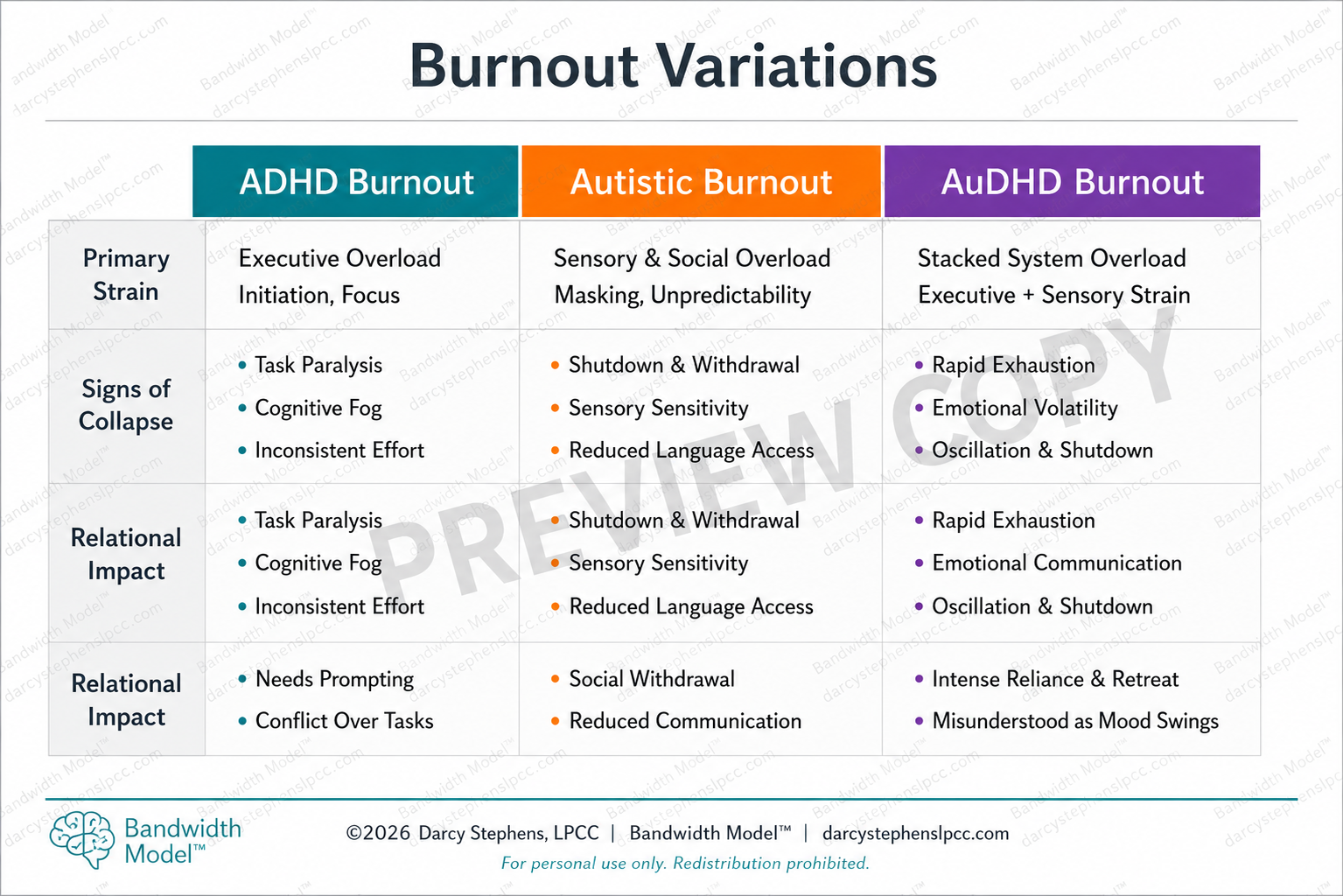
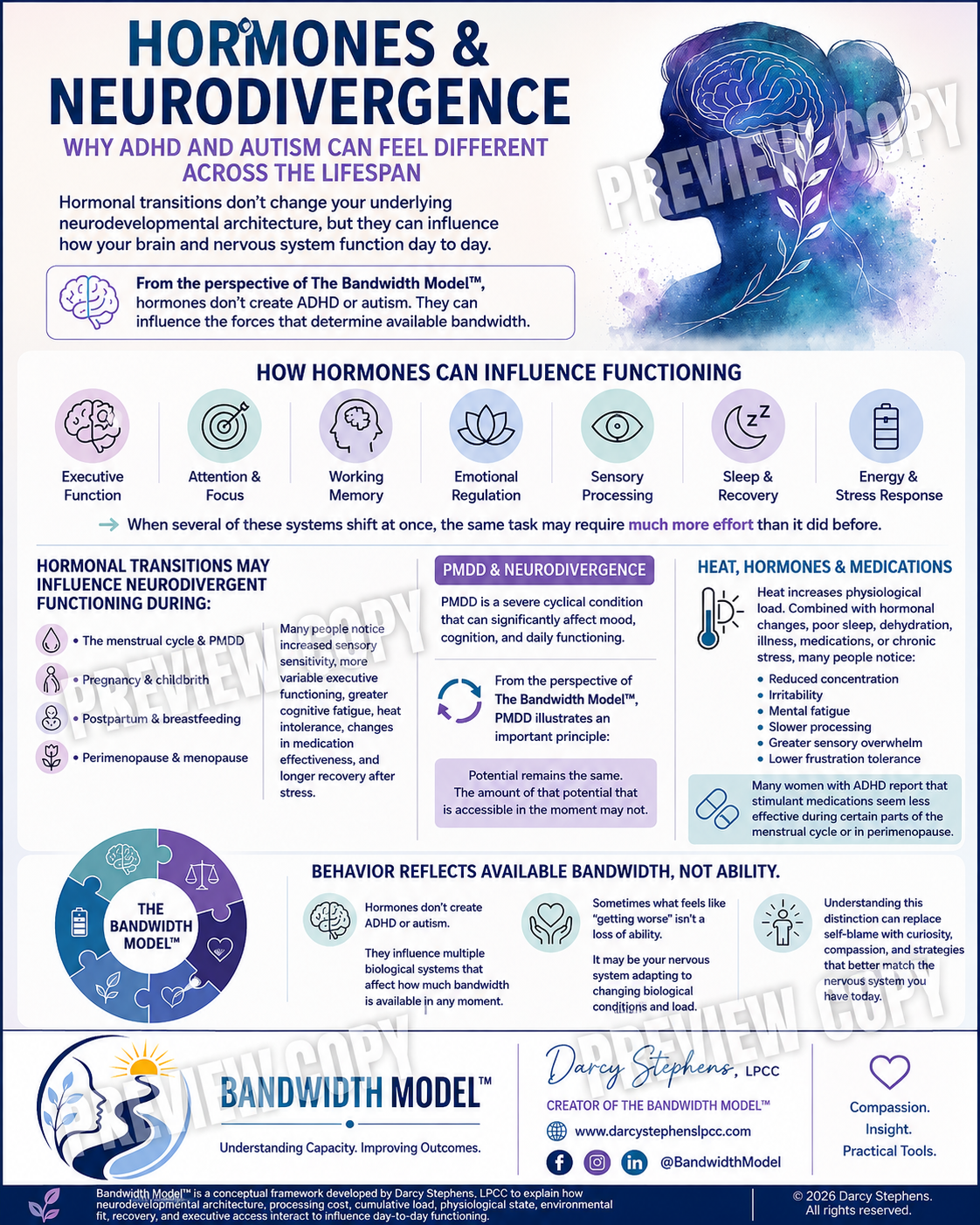
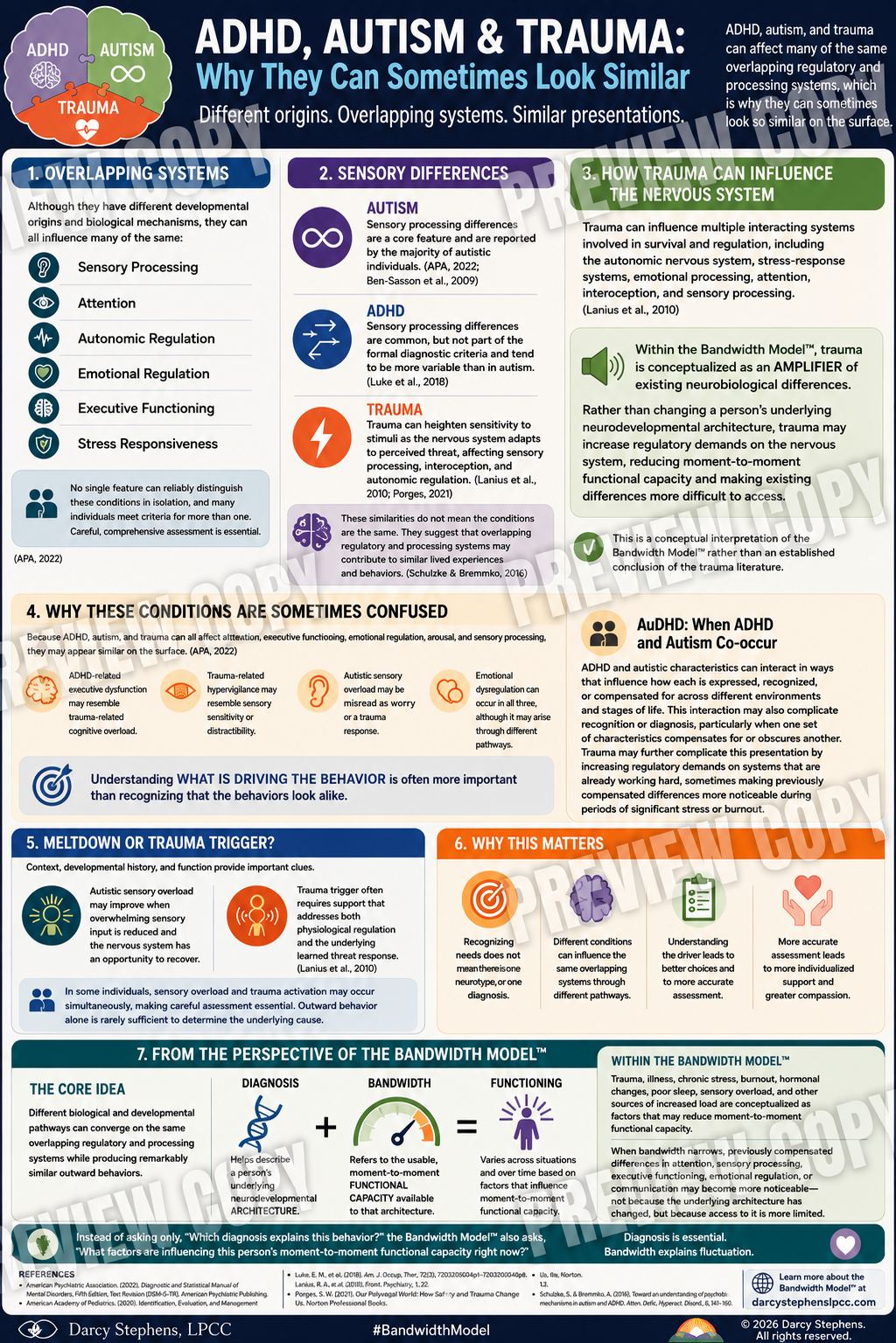
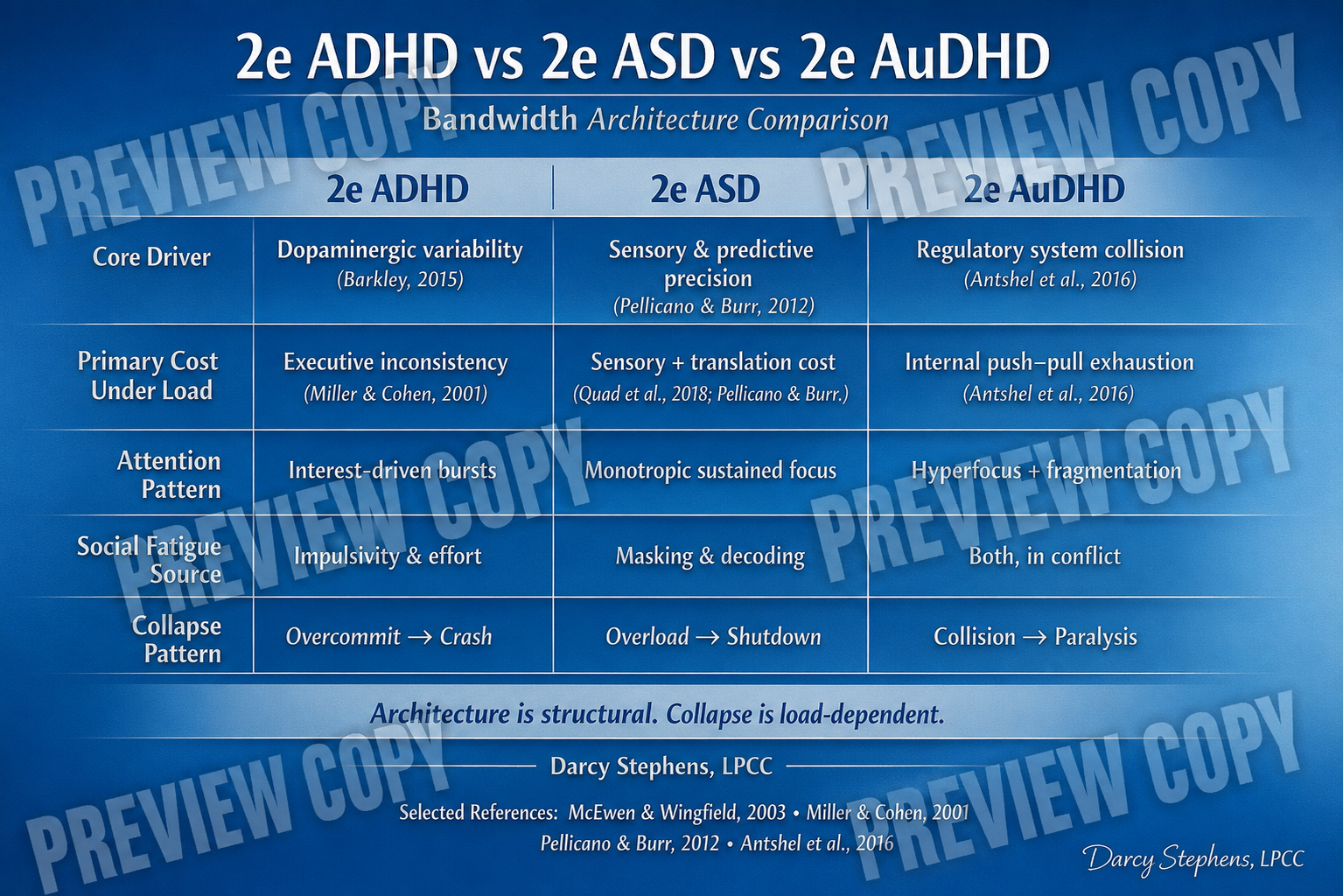
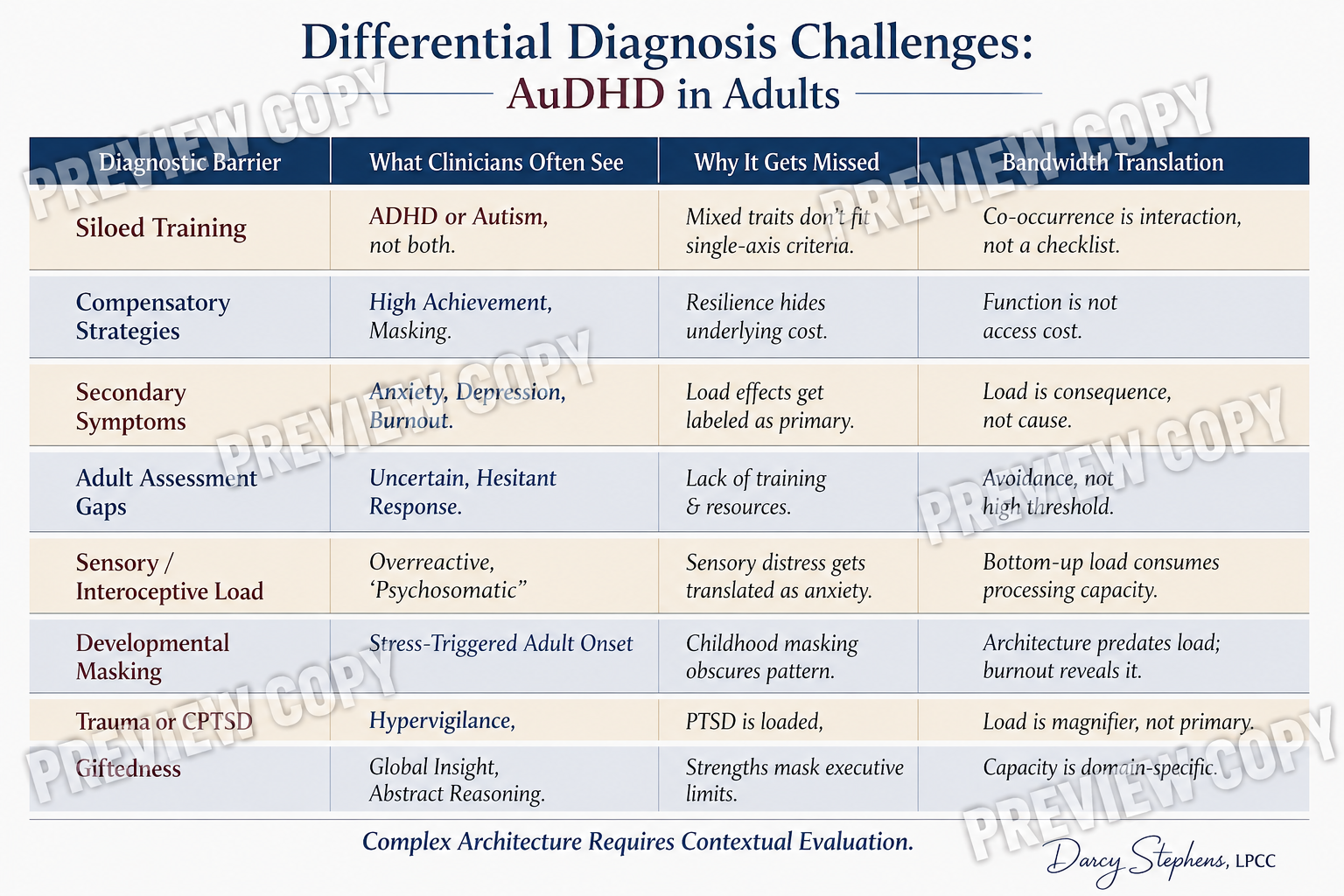
Why is AuDHD so often overlooked or misdiagnosed in adulthood? This clinical reference guide explores common barriers to recognizing co-occurring autism and ADHD, including masking, compensatory strategies, sensory and interoceptive differences, trauma, giftedness, and adult assessment limitations. By pairing common clinical presentations with Bandwidth Model™ translations, this resource encourages clinicians to look beyond surface symptoms and consider how neurodevelopmental architecture, cumulative load, and environmental demands interact to shape functioning. Designed for therapists, psychologists, educators, graduate students, and neurodivergent adults, this guide supports more accurate clinical conceptualization and thoughtful differential diagnosis.
Educational resource only. This handout reflects current research and clinical concepts and incorporates the author's Bandwidth Model™, an evidence-informed conceptual framework for understanding how neurodevelopmental architecture, cumulative load, nervous system state, and processing demands influence day-to-day functioning. The Bandwidth Model™ has not yet been empirically evaluated and should be considered a conceptual framework rather than an established scientific model. This resource is intended for educational purposes and should not be used as a substitute for comprehensive clinical assessment, diagnosis, or professional medical or mental health care.
Differential Diagnosis Challenges: AuDHD in Adults
Why is AuDHD so often overlooked or misdiagnosed in adulthood? This clinical reference guide explores common barriers to recognizing co-occurring autism and ADHD, including masking, compensatory strategies, sensory and interoceptive differences, trauma, giftedness, and adult assessment limitations. By pairing common clinical presentations with Bandwidth Model™ translations, this resource encourages clinicians to look beyond surface symptoms and consider how neurodevelopmental architecture, cumulative load, and environmental demands interact to shape functioning. Designed for therapists, psychologists, educators, graduate students, and neurodivergent adults, this guide supports more accurate clinical conceptualization and thoughtful differential diagnosis.
Educational resource only. This handout reflects current research and clinical concepts and incorporates the author's Bandwidth Model™, an evidence-informed conceptual framework for understanding how neurodevelopmental architecture, cumulative load, nervous system state, and processing demands influence day-to-day functioning. The Bandwidth Model™ has not yet been empirically evaluated and should be considered a conceptual framework rather than an established scientific model. This resource is intended for educational purposes and should not be used as a substitute for comprehensive clinical assessment, diagnosis, or professional medical or mental health care.