 Image 1 of 1
Chronic Stress Affects Our Nervous Systems Differently
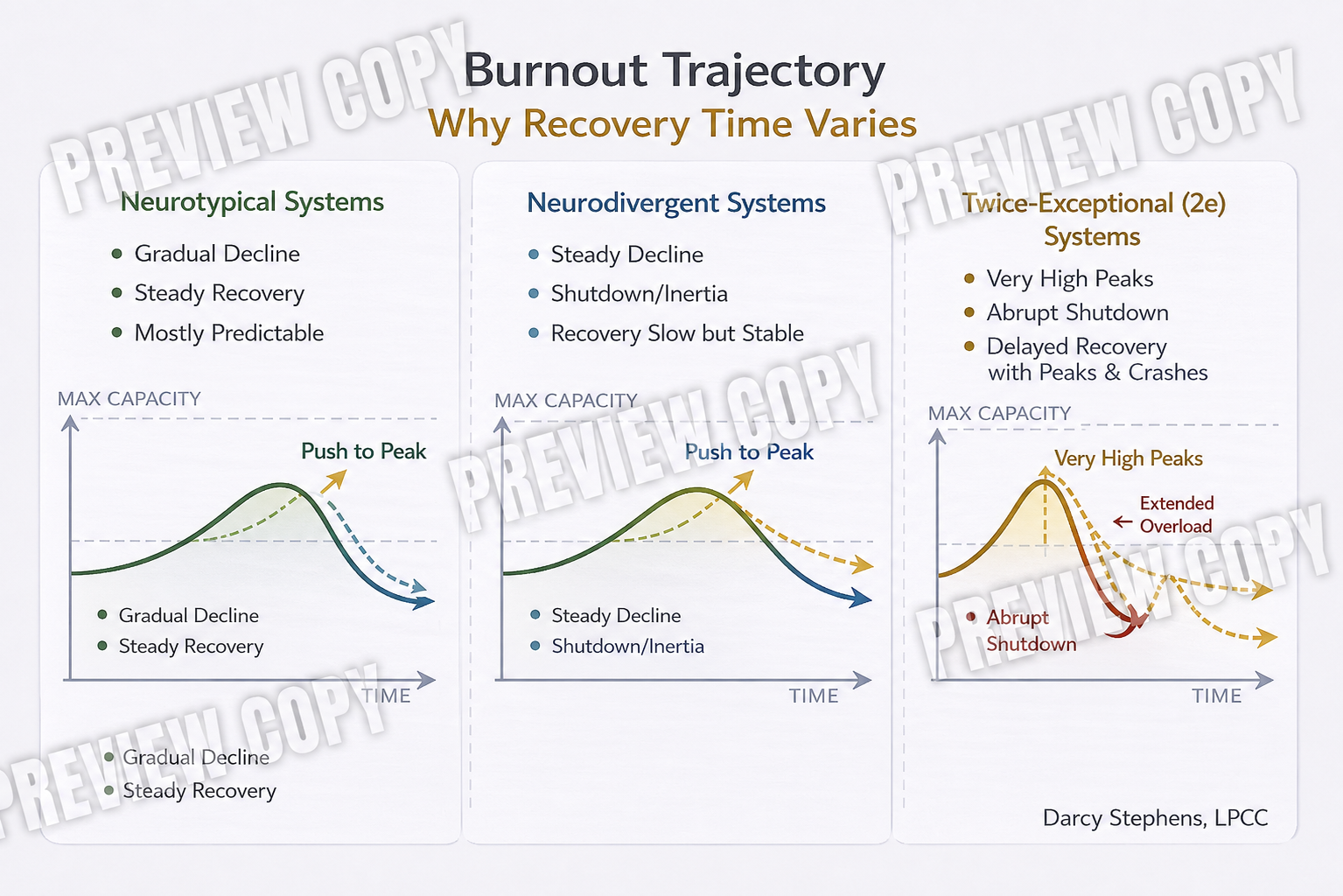
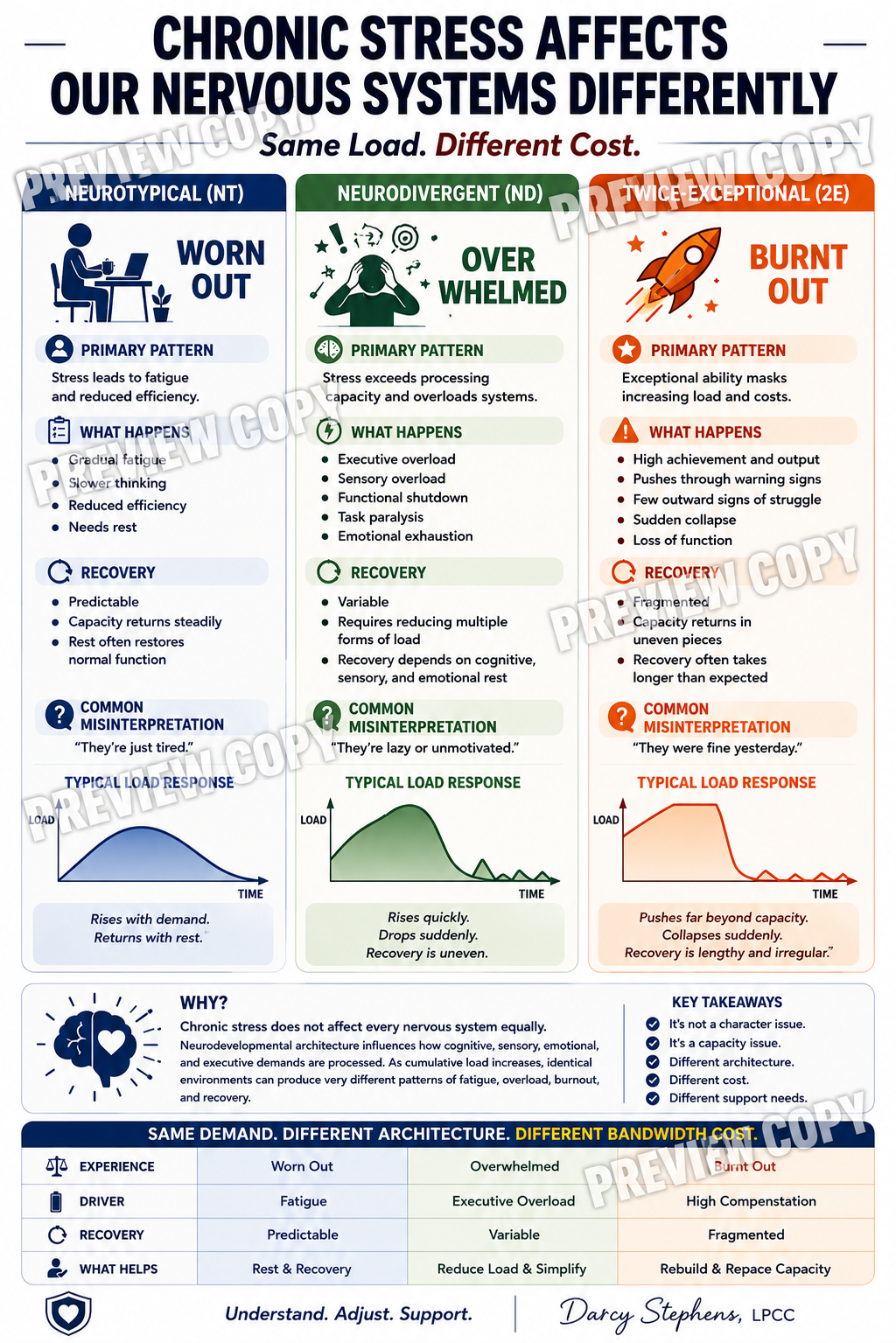
Why do some people recover from chronic stress with rest while others experience shutdown or burnout? This clinical infographic explores how the same external demands can produce very different outcomes depending on neurodevelopmental architecture. Comparing common stress responses in neurotypical, neurodivergent, and twice-exceptional (2e) nervous systems, the graphic illustrates differences in functional capacity, overload, recovery, and burnout. Grounded in the Bandwidth Model™, it emphasizes that chronic stress is not simply about resilience or willpower—it is about the interaction between architecture, cumulative load, and available bandwidth. Ideal for clinicians, educators, caregivers, and neurodivergent individuals seeking a clearer understanding of why recovery is not one-size-fits-all.
Educational resource only. This handout reflects current research and clinical concepts and incorporates the author's Bandwidth Model™, an evidence-informed conceptual framework for understanding how neurodevelopmental architecture, cumulative load, nervous system state, and processing demands influence day-to-day functioning. The Bandwidth Model™ has not yet been empirically evaluated and should be considered a conceptual framework rather than an established scientific model. This resource is intended for educational purposes and should not be used as a substitute for professional medical or mental health evaluation, diagnosis, or treatment.
Chronic Stress Affects Our Nervous Systems Differently
Why do some people recover from chronic stress with rest while others experience shutdown or burnout? This clinical infographic explores how the same external demands can produce very different outcomes depending on neurodevelopmental architecture. Comparing common stress responses in neurotypical, neurodivergent, and twice-exceptional (2e) nervous systems, the graphic illustrates differences in functional capacity, overload, recovery, and burnout. Grounded in the Bandwidth Model™, it emphasizes that chronic stress is not simply about resilience or willpower—it is about the interaction between architecture, cumulative load, and available bandwidth. Ideal for clinicians, educators, caregivers, and neurodivergent individuals seeking a clearer understanding of why recovery is not one-size-fits-all.
Educational resource only. This handout reflects current research and clinical concepts and incorporates the author's Bandwidth Model™, an evidence-informed conceptual framework for understanding how neurodevelopmental architecture, cumulative load, nervous system state, and processing demands influence day-to-day functioning. The Bandwidth Model™ has not yet been empirically evaluated and should be considered a conceptual framework rather than an established scientific model. This resource is intended for educational purposes and should not be used as a substitute for professional medical or mental health evaluation, diagnosis, or treatment.