 Image 1 of 1
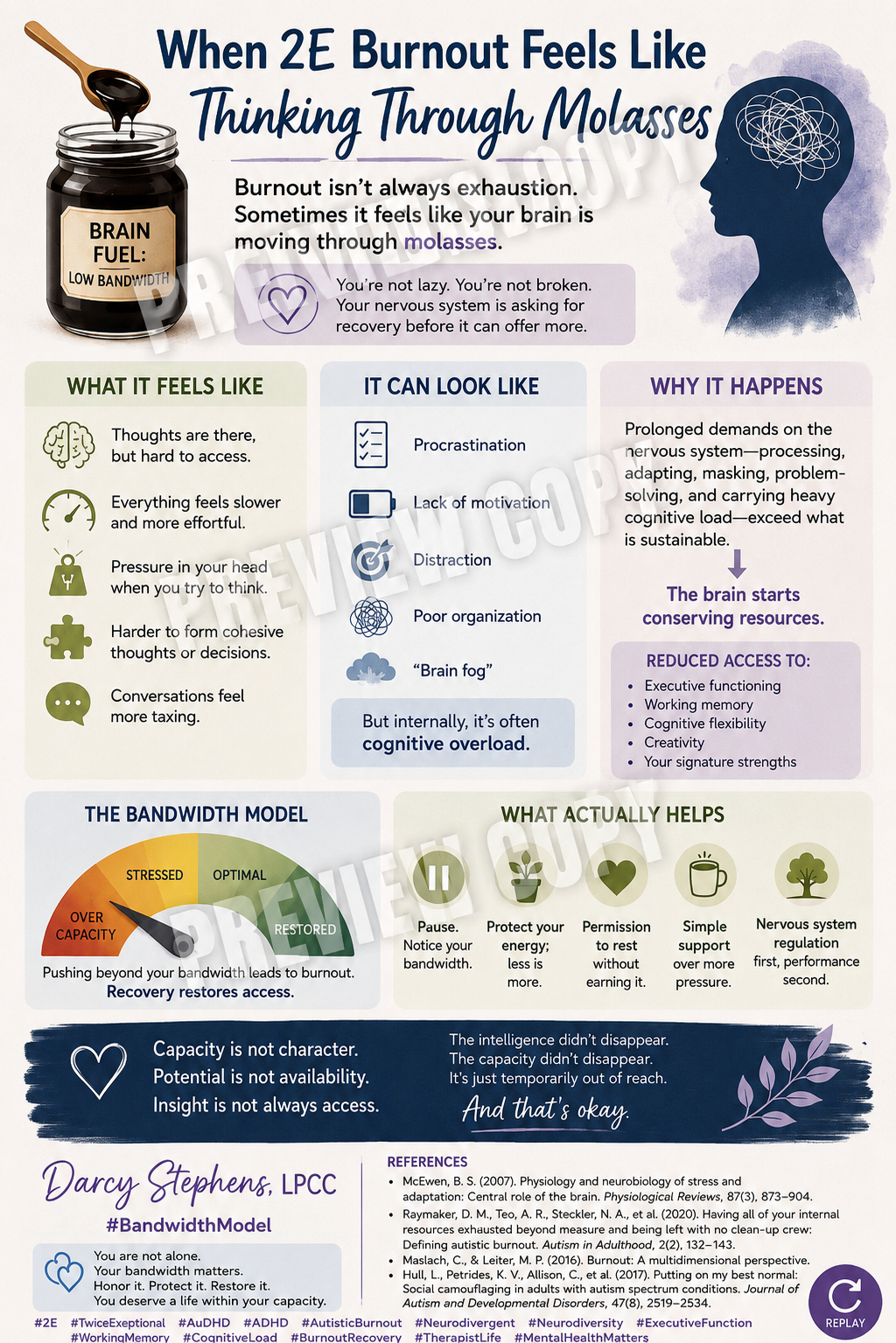
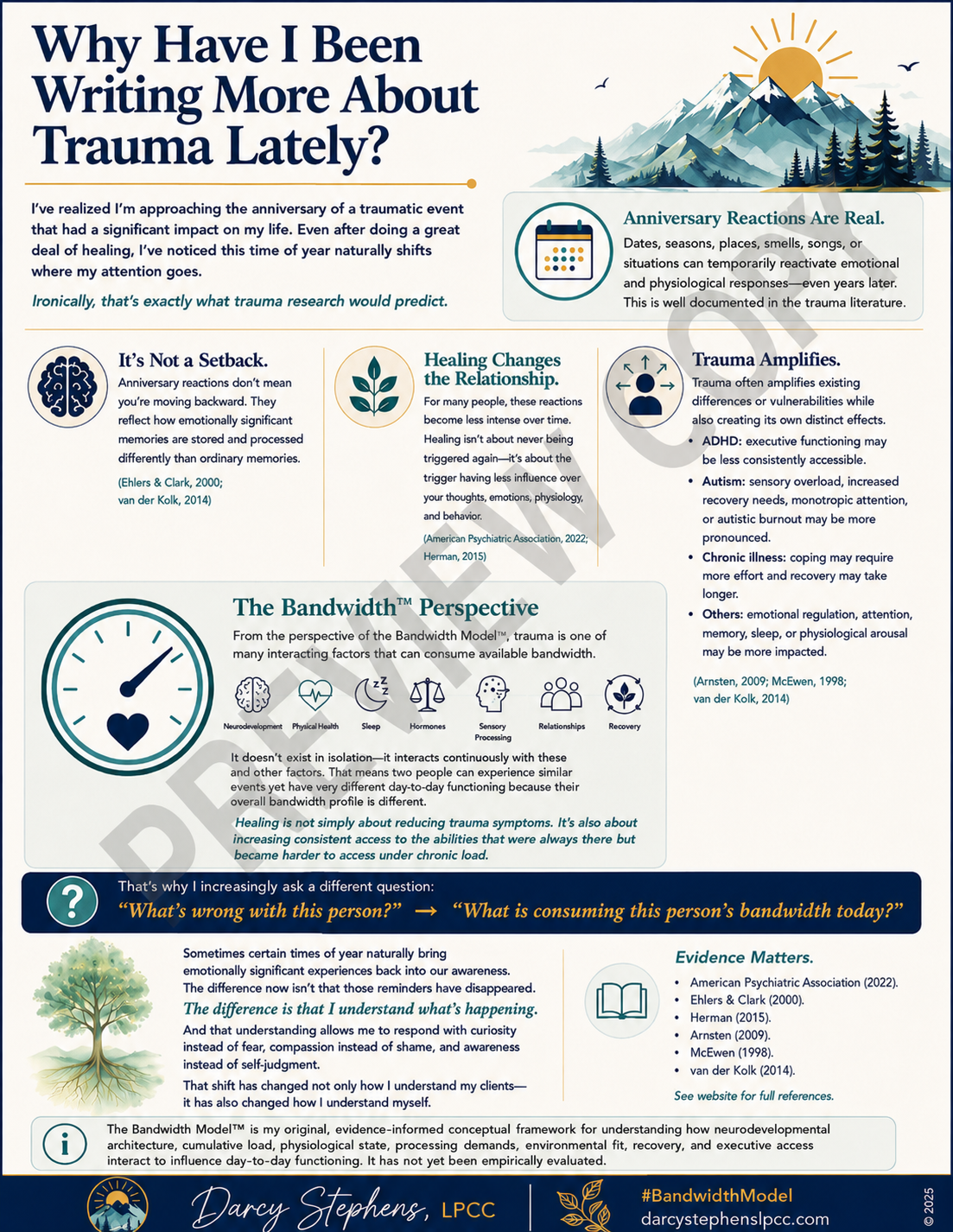
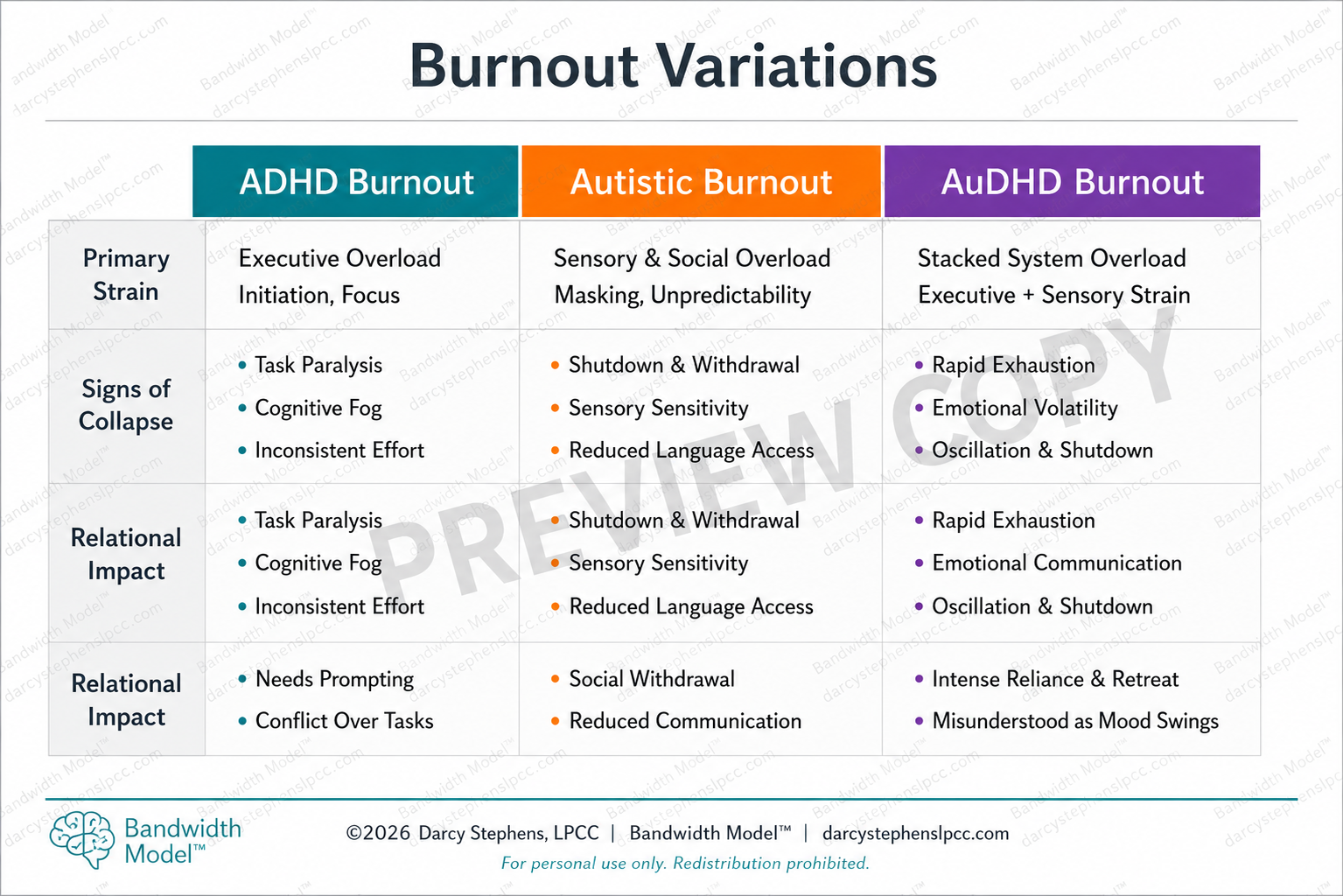
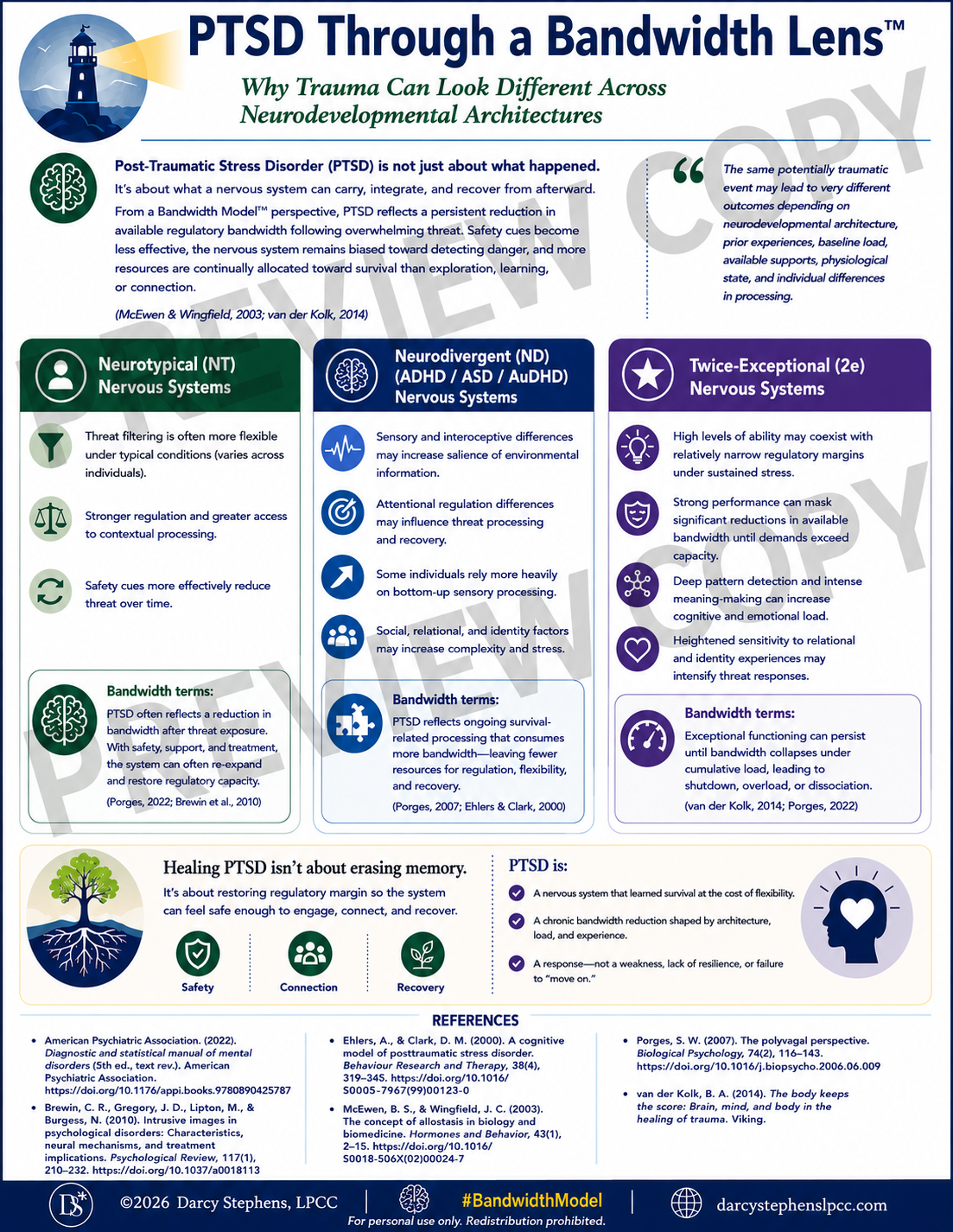
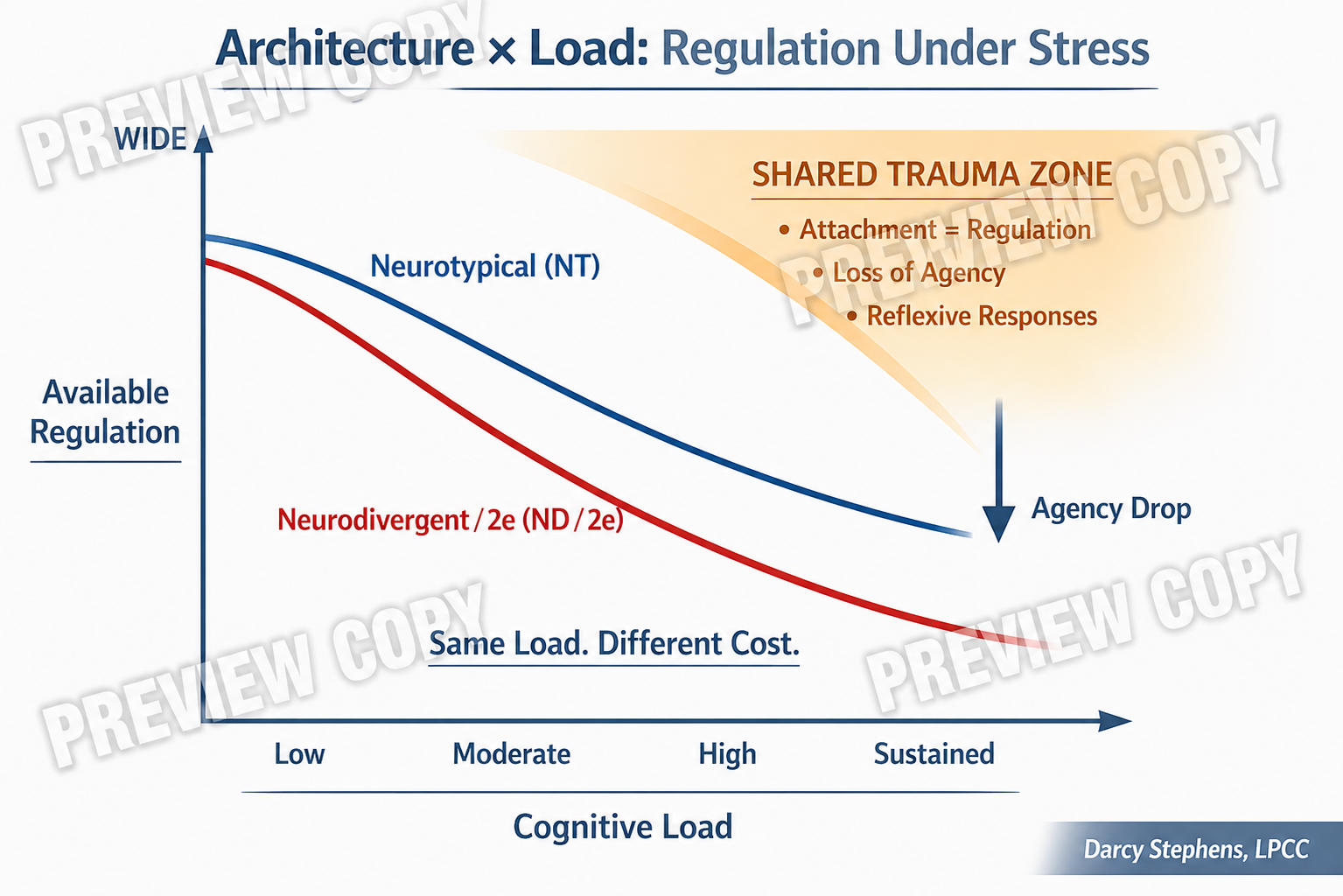
Why can the same stressor affect people so differently? This visual illustrates how neurodevelopmental architecture interacts with cognitive load to influence available self-regulation over time. Using the Bandwidth Model™, it demonstrates that individuals with different nervous system architectures may experience different regulatory costs under the same demands. The graphic also introduces the concept of the Shared Trauma Zone, where sustained overload can reduce access to regulation, increase reliance on attachment for stability, diminish agency, and contribute to more reflexive survival responses. This resource helps clinicians, educators, caregivers, and neurodivergent individuals better understand why identical environments can produce very different functional outcomes.
Educational resource only. This handout presents the author's Bandwidth Model™, an evidence-informed conceptual framework for understanding how neurodevelopmental architecture, cumulative load, nervous system state, and environmental demands interact to influence day-to-day functioning. The Bandwidth Model™ has not yet been empirically evaluated and should be considered a conceptual framework rather than an established scientific model. This resource is intended for educational purposes and should not be used as a substitute for professional medical or mental health evaluation or treatment.
Why can the same stressor affect people so differently? This visual illustrates how neurodevelopmental architecture interacts with cognitive load to influence available self-regulation over time. Using the Bandwidth Model™, it demonstrates that individuals with different nervous system architectures may experience different regulatory costs under the same demands. The graphic also introduces the concept of the Shared Trauma Zone, where sustained overload can reduce access to regulation, increase reliance on attachment for stability, diminish agency, and contribute to more reflexive survival responses. This resource helps clinicians, educators, caregivers, and neurodivergent individuals better understand why identical environments can produce very different functional outcomes.
Educational resource only. This handout presents the author's Bandwidth Model™, an evidence-informed conceptual framework for understanding how neurodevelopmental architecture, cumulative load, nervous system state, and environmental demands interact to influence day-to-day functioning. The Bandwidth Model™ has not yet been empirically evaluated and should be considered a conceptual framework rather than an established scientific model. This resource is intended for educational purposes and should not be used as a substitute for professional medical or mental health evaluation or treatment.