 Image 1 of 1
Burnout Trajectory: Why Recovery Time Varies
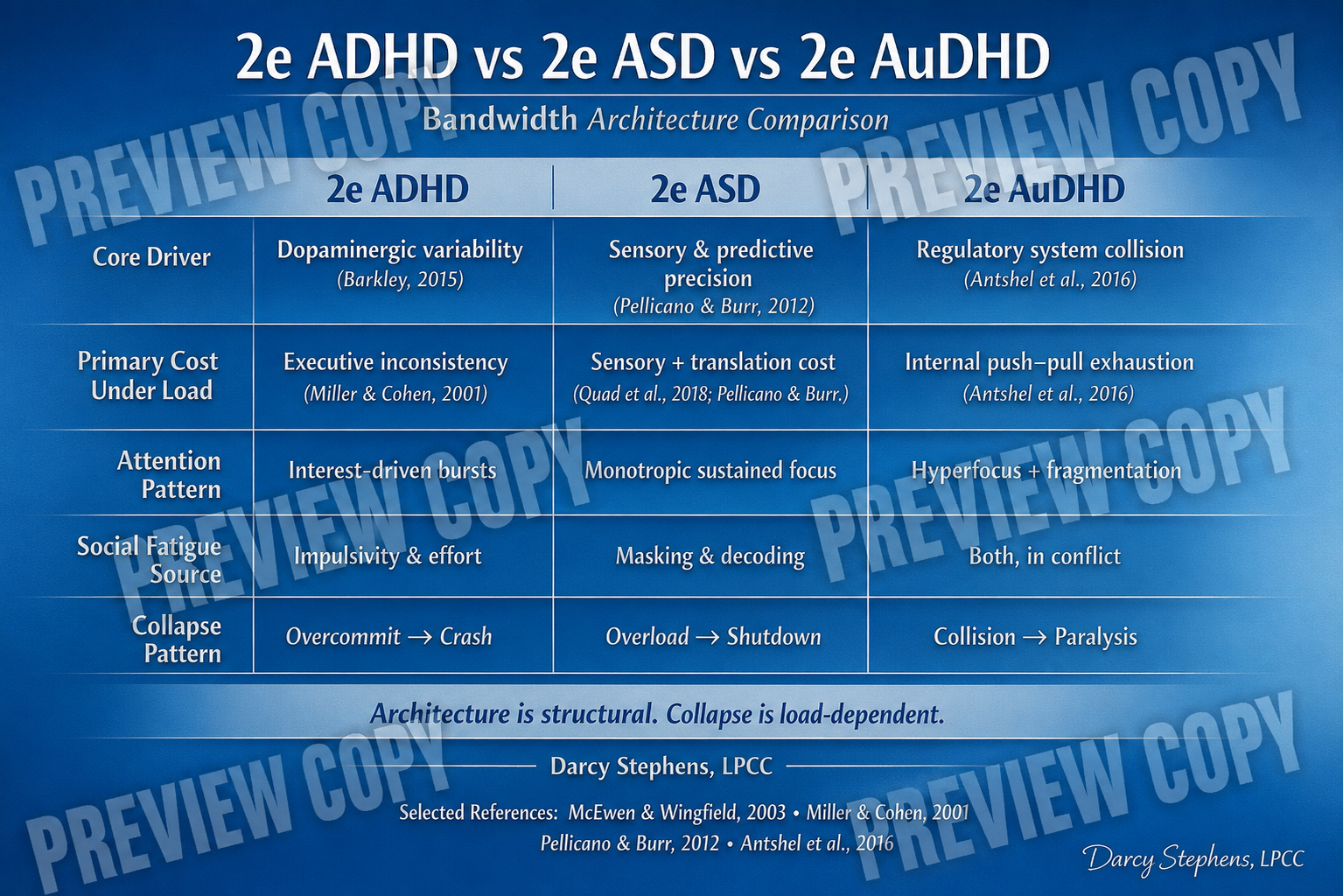
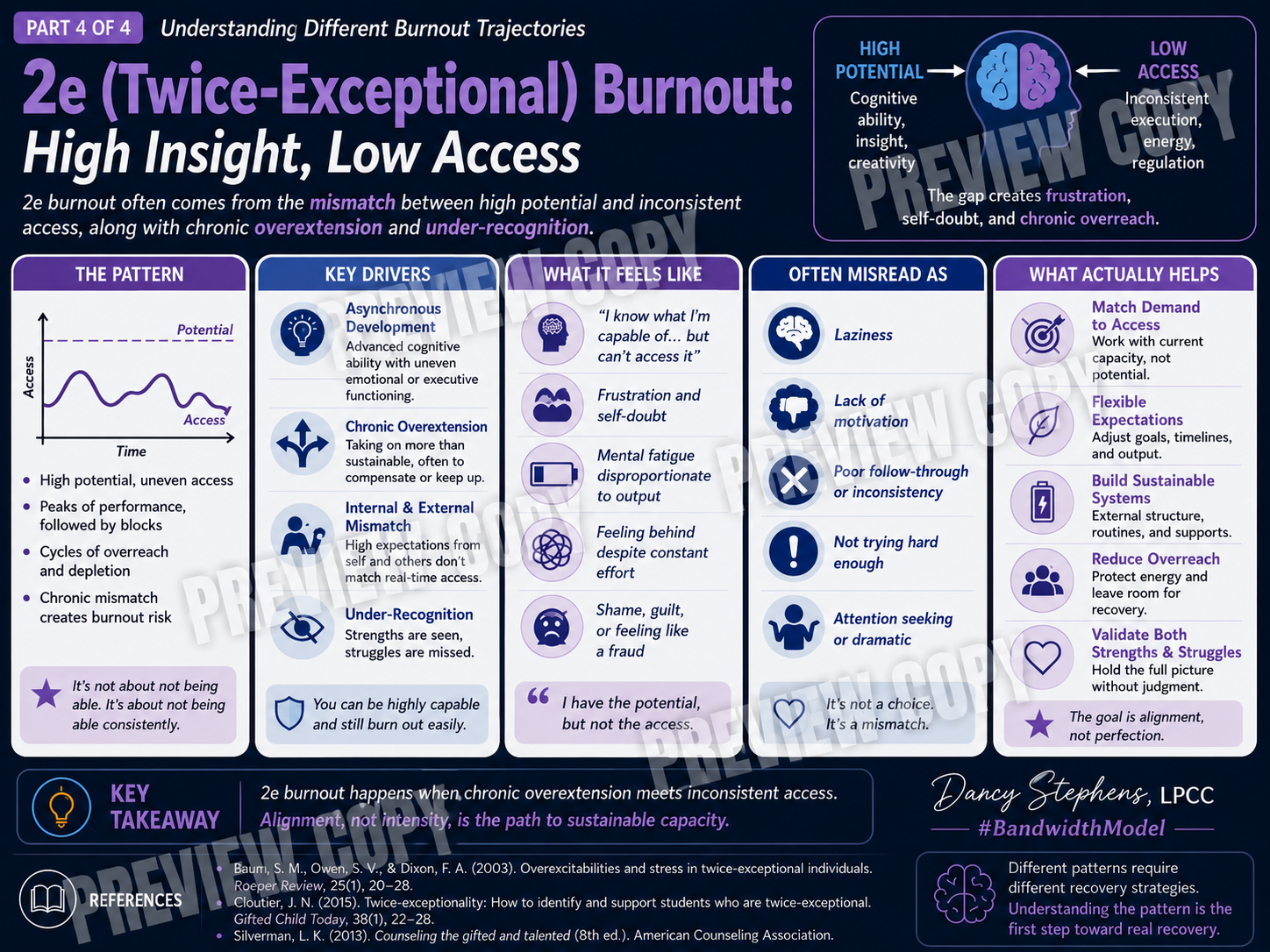
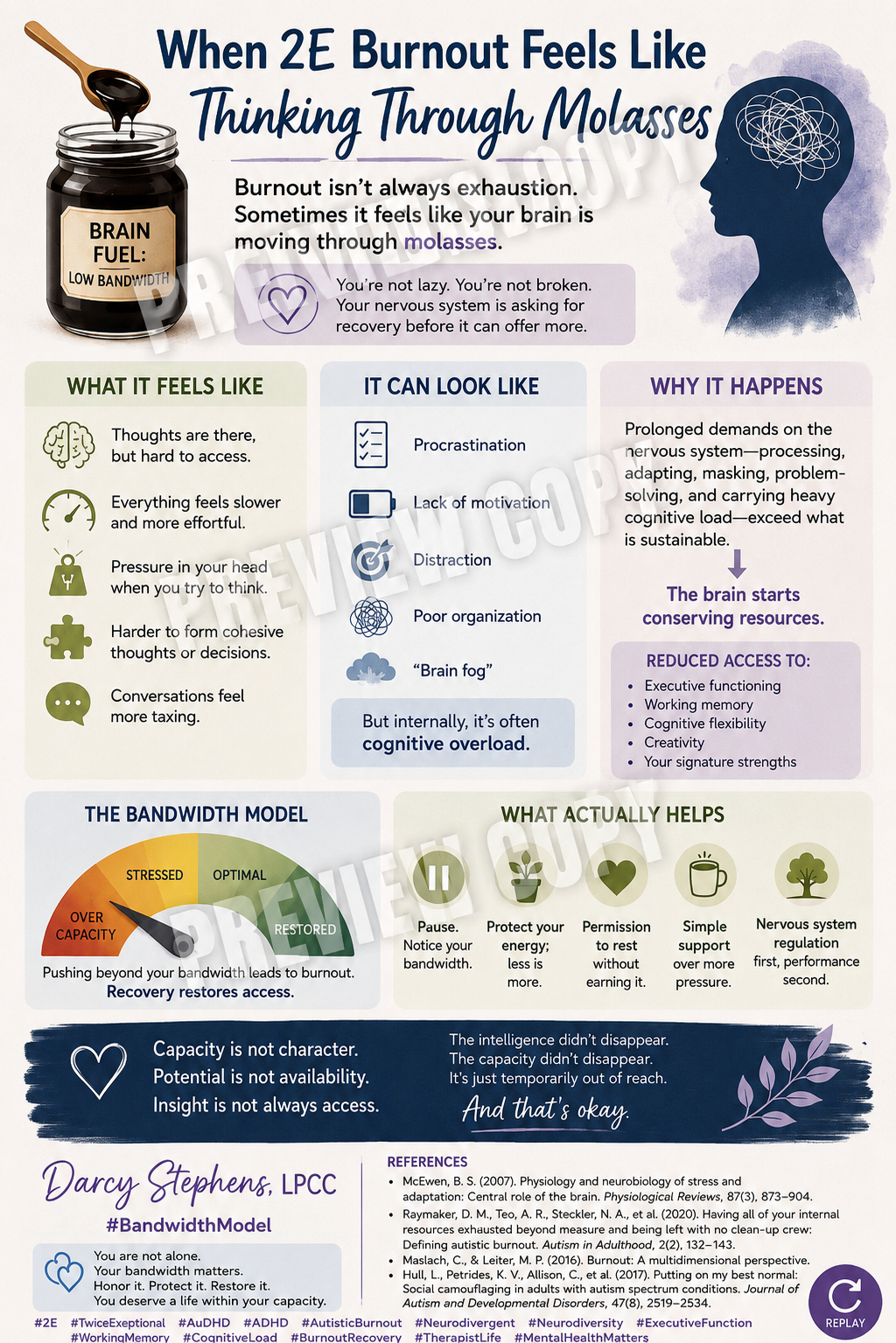
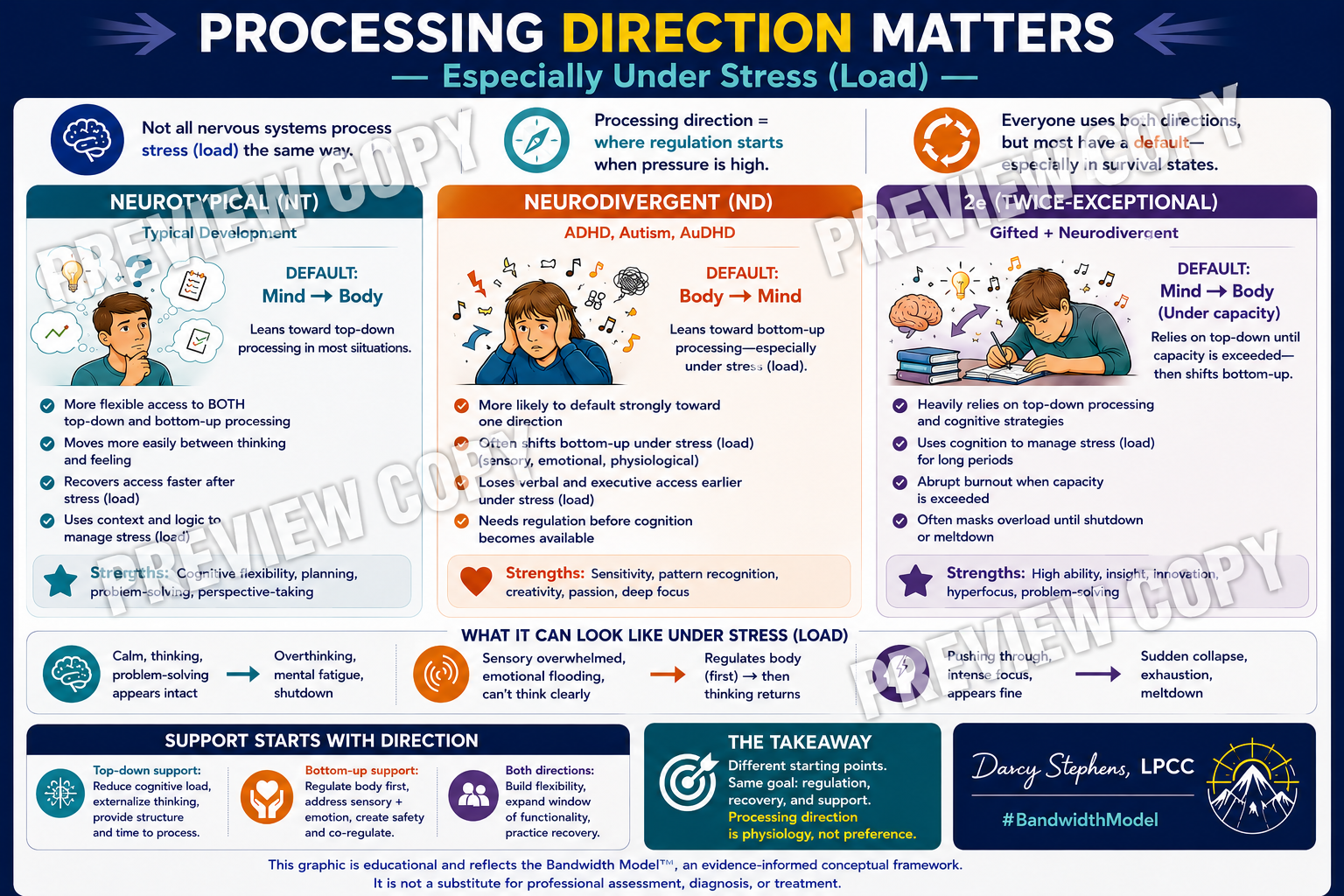
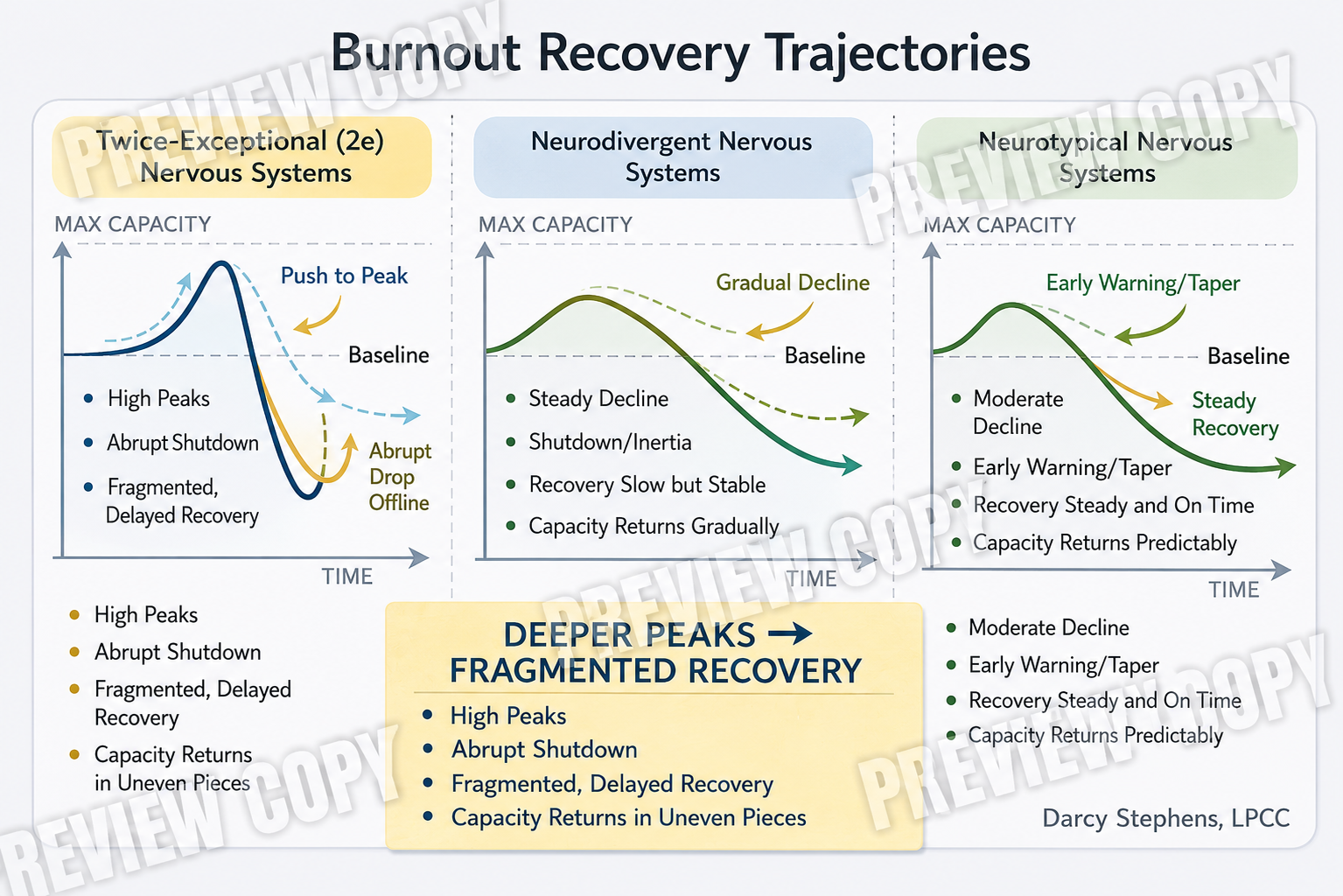
Why do some people bounce back from burnout while others need months to recover? This visual illustrates how burnout trajectories may differ across neurotypical, neurodivergent, and twice-exceptional (2e) nervous systems. It highlights common patterns of decline, shutdown, and recovery, demonstrating how sustained overload can lead to different recovery timelines depending on underlying neurodevelopmental architecture. The graphic is designed to help clinicians, educators, caregivers, and neurodivergent individuals better understand why recovery is often nonlinear and why a "one-size-fits-all" approach to burnout recovery may be ineffective.
Educational resource only. This handout reflects current research and clinical concepts and incorporates the author's Bandwidth Model™, an evidence-informed conceptual framework for understanding how neurodevelopmental architecture, cumulative load, nervous system state, and recovery influence day-to-day functioning. The Bandwidth Model™ has not yet been empirically evaluated and should be considered a conceptual framework rather than an established scientific model. This resource is not intended to diagnose or replace professional medical or mental health care.
Burnout Trajectory: Why Recovery Time Varies
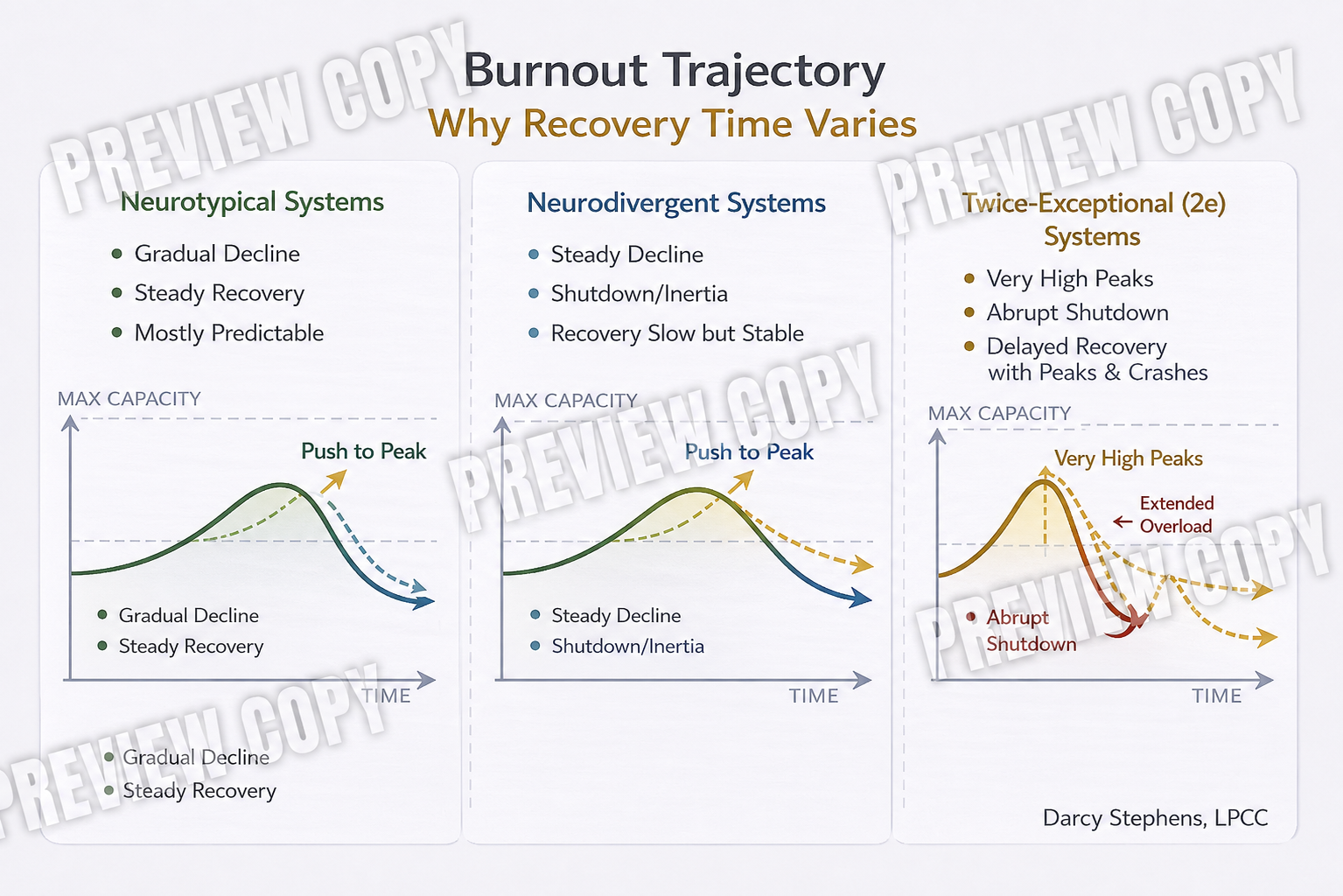
Why do some people bounce back from burnout while others need months to recover? This visual illustrates how burnout trajectories may differ across neurotypical, neurodivergent, and twice-exceptional (2e) nervous systems. It highlights common patterns of decline, shutdown, and recovery, demonstrating how sustained overload can lead to different recovery timelines depending on underlying neurodevelopmental architecture. The graphic is designed to help clinicians, educators, caregivers, and neurodivergent individuals better understand why recovery is often nonlinear and why a "one-size-fits-all" approach to burnout recovery may be ineffective.
Educational resource only. This handout reflects current research and clinical concepts and incorporates the author's Bandwidth Model™, an evidence-informed conceptual framework for understanding how neurodevelopmental architecture, cumulative load, nervous system state, and recovery influence day-to-day functioning. The Bandwidth Model™ has not yet been empirically evaluated and should be considered a conceptual framework rather than an established scientific model. This resource is not intended to diagnose or replace professional medical or mental health care.