 Image 1 of 1
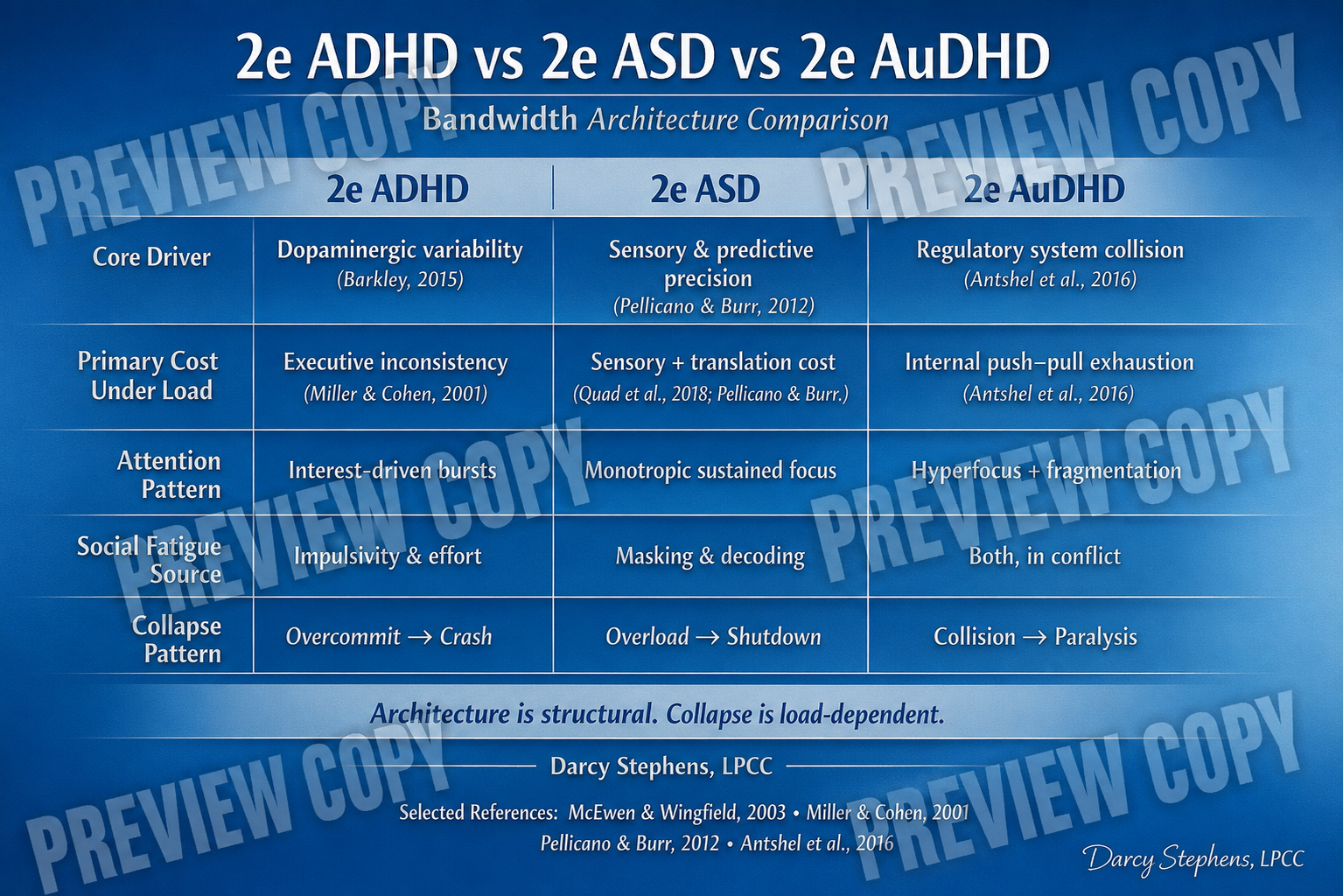
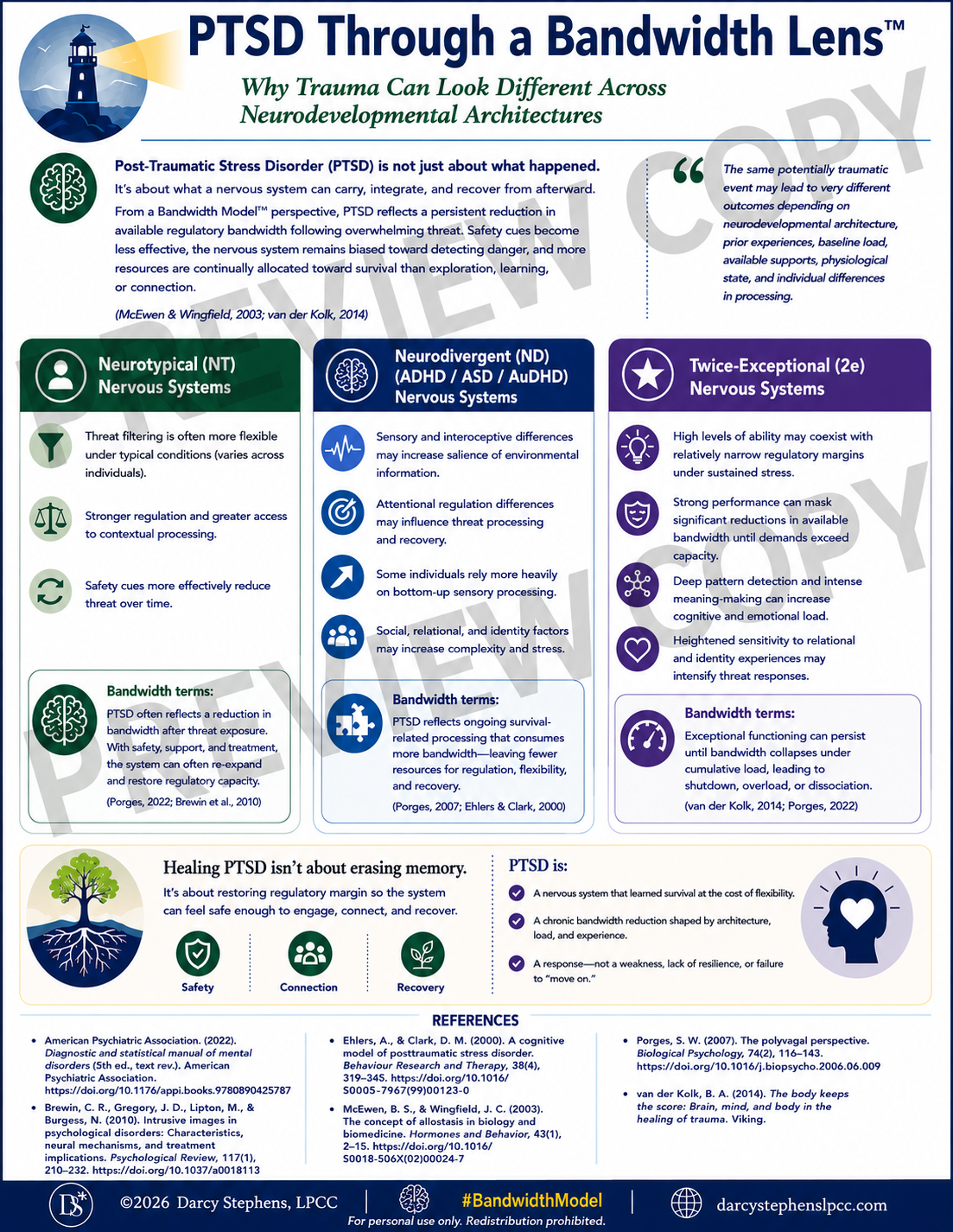
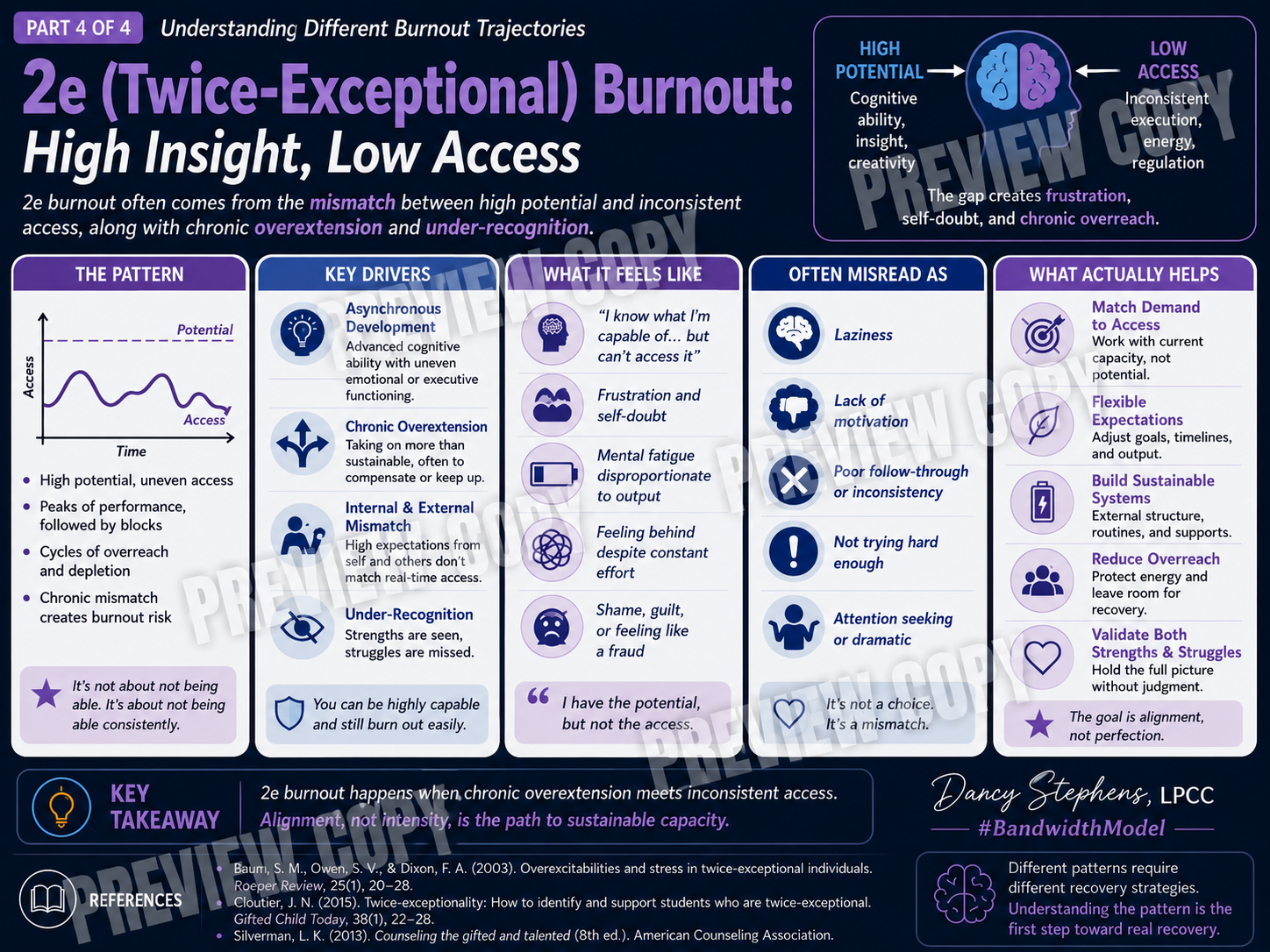
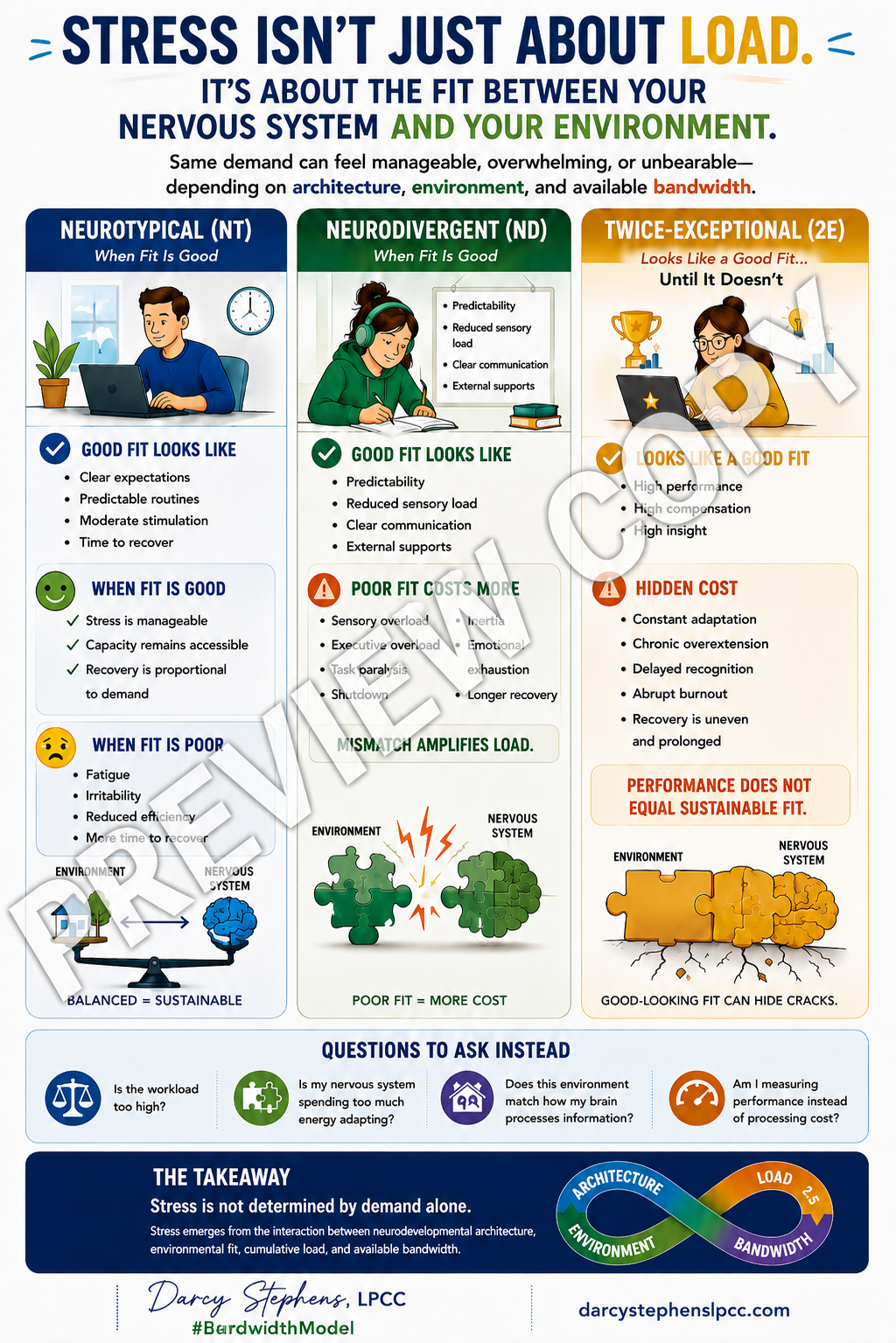
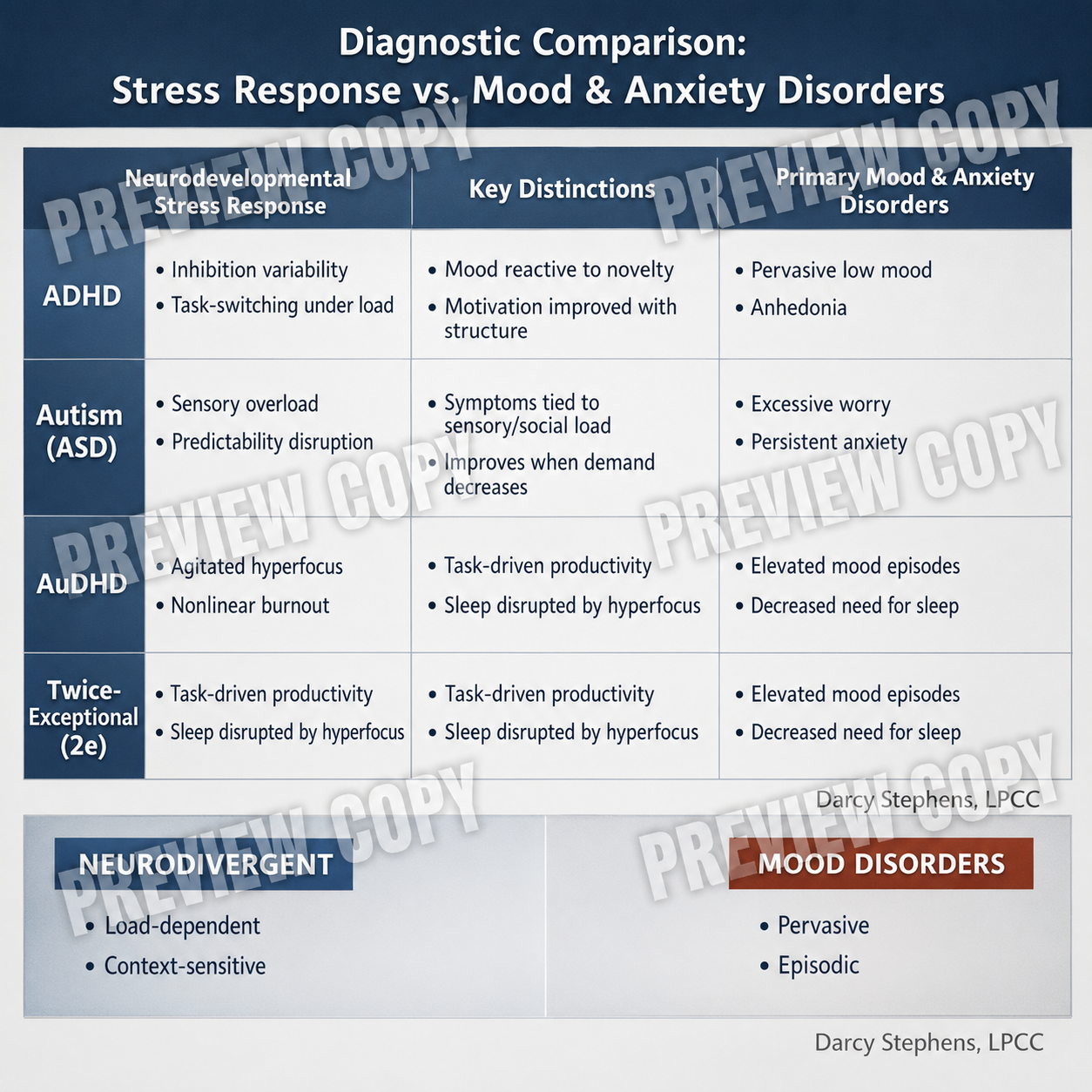
Many neurodevelopmental stress responses can resemble mood or anxiety disorders, particularly during periods of high demand. This comparison chart highlights key differences between common stress responses associated with ADHD, autism, AuDHD, and twice-exceptional (2e) profiles and the characteristic features of primary mood and anxiety disorders. By emphasizing patterns such as load dependence, context sensitivity, symptom triggers, and recovery, this resource supports more accurate conceptualization and differential diagnosis while encouraging clinicians to consider nervous system state and environmental demands alongside psychiatric symptoms.
Educational resource only. This handout reflects current research and clinical concepts and incorporates the author's Bandwidth Model™, an evidence-informed conceptual framework for understanding how neurodevelopmental architecture, cumulative load, nervous system state, and processing demands influence day-to-day functioning. The Bandwidth Model™ has not yet been empirically evaluated and should be considered a conceptual framework rather than an established scientific model. This resource is intended for educational purposes and should not be used as a standalone diagnostic tool or as a substitute for professional medical or mental health evaluation.
Many neurodevelopmental stress responses can resemble mood or anxiety disorders, particularly during periods of high demand. This comparison chart highlights key differences between common stress responses associated with ADHD, autism, AuDHD, and twice-exceptional (2e) profiles and the characteristic features of primary mood and anxiety disorders. By emphasizing patterns such as load dependence, context sensitivity, symptom triggers, and recovery, this resource supports more accurate conceptualization and differential diagnosis while encouraging clinicians to consider nervous system state and environmental demands alongside psychiatric symptoms.
Educational resource only. This handout reflects current research and clinical concepts and incorporates the author's Bandwidth Model™, an evidence-informed conceptual framework for understanding how neurodevelopmental architecture, cumulative load, nervous system state, and processing demands influence day-to-day functioning. The Bandwidth Model™ has not yet been empirically evaluated and should be considered a conceptual framework rather than an established scientific model. This resource is intended for educational purposes and should not be used as a standalone diagnostic tool or as a substitute for professional medical or mental health evaluation.