 Image 1 of 1
Why Behavior Isn't Always What It Seems: Understanding Adaptive Patterns Through the Bandwidth Model™ (PDF Infographic)
Behavior is rarely explained by a single diagnosis, personality trait, or stressful event.
This professionally designed educational infographic introduces one of the newest concepts within the Bandwidth Model™: Adaptive Patterns.
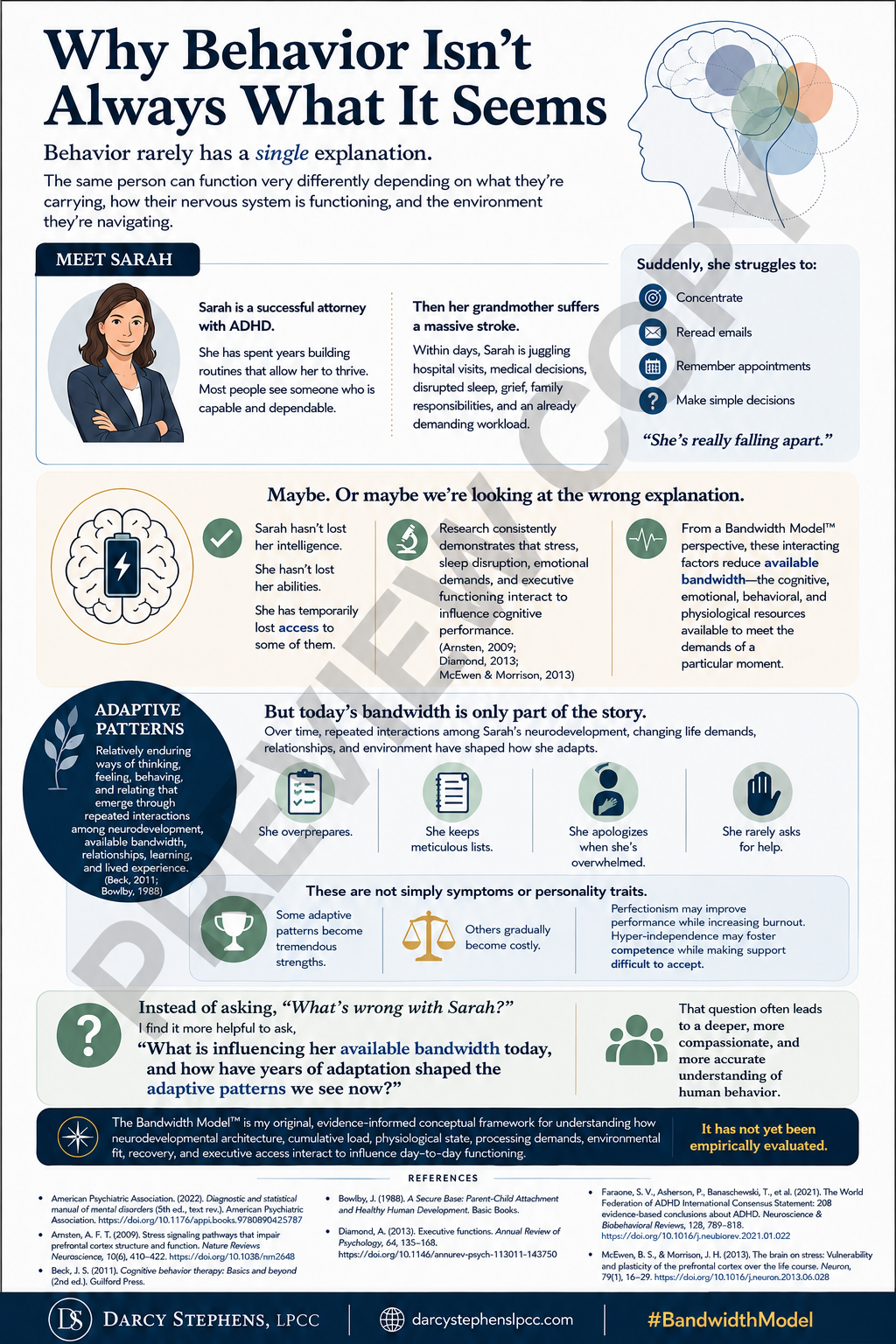
Using the story of Sarah, a successful attorney with ADHD facing a family medical crisis, this infographic illustrates how momentary reductions in available bandwidth differ from the long-term adaptations people develop through repeated life experiences.
Inside you'll explore:
Why capable people can temporarily lose access to their abilities without losing their abilities.
How stress, sleep disruption, executive functioning, and environmental demands interact to influence daily functioning.
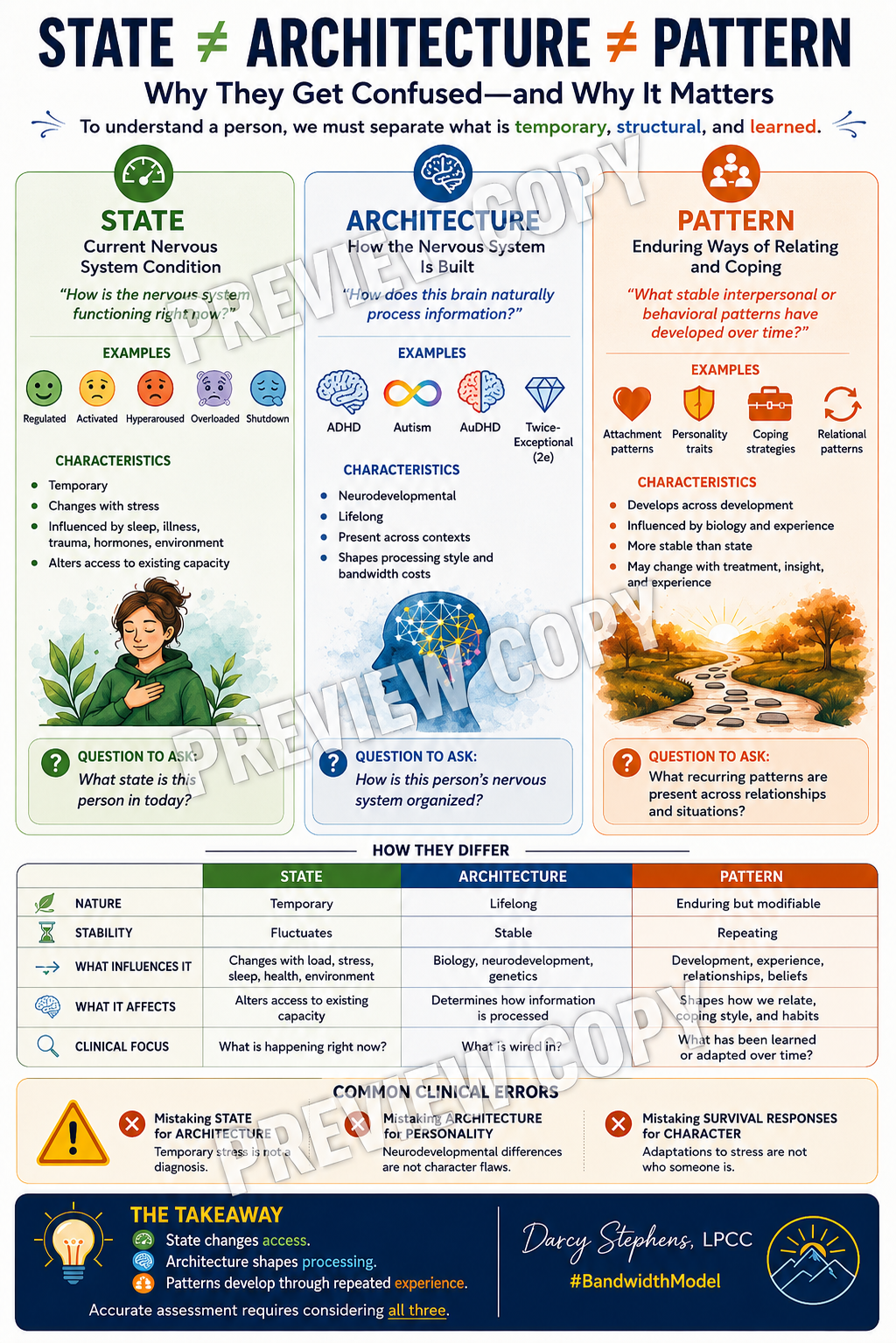
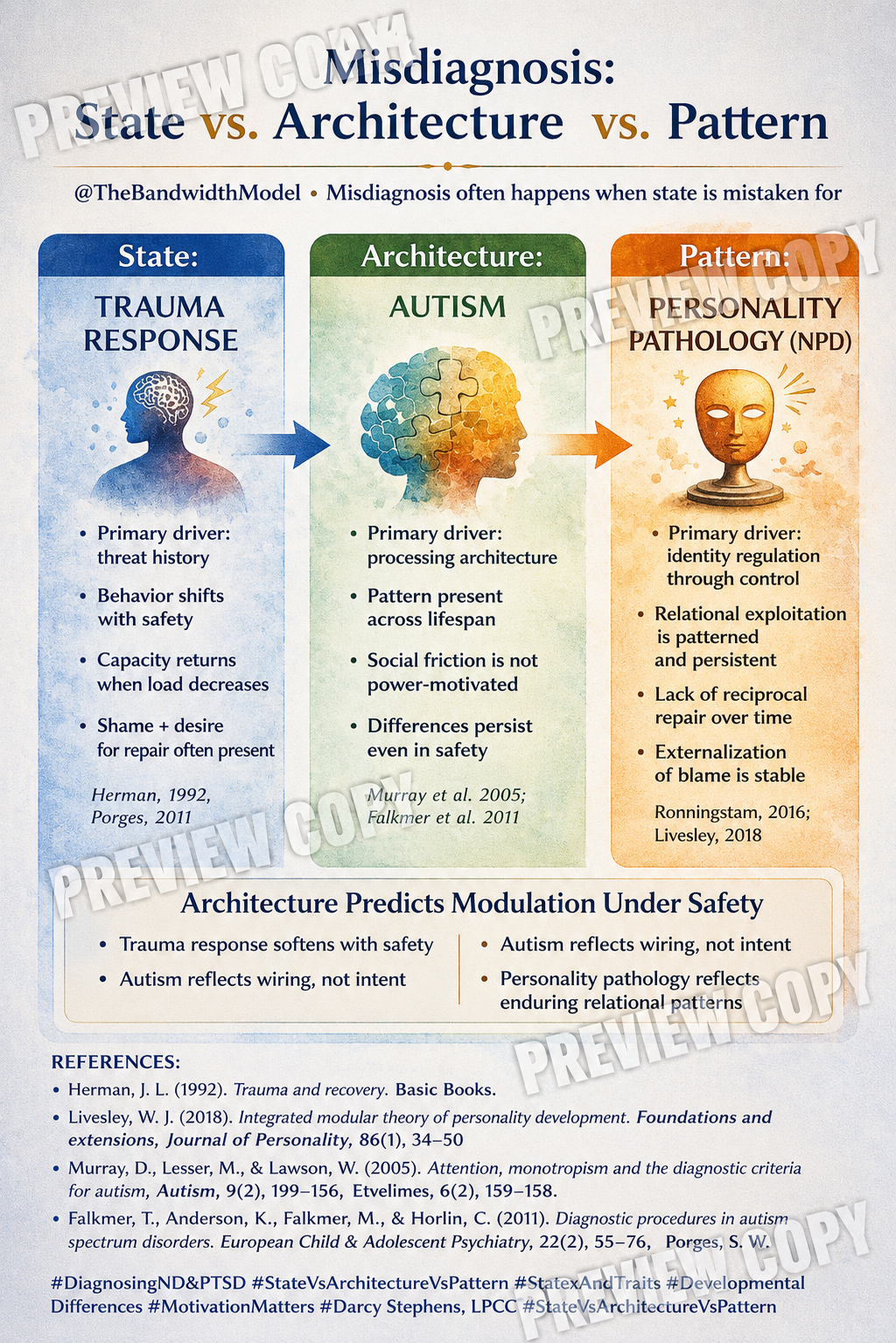
The difference between neurodevelopmental architecture and adaptive patterns.
Why perfectionism, hyper-independence, overpreparing, and excessive self-reliance may represent adaptive responses rather than simply personality traits.
How the Bandwidth Model™ provides a broader framework for clinical formulation and understanding human behavior.
This resource is designed for:
Mental health professionals
Students and trainees
Educators
Coaches
Healthcare professionals
Neurodivergent adults and families
Anyone interested in understanding behavior through a more nuanced, evidence-informed lens
Format: PDF Digital Download
Author: Darcy Stephens, LPCC
Educational Use Only
The Bandwidth Model™ is an original conceptual framework informed by research in neuroscience, psychology, executive functioning, trauma, and neurodevelopment. It has not yet been empirically evaluated and is intended to complement—not replace—existing diagnostic systems and evidence-based approaches.
Why Behavior Isn't Always What It Seems: Understanding Adaptive Patterns Through the Bandwidth Model™ (PDF Infographic)
Behavior is rarely explained by a single diagnosis, personality trait, or stressful event.
This professionally designed educational infographic introduces one of the newest concepts within the Bandwidth Model™: Adaptive Patterns.
Using the story of Sarah, a successful attorney with ADHD facing a family medical crisis, this infographic illustrates how momentary reductions in available bandwidth differ from the long-term adaptations people develop through repeated life experiences.
Inside you'll explore:
Why capable people can temporarily lose access to their abilities without losing their abilities.
How stress, sleep disruption, executive functioning, and environmental demands interact to influence daily functioning.
The difference between neurodevelopmental architecture and adaptive patterns.
Why perfectionism, hyper-independence, overpreparing, and excessive self-reliance may represent adaptive responses rather than simply personality traits.
How the Bandwidth Model™ provides a broader framework for clinical formulation and understanding human behavior.
This resource is designed for:
Mental health professionals
Students and trainees
Educators
Coaches
Healthcare professionals
Neurodivergent adults and families
Anyone interested in understanding behavior through a more nuanced, evidence-informed lens
Format: PDF Digital Download
Author: Darcy Stephens, LPCC
Educational Use Only
The Bandwidth Model™ is an original conceptual framework informed by research in neuroscience, psychology, executive functioning, trauma, and neurodevelopment. It has not yet been empirically evaluated and is intended to complement—not replace—existing diagnostic systems and evidence-based approaches.